From the Entropy of Language to the Entropy of Nations
A Reading of Peter Ayolov’s Book, “Negentropic Culture”
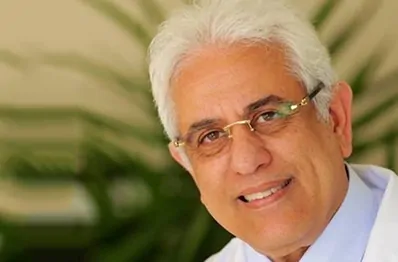
By Dr. Hossam Badrawi
An Intellectual Coincidence
Some time ago, I wrote an article titled The Entropy of Nations, borrowing the concept of entropy from thermodynamics to reflect on what happens to states and societies when their ability to preserve their internal order weakens. Their institutions gradually erode, the gap widens between law and its application, and the distance grows between authority and responsibility, and between the state and its citizens.
I argued that states, like physical systems, do not remain cohesive on their own. Order always requires energy to sustain it, institutions to renew it, values to lend it legitimacy, and awareness to resist its disintegration. When a state is left to the forces of neglect, corruption, and stagnation, it does not necessarily collapse in a single moment. Instead, it enters a slow process of fragmentation, resembling the increase of entropy in closed systems.
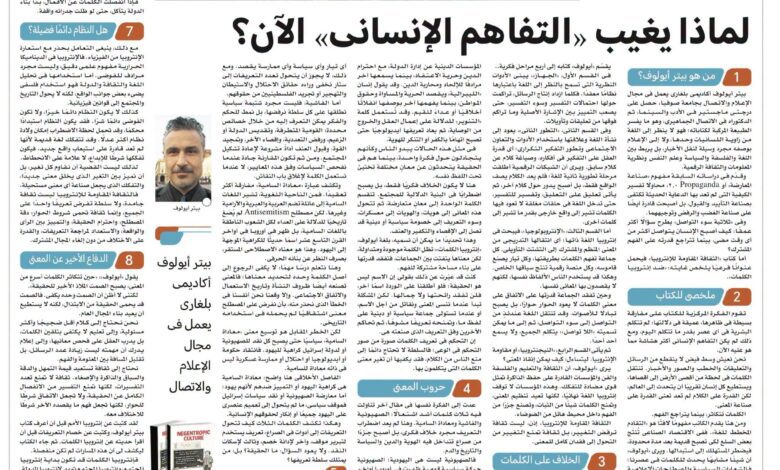
I wrote that article before learning of Peter Ayolov’s Negentropic Culture, published in 2026 as the second part of the second volume of his intellectual project, The Miscommunication Trilogy.
When I read it, I was surprised to discover that its author began with the same concept but applied it to a different field: I was exploring the entropy of states and institutions, while he was examining the entropy of language and meaning.
I also realized, however, that I had already come close to his central idea in two earlier articles on Conflicts of Meaning and Disputes over Definitions. In the first, I examined the words Enlightenment, secularism, and liberalism. In the second, I addressed Zionism, fascism, and antisemitism.
In all three articles, I was approaching the same truth from different directions: a society may begin to disintegrate when its words no longer carry shared meanings, and the entropy of language may precede the entropy of the state.
Who Is Peter Ayolov?
Peter Ayolov is a Bulgarian academic working in media and communication at Sofia University. He holds two master’s degrees, in literature and cinema, followed by a doctorate in mass communication. This background helps explain the multifaceted nature of his writing. He does not approach language solely through linguistics, nor does he view media as merely a vehicle for transmitting news. Instead, he connects language with philosophy, politics, psychology, information theory, and digital culture.
In his earlier research, he introduced the concept of “manufacturing opposition,” or Propaganda 2.0, seeking to explain how modern propaganda no longer confines itself to manufacturing support and acceptance, but has also become capable of manufacturing and directing anger and rejection.
In The Miscommunication Trilogy, he raises a more profound question: How has humanity come to communicate more than ever before while becoming less capable of achieving mutual understanding?
The subtitle of Negentropic Culture captures its purpose succinctly: “Against the Entropy of Words.”
My Summary of the Book
The book’s central idea rests on a paradox that appears simple but carries profound implications: humanity has never spoken as much as it does today, yet human understanding has never seemed more fragile.
We live amid an uninterrupted flood of messages, comments, speeches, images, and news. Words travel from one end of the world to the other in an instant, and almost anyone can address the entire world. Yet the ability to speak no longer necessarily translates into the ability to create meaning.
Words multiply while understanding diminishes.
From this starting point, the author introduces a striking concept: “the planned obsolescence of language.” In industrial economies, certain goods are deliberately designed to become obsolete after a limited period, forcing consumers to replace them. Ayolov argues that something similar is happening to words in our time. Political slogans, media terminology, and digital expressions suddenly appear, flood the public sphere, then lose their meaning and disappear, only to be replaced by new expressions.
Words are no longer created to endure, but to spread.
Their purpose is no longer always to clarify an idea. Instead, they are used to mobilize an audience, provoke an emotion, or elicit an immediate reaction. Language thus shifts from being a tool for thought and understanding to becoming a collection of temporary signals within successive cycles of mobilization and polarization.
Ayolov divides his book into four intellectual stages.
In the first section, “The Apparatus,” he develops the theoretical tools needed to view language as a complex system. As the production of messages increases, so do the possible interpretations and misinterpretations surrounding them, until it becomes difficult to distinguish the original signal from the layers of commentary and interpretation that accumulate around it.
In the second section, “The Second Evolution,” he revisits the origins of language and its relationship to tool use, social cooperation, and the evolution of recursive thinking—that is, the mind’s ability to think about its own thoughts and to formulate speech about earlier speech. He argues that digital networks have ushered in a second evolutionary stage for language. Speech no longer merely describes reality; it revolves around other speech. A comment is followed by a comment on the comment, an interpretation by an interpretation of that interpretation, until language enters closed loops in which words increasingly refer to other words rather than to an external reality.
The third section, “Entropology,” examines the entropy of language itself: its gradual movement away from organized, shared meaning toward interpretive fragmentation. Every group understands words in its own way, every movement creates its own vocabulary, and every digital platform generates its own context. People may therefore use the same words while intending entirely different meanings.
When a community loses its ability to agree on what words mean, dialogue ceases to be genuine dialogue and becomes an exchange of sounds. Language may then move from communication to miscommunication, and eventually to what we might call “noncommunication”: everyone speaks, but no one hears anyone else.
The fourth section, “Negentropy,” or resistance to entropy, asks the question: How can meaning be rescued?
Ayolov argues that culture, education, philosophy, art, and institutions capable of preserving collective memory serve as counterforces to disintegration. These institutions cannot halt the entropy of language permanently, but they can reorganize meaning, give words a measure of stability, and create islands of understanding within an immense ocean of noise.
A culture that resists entropy, then, is not a culture that rejects change. It is a culture that prevents change from turning into a total loss of meaning.
When Disagreements over Words Become Conflicts between People
This issue was not unfamiliar to me. I had previously written about three words that have become battlegrounds in our political and cultural lives: Enlightenment, secularism, and liberalism.
My concern was not to defend particular words for their own sake. It was to examine what happens when people engaged in a debate no longer disagree about the same idea, but instead about the meaning each person assigns to the word being used.
Someone may say “secularism” and mean the separation of religious institutions from the administration of the state, while respecting religion and freedom of belief. Another person may hear the same word as synonymous with atheism and hostility toward religion.
Someone may use “liberalism” to mean freedom, equality, and citizens’ rights, while another understands it as moral permissiveness or hostility toward traditional values.
The word “Enlightenment” may be used to refer to the exercise of reason and liberation from intellectual guardianship, only to be ideologically redefined until it becomes an accusation of unbelief or a rejection of one’s identity.
In such cases, people appear to be arguing over a single idea when, in reality, they are speaking about different meanings concealed beneath the same word.
The disagreement is no longer merely intellectual. It becomes a disturbance in the semantic structure of society. A single word splits into contradictory meanings; those meanings become identities, identities turn into opposing camps, and disputes over definitions become political or religious conflicts that may lead to exclusion, accusations of heresy, and violence.
This is precisely what we might call, in Ayolov’s terminology, “the entropy of words”: a word remains in circulation, but its meaning fragments across different groups, depriving it of its ability to create common ground for understanding.
I once expressed this idea by saying that a name is not the same as the reality it represents. If we gave a rose another name, it would not lose its fragrance or beauty. The problem begins when we forget the meaning and fight over the name, or when a political or religious group appropriates a word, assigns it a distorted definition, and then judges others according to the definition it has itself invented.
Controlling the definitions of words is a form of controlling consciousness. Power does not always need to prevent people from speaking; it may be enough to change the meaning of the words they use.
From Disputes over Definitions to Wars over Meaning
I returned to the same idea in another article addressing three even more explosive terms: Zionism, fascism, and antisemitism. Here, confusion over definitions was no longer merely an intellectual disagreement. It had become part of a conflict involving identity, religion, politics, history, and bloodshed.
Zionism is not Judaism. Zionism is a political nationalist movement that emerged in Europe in the late nineteenth century, whereas Judaism is a religion and a cultural and historical identity that predates it by many centuries. That is why some Jews have rejected Zionism since its emergence, and why Jews today also oppose the policies of the State of Israel or reject the occupation of Palestinian territories.
Zionism itself, however, has never remained a single, fixed doctrine. Religious, secular, labor, revisionist, and settler-oriented currents have emerged within it. Precise criticism must therefore do more than invoke a label; it must identify the particular movement, policy, or practice being discussed. At the same time, the multiplicity of definitions must never become a screen behind which we conceal the realities of occupation, settlement, displacement, or the denial of Palestinian rights.
Fascism, meanwhile, is not merely a political insult to be hurled at every authority we oppose. It is a pattern of governance and thought that can be identified through specific characteristics: extreme nationalism, the glorification of the state or leader, rejection of pluralism, exclusion of others, the glorification of force, and acceptance of violence as a legitimate instrument for reshaping society. Serious comparisons therefore require examining policies against these criteria, rather than using the word to shut down debate.
The expression “antisemitism” reveals a more complicated paradox. Linguistically, the Semitic languages belong to a family that includes Arabic, Hebrew, Aramaic, and others. Historically, however, the term antisemitism was not coined to describe hostility toward all peoples who speak Semitic languages. It emerged in late nineteenth-century Europe as a modern term for hatred directed at Jews. That is its established meaning in usage, regardless of the word’s literal construction.
Here we learn an important lesson: a word’s origin alone is not enough to determine its meaning. Meaning is also shaped by the circumstances in which a term emerges, its history of use, and social convention. Otherwise, we ourselves would commit the very error we warn against by imposing an etymological meaning on a term that it has not carried in historical usage.
The opposite danger, however, is to expand the political use of “antisemitism” until every criticism of Zionism or the State of Israel becomes equated with hatred of Jews. Criticizing a government, an ideology, an occupation, or a military practice is not, in itself, antisemitism.
The ethical distinction is clear: antisemitism means hatred of Jews or discrimination against them because they are Jewish. Opposition to Zionism or criticism of Israeli policies is a political position, unless it turns into racist generalizations about all Jews or a denial of their human rights.
These three words reveal how definitions become instruments of conflict: one definition is used to justify a position, another to condemn an opponent, and a third to silence criticism. The question is no longer, “What is the truth?” but rather, “Who has the power to define it?”
The Political Appropriation of Words
Here, I believe my own intellectual exploration adds another dimension to Ayolov’s argument. He focuses on the fragmentation of meaning caused by the density of communication and the speed at which messages circulate. But the fragmentation of meaning does not always occur spontaneously or innocently; it can be deliberately engineered.
We might call this “the political appropriation of words”: the seizure of a term’s definition by a political, religious, or media power, followed by the use of that definition to judge others.
This goes beyond the “planned obsolescence of language” discussed by Ayolov. It is “the planned distortion of definitions.”
A word is distorted, and the distortion is repeated until a propagandistic definition replaces its historical meaning. People then stop debating the idea itself and begin debating the manufactured image associated with it.
In this way, Enlightenment can be undermined by defining it as atheism; secularism can be portrayed as hostility toward religion; liberalism can be reduced to moral decay; criticism of Israel can be labeled hatred of Jews; and the right of Jews to live in safety can be portrayed as necessarily implying approval of Israeli policies.
At that point, language loses not only its precision but also its innocence. It becomes an arena in which power exercises its influence.
From the Entropy of Words to the Entropy of the State
The strength of Ayolov’s book lies in the fact that it does not treat the crisis of communication as merely a consequence of fake news or the misuse of social media. Instead, it sees a deeper crisis affecting the relationship between language and truth.
A false report can be corrected. But if the word “truth” itself loses its shared meaning, where can correction begin?
If every opinion becomes an “alternative truth,” every fact a “point of view,” and every body of knowledge a “narrative,” the danger extends beyond people believing falsehoods. It reaches the collapse of the very standard that makes it possible to distinguish truth from falsehood in the first place.
Here, the book converges with my idea of “the entropy of nations.” A state does not disintegrate only when its physical institutions collapse. Its disintegration may begin when the words that govern public life lose their meaning.
When the constitution becomes a text disconnected from actual practice, the law becomes a slogan that does not apply equally to everyone, citizenship becomes a word that carries no promise of equal rights, and democracy becomes elections without a genuine transfer of power, the entropy of language has already preceded the entropy of the state.
Institutions are ultimately built from words transformed into commitments: a constitution is made of words, as are the law, the social contract, and political promises. But these words become reality only when society preserves a shared understanding of their meaning and those in power respect the obligations they impose.
When words become detached from actions, the foundations of the state begin to erode, even if its walls remain standing.
Is Order Always a Virtue?
Nevertheless, we must be careful when borrowing the concept of entropy from physics. In thermodynamics, entropy is a precise scientific concept, not merely another word for disorder. Using it to analyze language, culture, and the state is a philosophical application that illuminates certain aspects of reality, but it does not turn history and society into systems governed by physical laws.
Nor is order always good, just as disorder is not always bad. Order can take the form of tightly controlled authoritarianism, while a moment of upheaval may create the possibility of a more just system. An old language may fragment because it can no longer accommodate a changing reality; in that case, its disintegration may be a precondition for creativity rather than a sign of decline.
The issue, therefore, is not to resist every change, but to distinguish between change that creates new meaning and disintegration that makes the creation of any meaning impossible.
A culture that resists entropy is neither a rigid culture nor an authority that imposes a single definition on everyone. It is a culture that protects the conditions necessary for dialogue: precise terminology, respect for truth, the distinction between opinion and fact, a willingness to reconsider definitions, and the capacity to disagree without destroying the common ground on which dialogue depends.
The Last Line of Defense for Meaning
Ayolov writes:
“When words multiply faster than meaning, silence becomes the last refuge of truth.”
I do not believe, however, that silence alone is enough. Silence may protect truth from trivialization, but it cannot rebuild the public sphere.
We need less noisy and more responsible speech, an education system that does not merely teach words but trains the mind to examine their meanings, and media that understands its task is not to increase the number of messages but to narrow the distance between information and understanding.
We need a culture that restores the value of patience, precision, context, memory, and attentive listening. A culture that does not prohibit multiple interpretations but prevents interpretation from becoming completely detached from truth. A culture that does not make agreement a prerequisite for dialogue, but does make understanding what another person means a prerequisite for disagreeing with them.
I wrote about the entropy of nations before I knew of Peter Ayolov’s book, and I wrote about disputes over definitions before reading his discussion of the entropy of words. The book has since revealed to me that these lines of thought were never separate.
The entropy of words may mark the beginning of the entropy of society, and the entropy of society may pave the way for the entropy of the state. When words lose their meaning, institutions lose their legitimacy, and the nation becomes a collection of competing voices, bound together by neither a social contract nor a shared understanding of truth.
Perhaps resistance to the collapse of nations begins in a place that seems small: restoring our respect for words.
For civilizations do not fall only when they become incapable of producing power or wealth. Their decline may begin when they continue speaking at great length, while no one remains capable of understanding what they are saying.