At the Café of “Dreamers of Tomorrow”: Human Values
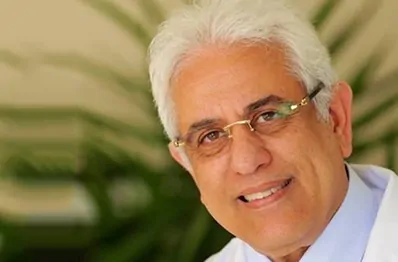
By Hossam Badrawi
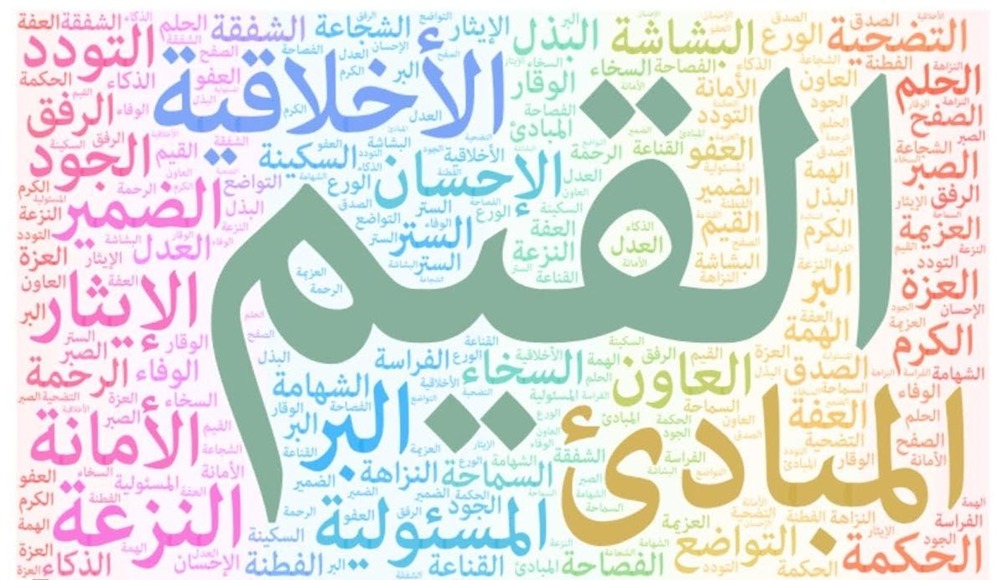
Human values are the virtues that guide individuals in their interactions with themselves and with others. They appear naturally in one’s attitudes, often unconsciously, as they become ingrained in one’s being. They influence choices and define behavior.
These values are not purely innate; they also result from social upbringing, beginning at birth and continuing throughout life.
Human values include respect, listening, empathy, affection, appreciation, and love for others. Through these, a person can acquire moral values such as justice, integrity, tolerance, and rejection of violence. Values motivate people to think, speak, and act in certain ways; they are internal standards that set boundaries for behavior.
Human values are categorized into:
-
Individual values: protecting oneself, freedom of choice.
-
Family values: family as the fundamental social unit, preserved through tradition, trust, love, and respect.
-
Professional values: derived from one’s profession, with unique ethical frameworks.
-
National values: ensuring equality and justice for all citizens, rooted in the traditions, history, and experiences of a nation.
-
Moral values: guiding individuals toward respect and love in society.
-
Spiritual values: love, compassion, justice, truth—innate and transcending religion, culture, or nationality, uniting all humanity.
Education, media, culture, and art are the foundations of building moral conscience. Family, school, and society all shape the values we see—or fail to see—in youth.
Children and young people spend about 18 years in educational institutions. Thus, schools and universities are critical for conveying society’s vision of citizenship, belonging, pride in the nation, and respect for women’s rights.
If graduates emerge as narrow-minded, intolerant, violent, extremist, or harassers, then clearly something is wrong in our system.
A young woman at the café told me:
“With all respect, I doubt older generations have a coherent vision or cumulative strategy. My peers and I believe our biggest challenge comes from the confusion in your generation’s ideas. We are the product of your contradictions.”
Her colleague added:
“You and your predecessors confused political, social, and cultural concepts. Are we a modern civil state as some of you claim and as we believe, or a religious state? Do we respect freedom of opinion, women’s rights, pluralism, and tolerance of differences? I doubt your generation has settled these issues.”
I replied: “Instead of endless debate, I agree with you. The real challenge is to find solutions.”
She said: “Then let’s return to education.”
I explained: “Education is not Egyptian, foreign, or religious—it is a universal means of seeking knowledge and skills. What changes is the method, as humanity evolves. With today’s technology and artificial intelligence, knowledge is available to everyone at no cost. The role of education has shifted from transferring information to immersing students in experiences that shape them in both digital and human contexts.”
But even with advanced tools, we may produce geniuses who are also extremists, violent, or harassers. The issue is not only curricula or prohibitions, but the way of life within educational institutions—how students learn to distinguish right from wrong, respect others, and live without violence.
Conscience is shaped by family, media, culture, and art, alongside education. And technology—games, internet, YouTube—exposes children to unlimited information beyond our control. Those who try to resist this wave will fail.
So—is this a crisis or an opportunity?
If we learn to use these tools to nurture tolerance, pluralism, and respect for others, we can leap over long-standing challenges. If we rely only on wishful thinking or traditional rote education, society will drown in contradictions created by ignorance, torn between modernity and fundamentalism, enlightenment and backwardness, science and superstition.