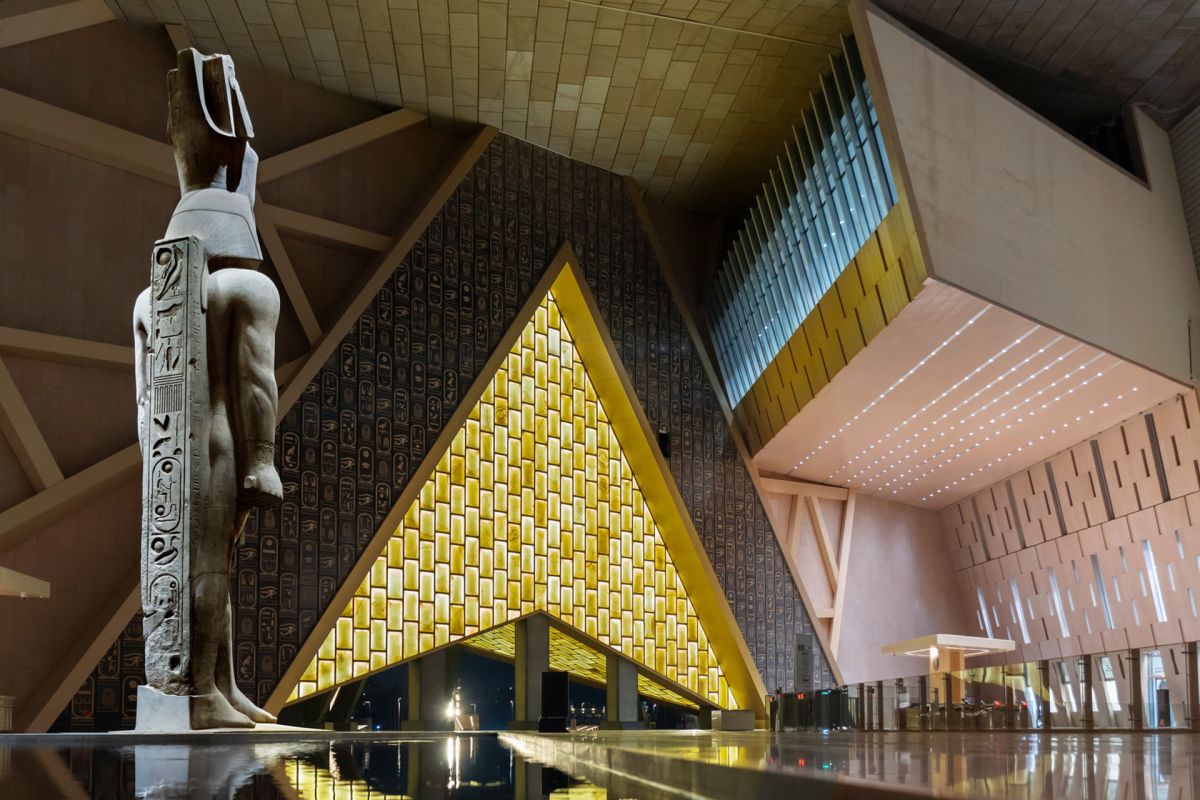
Commenting on the song posted in the launch video of the Grand Egyptian Museum in the hieroglyphic language, I researched the matter, because according to my previous understanding it is a language that can be read and understood only, but not spoken. What I reached is the following:
-
Where did our understanding of reading hieroglyphics come from?
Deciphering hieroglyphic writing was made possible thanks to the Rosetta Stone (1799), which contained the same text in three scripts:
Hieroglyphic – Demotic – Greek.
Since the Greek text was known, Champollion in 1822 was able to decipher hieroglyphic symbols and understand how to read the signs and their meanings.
Thus, we now know:
• Word meanings
• Grammar and morphology
• Sentence structure, pronouns, verbs
-
What about pronunciation?
Pronunciation is the mysterious part.
Ancient Egyptian was not written with letters fully representing sounds as we do today. Instead:
• Vowels were omitted (like early Arabic)
• Some sounds were written partially or inferred from context
• Some symbols were symbolic or pictorial, not fully phonetic
-
Attempts to approximate pronunciation:
Egyptologists tried to reconstruct pronunciation by comparing ancient Egyptian with:
• Coptic (the last phase of Egyptian, still used in the Coptic Church)
• Ancient Semitic and African languages
Thanks to this, we now have an academically accepted approximate pronunciation — but it remains hypothetical.
Summary:
• Hieroglyphic is fully readable and understood in meaning
• But its pronunciation is partially unknown, and what we use today is a standardized approximate form created by scholars
Example:
𓂋𓈖𓂝𓀀
Latin transliteration: r n ʿ
The word is “Ra” — the sun god.
Literal meaning: “sun” or “divine light.”
Pronunciation:
𓂋 = r
𓈖 = n
𓂝 = a pharyngeal sound like ʿ (ayn)
Since vowels were not written, scholars read it as “Ra.”
Another example:
𓅓𓂋𓏏𓊖
m r t
Meaning: “Meret” — a woman’s name meaning “beloved” or “desired.”
Pronounced today as Meret, though ancient Egyptians probably pronounced it differently.
Key Notes:
• We use Latin letters to reconstruct pronunciation (transliteration)
• Letters like “e” are added for ease of modern reading
• Coptic helps estimate ancient vowels
Example phrase from ancient inscriptions:
“Greetings to you, O Ra”
Hieroglyphic:
𓇋𓏏𓈖 𓂝𓂋𓏤
Transliteration:
i͗tn ʿ rʿ
Approximate pronunciation:
“Iten Ra”
Or in modern Egyptian tone: “Iten Ra‘”
Meaning:
𓇋𓏏𓈖 (i͗tn) = “greeting” or “sunlight”
𓂝𓂋𓏤 (ʿrʿ) = “Ra”
Cultural Notes:
This phrase appeared often on:
• Temple walls
• Tomb prayer texts
• Statues of kings and priests
Direction of writing today:
Should the sentence now be written right-to-left or top-to-bottom as the ancient Egyptians originally did, where direction also had artistic and symbolic meaning?