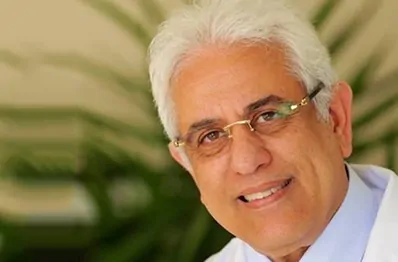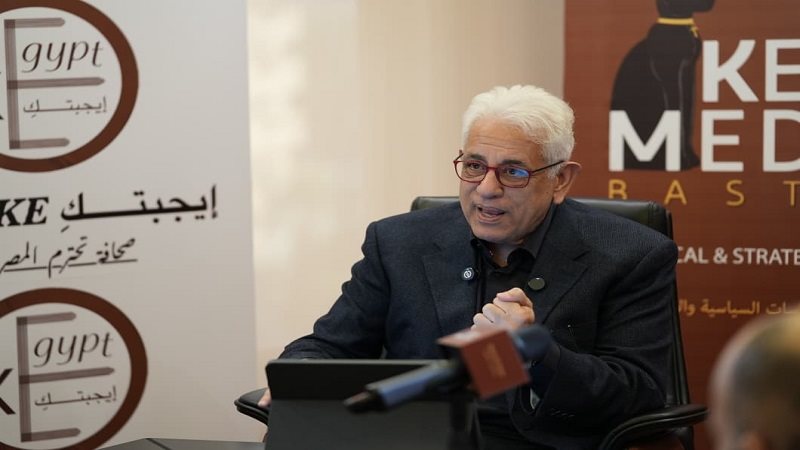
Dr. Hossam Badrawi, writer and political thinker, affirmed that the current Arab reality is witnessing dangerous transformations, reflected in the collapse or weakening of several pivotal states such as Syria, Iraq, Libya, and Sudan. This has created a strategic vacuum in the Arab region, leaving it more vulnerable to foreign interventions and ambitious regional projects.
Foreign Interventions in the Region
Dr. Badrawi explained, during his speech at a seminar organized by EgypTech, that this collapse was not a coincidence but the result of intertwined internal conflicts and external interventions, which were exploited to weaken the structure of Arab states and tear apart their social and political fabric. He emphasized that the Zionist entity was one of the primary beneficiaries of this new situation.
He added that the current circumstances impose a new reality in the equations of regional power. The Zionist threat is no longer limited to military confrontation but has expanded to intellectual, political, and economic influence. Israel, he said, is now pursuing a strategy of “breaking the expansion barrier” to revive what it calls the “ancient dream of Greater Israel.”
“Greater Israel” and the Balance of Power
Dr. Badrawi noted that the contemporary Israeli discourse about “Greater Israel” reflects a state of strategic arrogance fueled by regional shifts—especially the weakening of Arab states that once formed a defensive wall against expansionist ambitions. This narrative, he stressed, would not have been possible without the imbalance of Arab power, whether politically, socially, or economically. The collapse of state institutions in several Arab capitals has enabled Israel to advance its expansionist rhetoric amid the retreat of a unified Arab voice.
He further stated that Zionist forces have never abandoned their goal of imposing a new reality in the Middle East, viewing wars and military operations merely as tools to achieve a false dream based on geographic expansion and economic control, with no regard for the region’s stability or the rights of its peoples.
Egyptian–Saudi Cooperation
Dr. Badrawi stressed that the only path to counter these ambitions lies in strengthening Egyptian–Saudi cooperation. Cairo and Riyadh, he said, represent two fundamental pillars of Arab security, and their political and economic unity can restore balance to the region. The cooperation between the two nations goes beyond shared interests; it forms a genuine strategic alliance that commands global respect. He pointed out that major international powers closely monitor the relationship between Egypt and Saudi Arabia because of its political and diplomatic weight in both the regional and Islamic worlds.
Dr. Badrawi warned that there are deliberate attempts to sow discord and ignite disputes between the two sides in order to weaken this historic alliance, which serves as a bulwark against Israeli and regional schemes. He urged caution toward media wars and smear campaigns that aim to destabilize Arab unity from within.
U.S. Support and the Arab Role
Dr. Badrawi also highlighted that the United States remains Israel’s greatest supporter—politically, militarily, and economically—giving it an unfair advantage in the region. This continuous support, he explained, has emboldened Israel’s aggressive policies, at a time when the Arab world suffers from fragmentation and division.
He added that the turmoil in countries such as Syria, Libya, Yemen, and Sudan has weakened the collective Arab position, making it difficult for the Arab nation to speak with one voice or take a unified stance. The ultimate aim of these developments, he warned, is to undermine Egypt’s pivotal role in leading joint Arab action.
Regional Balance as a Shared Responsibility
Dr. Badrawi concluded by stressing that maintaining regional balance in the Arab world is a collective responsibility that requires political awareness and strategic coordination among major states. Understanding the current situation, he said, demands distinguishing between the temporary balance that currently tilts in favor of Israel and the historical balance in which Arab powers were cohesive and capable of deterrence.
He affirmed that rebuilding Arab strength begins with reinforcing unity between Egypt, Saudi Arabia, and other stable nations. History, he said, proves that when Arab power is united, it can change international equations. He ended by saying:
“What we are living through today is not the end of history but a true test of the Arab nation’s consciousness—its ability to overcome crises and build a stronger, more stable future.”