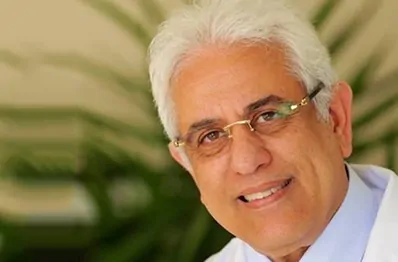
Whenever the month of January arrives, the story of Egypt as I witnessed it in 2011 comes back to my mind—fifteen years ago—based on the information that was available to me at the time, which I summarized and documented in my memoirs that I have not published.
From experience, I know that events written about as they happen are different from those written about later. Some events change in how they are perceived, visions become mixed as knowledge unfolds over time, and impressions may shift or multiply after the fact.
That is why I committed myself to writing and recording my thoughts, documenting my impressions day by day and moment by moment. Even if I later changed my opinion as new facts emerged, returning to read the emotions of the moment and analyzing its reality at the time it occurred is essential for recording history.
In my view, the 2011 revolution left Egypt’s security apparatus partially intact. We later discovered that one of the most important goals of those managing the revolution from behind the scenes—the Muslim Brotherhood—was to destroy the head of the security institution within the Ministry of Interior and to create severe tension between anyone in uniform and the public.
Nevertheless, the armed forces retained their independence and appeared intact and confident, though inclined to support any civilian structure except the National Democratic Party, which had governed policies and elections but had not truly governed the country. There will be more to say about this when the time comes.
The dismantling of the State Security apparatus was a target. It was the brain of the Ministry of Interior, and this was reinforced through the dismissal of its leadership, the theft of its documents, changing its name, and leaving it exposed to the anger of revolutionary youth—something that satisfied the revolutionaries—so that State Security became a victim of the revolution, which necessarily required victims.
Unfortunately, the Muslim Brotherhood and the Salafists were the only alternatives to the National Democratic Party. They had organization and funding. It is certain that the people did not demonstrate in Tahrir Square to hand power over to extremist religious rule. But in my opinion, the armed forces sought to remove the National Democratic Party structure from the game of power as quickly as possible, because the constitutional reality at the time clearly indicated that Egypt’s next president would be a civilian from the existing political parties, which would have made a civilian leader from the National Democratic Party a leading candidate.
Once again, there is much to be said on this matter. I was a witness to the events and a participant in them, and I publicly declared in advance that my cultural and political orientation was against inheritance of power, but in favor of democracy—something that caused me significant harm in my political career through deliberate electoral exclusion by some party leaders.
The creation of a political vacuum was the trap into which Egypt fell, blinded by massive propaganda designed to exclude all organized political forces except the Muslim Brotherhood.
The Brotherhood’s primary enemy was the State Security apparatus, and to a lesser degree Egyptian Intelligence, who knew everything about them—the sources of their wealth and their internal and external relationships with international intelligence agencies, especially those of the United States and the United Kingdom.
The Muslim Brotherhood succeeded in getting rid of State Security, as I explained, without resistance from some military leaders who believed that the apparatus supported hereditary succession in one way or another. Later, the Brotherhood inserted an article into the Islamist constitution that barred any qualified civilian leaders from the National Democratic Party from running for the presidency for ten years. In doing so, they eliminated both the organization capable of competing with them and the individuals qualified to do so.
Immediately after Mubarak’s removal, the Brotherhood applied pressure and adopted the proposed military-security roadmap: parliamentary elections first, the constitution and reform later, and presidential elections at the end.
As for the minority—including myself—who argued that new democracies need to establish basic guiding principles before rushing to the ballot boxes, we were sidelined, attacked, and marginalized.
I recall that others and I tried during that moment to stop the rush in that direction, but we failed. We attempted to convince the military authority that, in the absence of an organized civilian bloc, any parliamentary elections would hand power to the Brotherhood on a silver platter. Our goal was presidential elections first, before parliamentary elections—but unfortunately, the ruling authority did not agree.
During this transitional period, and after the Brotherhood won slightly more than 40% of parliamentary seats—as expected—against a divided and disorganized political bloc, the Brotherhood revealed their other face. They blamed protesters for the violence directed against them by the state and repeatedly claimed that activists were pawns of foreign intelligence agencies. In parliament, the Brotherhood seized every opportunity to praise law enforcement agencies and blocked all attempts to hold them accountable after gaining control over them.
This contradiction in positions became evident once the Brotherhood moved from the opposition side of the table to the ruling side. As soon as Morsi took the oath of office—after threats of civil war if the results were not announced in their favor—he congratulated the police (the enemies of the recent past) for reforming themselves, boldly referring to them as the esteemed partners of the 2011 revolution.
It goes without saying that security violations increased during Morsi’s short tenure, and Muslim Brotherhood militias reinforced official coercion. Their goal was to align all forces in favor of maintaining their grip on power.
I also recall that the “democratically elected” president affiliated with the Muslim Brotherhood and his regime violated all laws and norms of legitimacy. Supporters of the president besieged the Supreme Constitutional Court for more than 30 days to obstruct justice and delay rulings in two critical cases concerning the constitutionality of both the Constituent Assembly and the Shura Council.
During that period, the president granted himself the right to legislate and immunized all his decisions from judicial review. He dismissed the public prosecutor in violation of his constitutional oath and appointed someone of his choosing, also exceeding his constitutional authority. In doing so, he became Egypt’s supreme ruler—the executive, the legislator, and the judge.
Let us remember history and facts so that we do not get lost in new-old wishes that rely on forgetting and collective amnesia. This is a time for stability, working together, and building—not destruction. Life is a series of choices, and it makes no sense at every crossroads to choose the same path and expect different results.