In the history of states, it is rare to find figures who have crossed different political eras—not as tools in the hands of power, nor as marginal opponents, but as rational witnesses to its transformations. Individuals who understand the logic of the state, recognize its limits, and maintain a distance that allows for clear vision without emotional excess, and criticism without hostility.
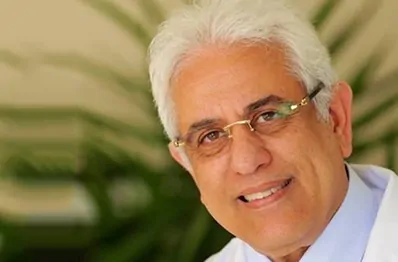
Dr. Mostafa El-Feki belongs to this rare category.
He is not merely a former diplomat, nor simply an official who occupied influential positions, but a political and intellectual encyclopedia whose experience was shaped over long decades of public service, direct engagement with decision-making centers, and deep exposure to international politics—combined with a remarkable ability to transform experience into knowledge, and knowledge into balanced analysis.
Between the State and Power
Dr. Mostafa El-Feki has lived through all the major stages of modern Egyptian political life:
From the July State with its centralized national ambitions, to the transformations of the 1970s and the redefinition of Egypt’s regional role, then the years of relative political openness, and finally the complexities of the region and the world in an age of globalization and turbulence.
Despite this long historical span, he never became a prisoner of a single era, nor a blind defender of any regime. Instead, he remained a man of the state, not a man of power, clearly distinguishing between the nation and the ruler, between the stability of the state and its stagnation, and between constructive criticism and gratuitous destruction.
Diplomacy as Understanding… Not a Job
In his diplomatic career, he did not treat foreign policy as a matter of protocol or official speeches, but as a complex science governed by interests, balances, and an understanding of human nature before geography.
That is why his analyses of international relations have always been calm and free of populism, fully aware that politics is not an arena of good intentions alone, but a rational field of struggle—one in which only those who know when to advance and when to retreat can prevail.
The Political Intellectual
What truly distinguishes Dr. Mostafa El-Feki is not only the positions he held, but his nature as a political intellectual.
He is an avid reader of history, widely versed in both Western and Arab thought, possessing a refined language and a rare ability to explain without oversimplifying, and to criticize without provocation.
He writes and speaks with a language that knows the value of words and understands that politics is not a stage for rhetoric, but a domain of comprehension and interpretation. For this reason, his intellectual and media presence has consistently retained a high degree of respect—even among those who disagree with him.
A Witness, Not an Official Historian
Most importantly, Dr. Mostafa El-Feki has never sought to be an official historian of authority, nor a false witness to its actions.
He was close to decision-making, yet never lost his intellectual independence.
Aware of the inner workings of the state, yet never relinquishing the right to question.
Here lies his true value: to be inside the scene without dissolving into it.
In an Age of Noise
In a time when politics has been reduced to slogans, and screens have turned into arenas of clamor, the value of a model like Mostafa El-Feki becomes evident.
A model that reminds us that politics can be understood rather than sanctified, that disagreement can be respectful, and that proximity to power does not necessarily mean losing one’s moral or intellectual compass.
Mostafa El-Feki also possesses a sharp sense of irony when exposing contradictions in politicians’ statements, along with a light-hearted spirit that allows him to critique even the fiercest disputes without provoking anger or emotional escalation.
Conclusion
Dr. Mostafa El-Feki is not merely a name in the record of official positions, but a living political memory, accumulated experience, and a rational voice in an age of confusion.
The respect he commands does not stem from universal agreement with him, but from the recognition that he belongs to a rare school: the school of reason, not chanting… of understanding, not emotional excess.