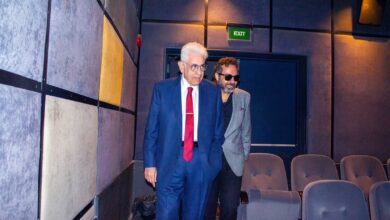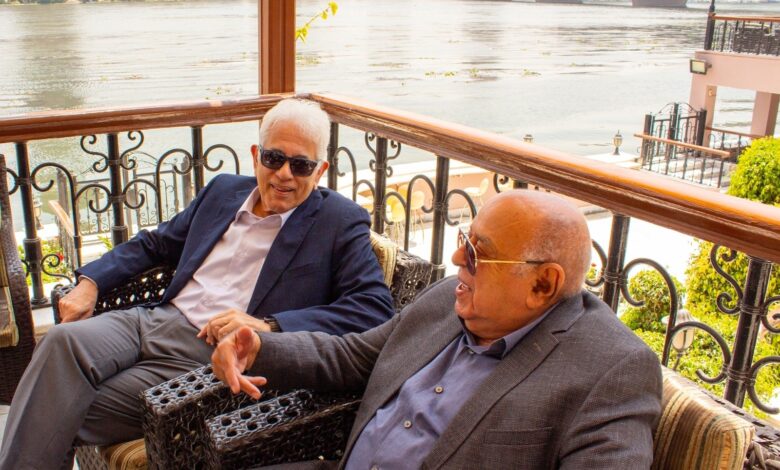
An expanded seminar on the future of education in Egypt was held on Saturday, May 16, 2026, at the Diplomatic Nile Club, attended by a distinguished group of public figures, diplomats, intellectuals, and individuals concerned with education and human development.
The seminar was moderated by Dr. Samir Radwan, former Minister of Finance, and Ambassador Raouf Saad, former Egyptian Ambassador to Russia.
Among the attendees were former Minister Moushira Khattab, former President of the National Council for Human Rights; Dr. Laila El-Khawaga; Dr. Heba Nassar, former President of Cairo University; Dr. Alia El Mahdy, Professor of Economics and former Dean of the Faculty of Economics and Political Science at Cairo University; Dr. Nagwa Khashaba, academic, writer, and Egyptian intellectual interested in educational and cultural affairs; Dr. Heba El-Leithy, Professor of Statistics and Economics and expert in poverty and human development; Dr. Mostafa Kamel El-Sayed, Professor of Political Science at Cairo University and one of Egypt’s leading political thinkers; and Mr. Abdel Azim Hammad, journalist and former Editor-in-Chief of both Al-Ahram and Al-Shorouk newspapers.
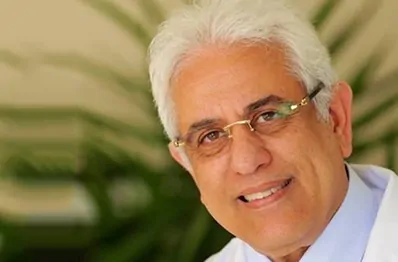
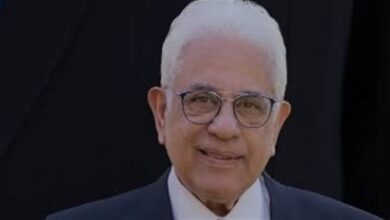
At the beginning of his speech, Dr. Hossam Badrawi expressed his great pleasure at being among such distinguished Egyptian figures, emphasizing that education is not merely a service or administrative file, but a civilizational future directly linked to the state’s ability to survive and progress in a world changing at an unprecedented pace.
Dr. Badrawi pointed out that educational reform is fundamentally a political decision before it is a technical one, explaining that countries which succeeded in building modern renaissances began first by rebuilding the human being and by giving education genuine priority beyond slogans and temporary plans.
He added that the problem lies not only in curricula or examinations, but in the philosophy upon which the entire educational system is built, stressing that the real goal of education should be to build minds capable of critical thinking and creativity — not merely graduates seeking jobs, but creators of civilization.
Dr. Badrawi particularly focused on the preschool stage.
He also stressed that any educational reform project that does not place teachers at the center of the educational process will fail to produce meaningful impact. He noted that respecting teachers, qualifying them, and improving their conditions represent the cornerstone of any genuine and sustainable reform. He added that Egypt has approximately 750,000 teachers educating 30 million children, and that upgrading the capabilities of this teaching workforce is not impossible, but achievable within no more than five years.
He further emphasized that technology and artificial intelligence alone cannot create an educational renaissance unless accompanied by a transformation in ways of thinking, freedom of expression, and the removal of barriers restricting creativity.
“The challenge,” he explained, “lies in redefining the relationship between the student and knowledge.”
Dr. Badrawi also addressed what he described as one of the greatest dangers facing societies: the killing of children’s curiosity and turning education into a mechanical process devoid of passion and discovery. Equally dangerous, he said, is creating contradiction within children — encouraging them at times to think critically and reject what lacks evidence, while at other times presenting them with unquestionable absolutes they are not allowed to discuss.
He affirmed that building the Egyptian individual must rely on an integrated system combining knowledge, values, coexistence, and openness to the world, while preserving national and cultural identity. He stressed that true investment lies not merely in buildings, but in the human mind capable of innovation and shaping the future.
At the conclusion of the seminar, an open dialogue took place between Dr. Badrawi and the audience, addressing several challenges facing Egyptian education and ways to develop it in a manner that achieves justice, efficiency, and sustainability. Participants highly praised the depth of the discussion and the future-oriented vision presented during the seminar.