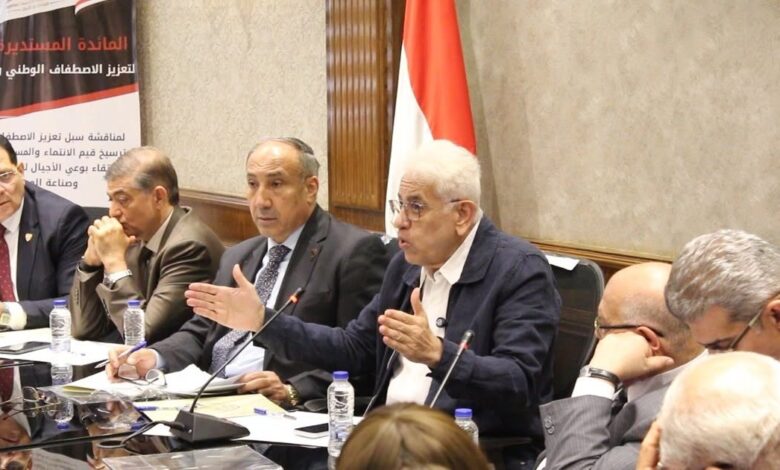
Today, Thursday, June 4, 2026, the Civil Education Center in Gezira hosted the Roundtable on Strengthening National Cohesion and Building Public Awareness. The event was organized by the Leaders Foundation for Administrative Sciences and Development, chaired by Dr. Ahmed El-Sherif, as part of the national response to the call launched by President Abdel Fattah El-Sisi to strengthen alignment among state institutions and foster unity among national forces in addressing current challenges.
The roundtable coincided with the launch of the national local councils simulation program, “The Road to Local Government – The Local Compass,” and brought together a distinguished group of intellectual, political, executive, and academic leaders, as well as experts and specialists. The objective was to discuss regional and international challenges affecting Egypt’s national security, enhance public awareness, support efforts to build the Egyptian citizen, and reinforce the values of belonging, citizenship, and national participation.
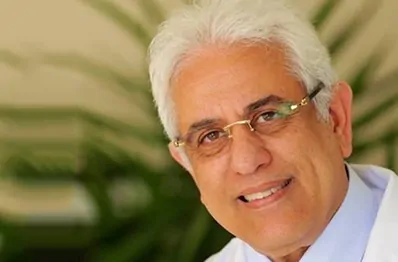
At the invitation of Dr. Ahmed El-Sherif, Dr. Hossam Badrawi chaired the main session. He opened the proceedings with a keynote address focused on the need to move from the stage of discussing ideas to the stage of actual implementation. He emphasized that Egypt’s real challenge is no longer the absence of visions or solutions, but rather the gap between the ideas that are proposed and their practical application on the ground.
Dr. Badrawi stated that national security is a concept far broader than military, political, or economic security in their traditional sense. He explained that national security is “the ability of the state and society to protect their survival, stability, vital interests, and core values, while ensuring the capacity to achieve development and continuity for future generations.”
He stressed that any serious discussion of national security must begin with a clear and agreed-upon definition of the concept, because differing definitions inevitably lead to differing priorities and solutions. He added that national security is closely linked to young people and children, who represent approximately 65% of Egyptian society, emphasizing that discussions about Egypt’s security concern not only the present but also the future of coming generations.
Dr. Badrawi affirmed that education, awareness, healthcare, social protection, and youth empowerment are fundamental pillars of national security. He emphasized that a state that fails to invest in building its people cannot preserve its security and stability in the long term.
Addressing regional and international developments, he noted that the standards of power in the modern world have changed, and that military capabilities alone are no longer sufficient. He explained that the elements of contemporary power now include the ability to build a strong economy, achieve sustainable development, possess advanced technology, actively engage in artificial intelligence applications, and encourage creativity and innovation among young people.
He also addressed the societal dimension of national security, emphasizing that genuine stability depends on a society’s ability to accept diversity, respect differences, and value opposing viewpoints. He warned that the absence of a culture of pluralism and the transformation of differences into hostility and conflict pose a direct threat to social cohesion.
Dr. Badrawi further noted that economic conditions have a direct impact on national security. He explained that a citizen who feels economically insecure or has lost hope is an important indicator that must be considered when assessing national stability. He stressed that the ultimate objective of any economic policy should be to provide citizens with a reasonable level of security, dignity, and well-being.
In concluding his remarks, Dr. Hossam Badrawi called on participants to focus on practical and implementable proposals rather than broad rhetoric. He emphasized that any serious vision must be accompanied by clear performance indicators, monitoring mechanisms, and a defined timeline through which results can be evaluated and ideas transformed into tangible realities.
Following his opening remarks, Dr. Badrawi opened the floor for discussion, inviting attendees to present their views and proposals on strengthening national cohesion and reinforcing public awareness. The dialogue was conducted in an open and constructive atmosphere aimed at producing practical, actionable recommendations to support state institutions and enhance the capacity of Egyptian society to address current and future challenges.
The event was attended by a distinguished group of political, intellectual, academic, and executive leaders, including MP Nagi El-Shehabi, Chairman of the Democratic Generation Party; Dr. Hisham Mostafa Abdel Aziz, Chairman of the Reform and Renaissance Party; and Dr. Mamdouh Abdel Hakim, Chairman of the Egyptian Liberation Party. Also present were numerous members of both the House of Representatives and the Senate, as well as former executive, diplomatic, and security officials, university professors, experts, and specialists in the fields of politics, economics, media, and community development.
The gathering also included a number of public figures, representatives of political parties, and members of civil society organizations. The extensive dialogue sought to generate practical visions and implementable proposals for strengthening national cohesion, deepening public awareness, and supporting the foundations of Egyptian national security in the face of current and future challenges.
To watch the full speech delivered by Dr. Hossam Badrawi during the Roundtable on Strengthening National Cohesion and Building Public Awareness, viewers may access the recording through the following link.