The entire planet Earth owes a debt to this Egyptian genius:
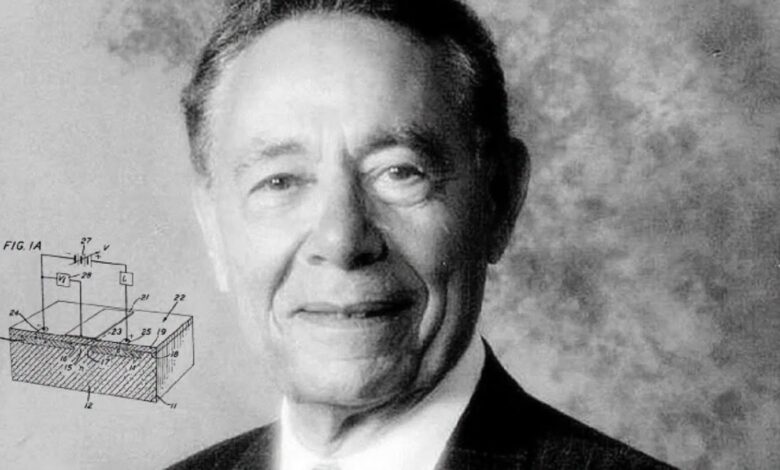
Dr. Mohamed Mohamed Atalla (Mohamed M. Atalla)
He was an Egyptian-American inventor from Port Said, born in 1924.
He graduated from Cairo University and later earned his master’s and Ph.D. degrees in Mechanical Engineering from Purdue University in the United States.
In 1959, in collaboration with scientist Dawon Kahng, he invented the MOSFET transistor, one of the most important components in the history of electronics.
This invention became the foundation of all modern electronic devices: your phone, your computer, your car, and even satellites.
What made it remarkable:
• Extremely low power consumption
• Ease of manufacturing and low cost
• The most widely manufactured transistor in history (astronomical numbers exceeding 10²²)
He worked at Bell Labs, which produced nine Nobel Prizes and inventions such as the laser, UNIX, and the C programming language.
He later became Director of Research and Development at HP.
In the 1970s, he founded Atalla Corporation, which later became Utimaco Atalla, specializing in data security and encryption.
He invented:
• Atalla Box
• The first Hardware Security Module (HSM), which is still used today in most ATM machines around the world to protect your data during transactions
• Remote PIN Verification, for securing personal identification numbers
• Internet and e-commerce security solutions (such as TriStrata Security)
This Egyptian genius is the person protecting your banking transactions every day, and the one who enabled the electronics revolution we live in.
A purely Egyptian source of pride… unfortunately, we do not hear about him often.
“People of Egypt… this is what real science looks like—not just words, but achievements that changed the face of humanity.”
I myself did not know about Mohamed Atalla until I read about him and carefully verified every piece of information I mention here.
He did not wait for fame; he built the future.
The time has come to know our history and build upon it.
Why do many people not know him today?
• His work at Bell Labs did not initially receive enough internal recognition because of his mechanical engineering background compared with physicists.
• He left early-stage electronics and focused on banking security, a field considered less “glamorous” in the media.
• In the world of technology, recognition often goes to companies and CEOs rather than scientists working behind the scenes.
• Stories of talented Egyptian immigrants need greater effort and attention in the media.
(One factual note: Mohamed Atalla is indeed regarded as a pioneering inventor of the MOSFET and banking security technologies. However, some details in the original text—such as exact Nobel associations or company lineage—may require historical verification.)