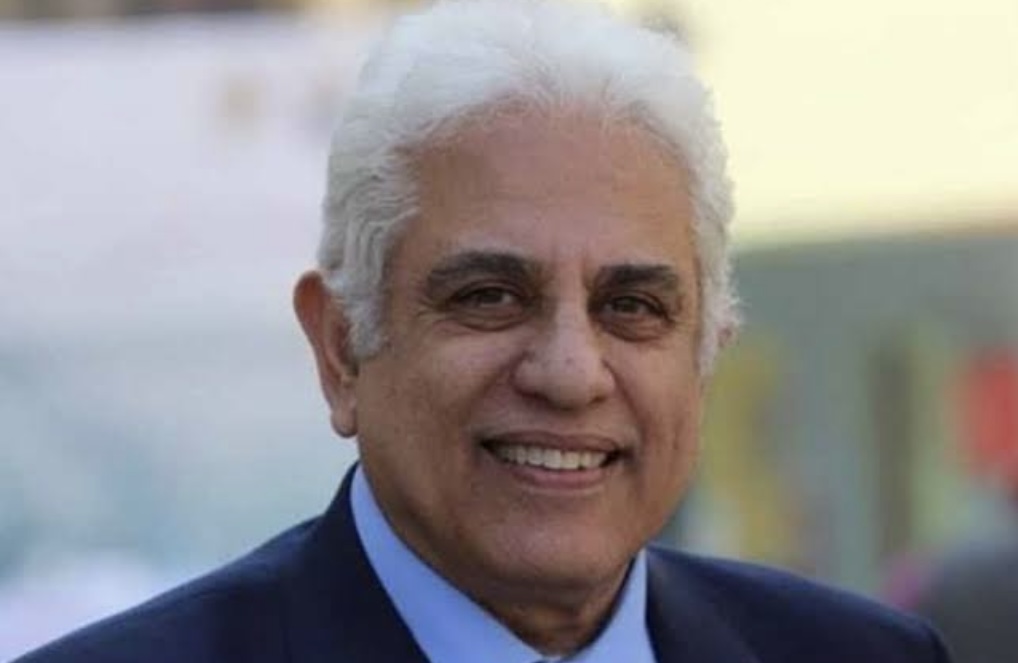
Approaching 75, Hossam Badrawi reflects on ageing, purpose, curiosity, and the need to keep pursuing dreams, loving others, and finding reasons to rise each morning.
The feeling that life has no purpose may be the hardest thing a person faces in old age.
I have thought about this for a long time, watching those around me as I approach 75, and I find it among the truest things I could say, and among the most painful.
A person can bear a great deal of physical pain and adapt to the decline of certain abilities. What is harder to bear is the feeling that nothing is asked of you anymore, that the days no longer carry a project waiting for you, a dream to pursue, someone who needs you, or new knowledge to stir your curiosity.
The real danger in old age is not only that the body weakens, but that the will to live weakens, that the past grows larger than the future, and a person turns, without noticing, from someone who lives their life into someone who merely remembers it.
In youth, we live facing forward. Then the years pass, and we accumulate a long history, and here lies a hidden trap. One may begin to live around what has happened instead of thinking about what could still happen.
There is nothing wrong with memory; it is the thread that connects our present to our past, but tragedy begins when memory becomes the sole source of meaning in life. Memory itself is not guaranteed; it is a biological function that may recede without asking our permission. If a person has built their entire existence on what once was, what remains when part of that past withdraws?
This is why I believe a person needs, at any age, something to look forward to tomorrow: an unfinished project, a book not yet read, a place not yet visited, someone to make happy, a dream not yet fulfilled.
To live, I have come to think, is simply this: to pursue, to feel, to love, to struggle, to rejoice, to share, to make mistakes and reconsider yourself, to learn something today that you did not know yesterday, and to wake to a morning because there is something ahead you want to do, not merely because you did not die in the night.
The heart may beat and the lungs may breathe, yet something essential can withdraw from within if curiosity and the ability to engage with others are lost.
I fear this may be a form of death while we are still breathing.
So I want to say something to the children, the grandchildren, and everyone living around an older person:
Be careful of the words you say with good intentions.
“Why tire yourself out?” “Enough work — rest now.”
“That’s not fitting at your age.”
“Leave it to the young.”
These phrases may be loving, but sometimes they carry a message we never intended: “Your role is over.”
An older person does not need reminding each morning that they have aged; the body does that efficiently on its own.
What they need is someone who respects their ability to choose: when to work, when to rest, whether to travel, to love, to learn, to write and argue, to begin a project without knowing whether they will live to see it finished.
One need not guarantee reaching the end of the road to have the right to begin walking it.
I think we have done the concept of rest an injustice by making it the ultimate reward at the end of life, but what if a person’s happiness lies in work, in writing, teaching, research, painting, or serving others?
Rest is a right, but not an existential purpose. Excessive rest can be the beginning of extinguishing.
The mind needs challenge to remain present, just as muscles need training to remain capable of movement.
At this threshold, I do not wish to become young again. I want to remain capable of wonder, to listen to someone in their twenties and discover they know something I do not; to read a study that overturns an idea I once held, and have the courage to say: I was wrong.
True old age, I think, does not begin when hair turns white, but when a person says, “I know enough” and closes the door to the future with their own hand.
It may seem strange to wish to remain capable of pain, too. I mean not losing my sensitivity to life, that injustice should still anger me, a grandchild’s laughter should still delight me, and my country’s future should still concern me.
The opposite of love is not always hatred; sometimes it is indifference, and I fear indifference more than I fear pain.
Whoever loves still has something to lose. Whoever dreams still has a future.
Age gives no monopoly on wisdom.
Experience can turn into arrogance, and memory into the belief that the past was always better. So I want to trust my experience without worshipping it, and to advise my children while leaving them the right to disagree with me.
Perhaps one of the best gifts of age is to become a bridge between generations, not a guard at the gate of the past.
No one knows how many years remain to them, at any age. However, I know how I want to live mine: capable of love and of pain, learning what is new, present in my family’s life rather than merely a picture in its history, and still trying, as long as I can, to make a difference in my country — even a smaller one than before.
Value does not always lie in the size of the impact, but in the persistence of the desire to make it.
Every morning, whatever our age, is worth one small question: what is worth rising for today?
The answer may be a page written, a book read, a grandchild heard, a tree planted whose shade we may never sit in. It does not matter. What matters is that there remains a tomorrow within us.
Life is not measured only by the years we have crossed, but by how much desire remains in us to keep crossing. I do not ask life to return my youth. I ask for something more beautiful: to keep my curiosity, my capacity for love, my courage to change, and my desire to make a difference.
For as long as a person still has something to pursue, someone to love, and a cause worth a stand, they have not yet become merely a memory.
Life is beautiful and deserves more than that we simply remain in it; it deserves that we live it and feel it until the very end of the road.