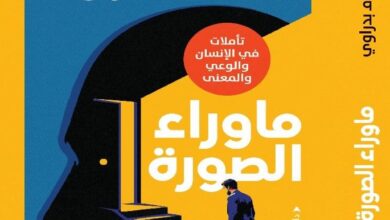
After writing my article Let’s Live, I remembered this book and returned to it, after a dear friend reminded me of it.
There is a question that visits most of us as we grow older, perhaps more often than we care to admit:
What if?
What if I had chosen a different field of study?
What if I had married someone else?
What if I had not left that job?
What if I had traveled when I had the chance?
What if I had said “yes” instead of “no,” or “no” when I said “yes”?
Two small words, yet they can open a door to an endless world of possibilities.
As I reread The Midnight Library by British writer Matt Haig, I realized that the entire novel is built, in one way or another, around those two words.
But to me, it is not really a novel about possibilities as much as it is a novel about regret—the strange human feeling that sometimes makes us suffer not because of what actually happened to us, but because of what we imagine might have happened had we chosen another path.
And that, I think, is where the brilliance of the idea lies.
Who Is Matt Haig?
Matt Haig is a contemporary British writer and novelist who has written fiction, essays, and books for children. Yet a significant part of his work has revolved around questions of anxiety, depression, loneliness, and the meaning of staying alive.
Perhaps his best-known book, alongside The Midnight Library, is Reasons to Stay Alive. Its title alone reveals much about the intellectual world that concerns him: Why do we continue living when life itself can sometimes seem meaningless?
For that reason, The Midnight Library, published in 2020, does not strike me as merely an ingenious fictional idea. Rather, it feels like an extension of a question that has pursued its author:
What makes life worth living?
The Story
The protagonist of the novel is Nora Seed, a woman who reaches a moment in her life when she feels that everything has failed.
Dreams have not been fulfilled. Relationships have ended. Opportunities have been lost. There are people she believes she has disappointed.
When she looks back, she does not see her life as we normally might—as a mixture of successes and failures—but as a long sequence of mistakes.
She reaches a point where she loses the desire to continue.
But in the mysterious space between life and death, she finds herself in an infinite library.
The Midnight Library.
Its shelves contain an infinite number of books, but these books do not tell the stories of other people.
They tell the stories of her lives.
Each book represents a life she could have lived had she made a different decision at some point.
If she had continued swimming.
If she had chosen another career.
If she had stayed with someone she left.
If she had moved to another country.
If she had pursued a dream she abandoned.
Nora is given something no human being is given in reality: the opportunity to enter these lives and discover what would have happened if she had chosen another path.
And that is where the real novel begins.
It is not so much a journey through parallel universes as it is a journey into the human psyche.
We Know Only the Road We Took
While reading, I stopped at an idea that I find deeper than the events of the novel themselves.
We judge the road we actually took with almost complete knowledge.
We know its failures, disappointments, pain, and costs.
But when we imagine the road we did not take, we usually imagine it through its most beautiful possibilities.
And this is where we can be profoundly unfair to ourselves.
We compare a complete reality with an incomplete fantasy.
We say:
If I had married that person, I would have been happier.
If I had accepted that job, I would have been more successful.
If I had traveled, I would have been wealthier.
But we do not know the other spouse in everyday life, the illness that might have come, the loneliness that might have accompanied success, or the loss hidden behind wealth.
We see the gains of the alternative life, but not its costs.
And this is why regret, although sometimes necessary for learning, can become a cruel mental deception:
We put our real life on trial against an imaginary life that was never tested.
The Tragedy—and the Privilege—of Being Human
Here I arrived at an idea that I believe lies at the heart of the novel for me:
The tragedy of being human is not that we live only one life, but that we can imagine thousands of lives we never lived.
An animal lives its life.
A human being lives a life while simultaneously imagining the lives he or she could have lived.
This is one of the sources of our brilliance, but also one of the sources of our suffering.
The imagination that creates art, science, and civilization is the same imagination capable of creating regret.
The consciousness that allows us to envision the future also allows us to reconstruct the past into something more beautiful than it ever could have been.
Kierkegaard and the Vertigo of Possibility
This led me to the Danish philosopher Søren Kierkegaard, who made anxiety a fundamental part of understanding human freedom.
For Kierkegaard, anxiety does not arise merely from fear of what will happen. It also arises from realizing that we could have chosen something else.
The more possibilities we have, the greater our freedom—but with it comes greater anxiety.
It is as if we stand before countless open doors, without knowing which one leads to the life we want.
The Midnight Library turns this philosophical idea into a physical place.
Endless shelves.
Endless books.
Endless lives.
At first, it seems like a wonderful dream.
But then the question becomes:
Is absolute freedom really a blessing?
Or does part of life’s value come precisely from the fact that we cannot live every possibility?
Sartre and the Burden of Choice
Then Jean-Paul Sartre places an even greater responsibility upon us.
In existentialist philosophy, a human being is not merely what has happened to them, but also what they choose to do with what has happened.
Freedom is not always a comfortable gift.
It is a burden.
Because choice means responsibility.
And whenever we say that circumstances alone created our lives, we may sometimes be trying to escape a more difficult truth: that, to varying degrees, we participated in creating them.
But I disagree with an extreme interpretation of this idea.
Human beings are not absolutely free.
We did not choose our birth, our families, our genes, our country, or our time. Economic, social, and political circumstances can impose very real limits upon us.
Yet within those limits, there remains a space for choice.
And perhaps human dignity exists precisely within that space.
Nietzsche and the Hardest Question
Nietzsche takes us to an even more demanding—and, at the same time, beautiful—test: the idea of eternal recurrence.
Imagine that someone tells you that you will live your exact life again, in every detail, with all its joys, mistakes, and suffering—and then live it again forever.
How would you respond?
Would you consider it a curse?
Or could you say yes to this life exactly as it was?
I do not read Nietzsche’s idea here as a physical theory about time, but as a philosophical test of our ability to affirm life.
And suddenly the question becomes entirely different from Nora’s question at the beginning of the novel.
Instead of:
Which other life should I have lived?
The question becomes:
Can I accept the life I have lived—and then continue creating what remains of it?
To me, that is the more mature question.
Is There Such a Thing as a Perfect Life?
With every life Nora experiences, we discover something simple and profound at the same time:
There is no path without loss.
The life in which you achieve success may be the life in which you lose something else.
The life in which you find love may contain a pain you never expected.
A choice that looks perfect from the outside may create an entire chain of consequences no one could have anticipated.
And here I believe the novel comes close to an important human truth:
Perhaps there is no perfect life.
Not because life is bad, but because life is complex.
Every choice is, at the same time, a surrender of another choice.
Every great “yes” in our lives contains within it a number of “no’s.”
And if we could live every possible life, we might lose the very meaning of choosing.
It is the limitation of life that gives it value.
The Limits of Life Are What Give It Meaning
Here I would take the novel one step further.
We usually regard the limitations of life as a tragedy.
We have one lifetime.
One body.
Limited time.
And we cannot go back.
But what if this very limitation is what gives life its value?
If we had an infinite number of lives ahead of us, we could postpone everything.
I will love you in the next life.
I will apologize in another life.
I will write the book later.
I will travel in another version of myself.
I will start the project in a parallel universe.
But because we have only one life, the present moment becomes valuable.
The words “I love you” matter because they may not be repeated.
An apology becomes necessary because time does not turn back.
A decision matters because we pay a price for it.
Mortality does not merely take meaning away from life; perhaps it is what gives life much of its meaning.
Acceptance Is Not Surrender
The book can easily be interpreted as an invitation to accept the life we have.
But I do not like that interpretation if acceptance means surrender.
I do not want a person to say: This is my life, and that is the end of it.
Coming to terms with the past is one thing. Giving up on shaping the future is another.
I can reconcile myself with my past choices while deciding to change my life tomorrow.
I can accept my mistakes without repeating them.
I can appreciate what I have achieved without losing the desire to achieve more.
So I believe the deeper message is not:
Be satisfied with what you have.
It is:
Do not allow what you failed to do yesterday to prevent you from doing what you still can do tomorrow.
And As We Grow Older…
Perhaps this is what touched me most personally in the novel.
When we are young, we ask:
Which life will I choose?
As we grow older, the question may become:
Did I choose the right life?
I believe both questions are incomplete.
No one knows at the beginning of the journey where it will end, and no one can return at the end to test the other roads.
Perhaps the wiser question is:
What will I do with the life that is still ahead of me?
A person is not merely their résumé.
Not the jobs they held, the positions they reached, the successes they achieved, or even the mistakes they made.
The self is not a museum of the past.
The self is an ongoing project for as long as life continues.
And this is where The Midnight Library connected, for me, with an idea that has occupied my thoughts a great deal lately:
To live is to strive.
To feel.
To love.
To learn.
To discover.
To change your mind.
To begin a new project.
To risk failing again if failure is the price of trying.
And to wake up in the morning with something in your mind that you have not finished yet.
The real danger is not that you chose the wrong path twenty or forty years ago.
The danger is convincing yourself today that there are no paths left.
The Library Within Each of Us
The Midnight Library in the novel is a fictional place between life and death.
But I believe each of us has our own Midnight Library.
It is called memory.
On its shelves are people we loved.
Opportunities we lost.
Doors we closed.
Words we said and wish we had never said.
Words we never said and wish we had.
Dreams that came true and others that remained on the shelf.
We can spend the rest of our lives wandering through this library, pulling out one book after another and asking:
What if?
But life is not inside the library.
Life is outside it.
Wisdom is not about erasing regret. Regret is part of consciousness, and it can be a great teacher.
But wisdom means not allowing regret to become a prison.
We should visit the past to learn from it, not to live there.
And I Closed the Book…
When I closed The Midnight Library, I felt that the novel had begun with death in order to speak about life.
It began with despair in order to arrive at possibility.
It began with the question:
Which life should I have lived?
But it left me facing another question, one I consider more important:
What will I do with the life that is still ahead of me?
Perhaps we did not choose everything that happened to us.
Perhaps we made mistakes in some of the things we chose.
Perhaps, if we could go back in time, we would choose differently.
But time does not go backward.
And perhaps the beauty of life is not in living every possibility, but in giving the possibility that became our life as much meaning as we possibly can.
We do not possess a magical library that allows us to experience the lives we never lived.
But as long as there is another morning, curiosity that has not gone out, a person we can still love, an idea we can still write down, work we have not yet completed, and a dream—small or great—that we have not yet abandoned…
there is still an open book.
And there is still a page that has not been written.
And as long as we can write the next page, the question is not:
Why didn’t I live another life?
It is:
How can I live this life… all the way to the final page?