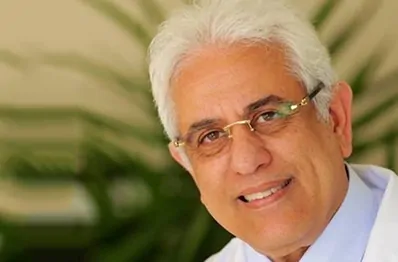
My friend Dr. Osama Hamdy, a professor at Harvard University, wrote a painful article entitled, “Why Did They Succeed? And Why Are We Driving the Final Nail?” In it, he compared, through numbers, the path to becoming a physician in the United States with the path followed here.
………
There, students complete four years of undergraduate preparation before knocking on the door of medical school. Then comes a rigorous aptitude examination, followed by an essay explaining why they have chosen to place human lives in their hands. Then they sit for an interview with an experienced professor who reads beyond the papers. After all of that, only four out of every ten applicants who meet the basic requirements are admitted.
Here, there is one shortened path: the secondary-school final score, and nothing else.
The figures he cited speak for themselves.
A country of 340 million people admits between 16,000 and 24,000 students to medical schools, while a country of 115 million admits between 25,000 and 37,000.
There are hundreds of university and teaching hospitals, and 1,700 hospitals offering programs for graduate medical training. Here, there are only 120, crowded with graduates, international students, and students from private universities.
And the result, as he described it in his candid words, is a graduate produced through a process of “boiling eggs”—fast, superficial, and without sufficient preparation.
Dr. Osama Hamdy’s original post
I agree with every word he wrote, and I credit him with opening the door to this discussion. But I want to step out of the medical school and look at the whole house, because what he describes is not a flaw confined to a college or a ministry. It is a symptom of a way of thinking—a method of judging things—that extends from education to healthcare, urban development, the economy, and culture, and even into people’s own sense of themselves.
It is a way of thinking that worships quantity while neglecting quality.
The Ruler and the Scale
There are two ways of measuring things.
There is the ruler, which measures length, width, and number.
And there is the scale, which weighs value, quality, and impact.
The ruler is easy. All you have to do is count.
The scale is difficult. It requires a standard—and someone with the courage to admit that the pan is light.
When the mind that makes decisions chooses the ruler alone, the question is always:
How many?
How many universities have we opened? How many hospitals? How many kilometers of roads? How many housing units? How many graduates?
But the harder questions are rarely asked:
What have we actually achieved?
Did the student learn how to think?
Was the patient cured?
Does the road actually reach where people need to go?
Has the graduate become capable of competing in a world that recognizes nothing but competence?
Quantity is seductive because it can be photographed, announced at conferences, written on banners, and measured within a single administrative cycle.
Quality is slow. It often takes years to become visible, and its success is frequently attributed to someone other than the person who planted its seeds.
And so those seeking achievements that can be seen and counted naturally reach for the ruler, leaving the scale to whoever comes after them.
When the Measure Becomes the Goal
In management science, there is a principle known as Goodhart’s Law: when a measure becomes a target, it ceases to be a good measure.
The number of graduates was once an indicator of the expansion of education. When it became the goal itself, we began producing graduates without necessarily providing them with an education.
The number of hospital beds was once an indicator of healthcare capacity. When it became the goal, buildings filled up while skilled doctors, trained nurses, and available medicines remained in short supply.
A school’s success rate was once an indication of educational quality. When it became the target, success rates rose, understanding declined, and knowledge itself ceased to be the objective.
And so the numbers do not lie.
They simply tell the truth about the wrong thing.
They tell us the truth about size, while remaining silent about everything else.
The Greater Danger Is When the Number Enters the Soul
What concerns me more than politics itself is what this does to people’s minds and hearts.
When society hears, year after year, celebrations of the biggest, the longest, the highest, and the most numerous, these standards gradually move from public discourse into the consciousness of the family, and then into the individual’s sense of value—until they become the measure of life itself.
A father asks his son:
“What score did you get?”
But he does not ask:
“What did you understand?”
A mother boasts about her daughter’s grades rather than what her daughter loves or what she is good at.
A wedding is measured by the number of guests.
A house by its square meters.
A man by what he owns.
A writer by the number of followers he has on social media.
An idea by the number of likes it receives.
The same mentality can even extend into religious practice. Faith becomes measured by the number of prayers, Qur’an recitations, and outward displays of religiosity, by the volume of loudspeakers calling people to prayer, rather than by honesty, integrity, and the way a person treats others.
This is where the real danger lies:
A culture of counting and loudness can evolve from a policy that can be changed by a decision into a social creed that may take an entire generation to change.
Policies can be amended.
But when values become corrupted, they are inherited.
“Even If the Abundance of Evil Impresses You”
There is a verse in the Qur’an that, to me, captures the entire issue:
“Say: The impure and the pure are not equal, even if the abundance of evil impresses you.”
— Qur’an 5:100
Abundance is impressive. That is human nature.
But abundance does not make unequal things equal.
There is also a famous hadith describing a community that has become large in number:
“You will indeed be many at that time, but you will be like the froth carried by a flood.”
A multitude without weight—carried by the current rather than capable of carrying anything itself.
It is no coincidence that small countries such as Singapore, Finland, and Switzerland have established their place in the world through the quality of their people rather than their numbers, through what their people are capable of mastering rather than what they are capable of accumulating.
So, What Should We Do?
I am not calling for us to despise quantity.
A country the size of Egypt needs large numbers of schools, hospitals, and roads.
But I am calling for quantity to follow quality, rather than replace it.
Before announcing the number of any project, we should ask:
What is its purpose?
How will we know whether it has achieved that purpose?
And who will be held accountable if it does not?
We should measure education by what graduates are capable of doing, not by the number of graduates.
We should measure healthcare by recovery rates and by people’s confidence in their hospitals, not simply by the number of hospital beds.
We should ask our government about rights:
Have those rights actually reached the citizen—or is everything merely rhetoric for self-congratulation, with no reality behind it?
Every institution should have an independent scale—one that is not afraid to say when the pan is light.
And before all of that, we must restore, in our homes, our schools, and our pulpits, the question that has gone missing:
Not “How many?”
But “What?” “How?” and “Why?”
Dr. Osama Hamdy concluded his article by saying that the foundation of healthcare is quality.
I would add one more thought:
A nation that counts without weighing may one day wake up to discover that it has plenty of everything—and that none of it actually works.