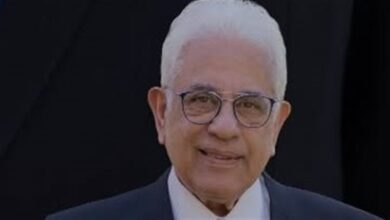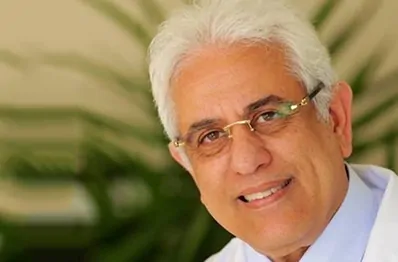
I recently took part in a televised discussion about the future of Egypt’s presidency, following President Abdel Fattah el-Sisi’s announcement that he did not intend to amend the Constitution to extend his presidential tenure beyond 2030 and that he would abide by the constitutionally prescribed term limits.
What caught my attention was the scale of the public acclaim surrounding this announcement, as though respecting the Constitution had become an extraordinary achievement worthy of celebration rather than a natural obligation incumbent upon anyone entrusted with public office, foremost among them the President of the Republic.
I say this without diminishing the importance of the announcement. On the contrary, I recognize its significance while remaining surprised that adherence to constitutional rules should itself become cause for celebration.
The Constitution is not a gift from a ruler to the people. It is the nation’s social contract, defining the limits of authority, safeguarding rights, and guaranteeing the peaceful transfer of power. It is the ultimate reference to which we turn when we disagree, not merely when we agree.
Respect for the Constitution should never come as a surprise. Its violation, rather, should be unthinkable.
During the discussion, the conversation shifted to the President’s proposal to prepare and train qualified individuals capable of assuming the presidency. The proposal involved holders of advanced academic degrees participating in a 30-month training program at the Military Academy.
My response was clear: preparing future leaders is commendable, and training in state affairs is essential. However, we must not confuse preparing citizens to assume public responsibility with requiring them to pass through a particular institution before they can exercise their constitutional right to run for office.
Article 141 of the Egyptian Constitution establishes the conditions for candidacy for the presidency and refers to the law for additional requirements within its constitutional framework. The existing constitutional requirements do not include holding a doctorate or completing prior military training.
There is a fundamental difference between offering an optional leadership development program and turning that program into a mandatory gateway to presidential candidacy.
In a democratic state, the president is not appointed after passing an examination designed by the incumbent authorities. The president is chosen by the people in a free election among candidates who meet the constitutional and legal requirements.
A candidate might be a distinguished scholar holding the highest academic qualifications, a politician who has gained experience through public service, a successful economist, or a community leader with a compelling vision and the ability to persuade others.
A doctorate demonstrates specialized knowledge and research capability, but it is not a certificate of political wisdom, integrity, or the ability to manage differences and build national consensus.
The Military Academy is an institution of considerable standing and importance, but political life extends far beyond any single institution, whether civilian or military. The state cannot be reduced to one institution, however important it may be. The nation belongs to all its citizens.
Then came a question that opened the door to a much broader discussion than I had anticipated.
The interviewer asked me: Would you accept a Christian serving as Egypt’s prime minister?
My answer was simple: Why not?
I went further, explaining that the requirements for presidential candidacy themselves make no distinction between Muslims and Christians, or between men and women.
What matters is meeting the constitutional and legal requirements, possessing the necessary competence and leadership abilities, and securing public support through free and fair elections.
I was not advancing a religious argument, nor was I advocating for the selection of someone because of their faith or gender. I was speaking about a clear constitutional principle: equality in citizenship.
Yet the reactions that followed the interview surprised me even more than the question itself.
I encountered people who insisted, with absolute confidence, that a woman could not be permitted to govern Egypt and that a Christian could never become president. Some even cited the Constitution as though it explicitly prohibited such possibilities.
At that moment, I realized that we were confronting more than a difference of opinion. We were facing a deeper problem in understanding the relationship between religion and the state, citizenship and political authority, and constitutional text and social culture.
What Does the Constitution Actually Say?
Article 141 of the Egyptian Constitution sets out the requirements for presidential candidacy. These include Egyptian nationality, Egyptian parents, the enjoyment of civil and political rights, completion of military service or a lawful exemption from it, and a minimum age of 40, alongside other requirements established by law.
The article does not require a candidate to be Muslim or male.
Article 53 establishes equality before the law and prohibits discrimination on the grounds of religion, belief, or sex. Article 11 affirms the state’s commitment to achieving equality between women and men in civil, political, and other rights.
Article 2, which identifies Islam as the religion of the state and the principles of Islamic Sharia as the principal source of legislation, does not stipulate that the President of the Republic must be Muslim.
Here, we must distinguish between the constitutional identity of the state and the political rights of the citizens who belong to it.
Egypt, with its history, civilization, and human diversity, does not belong to one religious community at the expense of another, nor to one gender at the expense of the other.
If we believe Egyptians are equal in their obligations, how can we accept that some should enjoy fewer rights than others?
Do we expect Christian citizens to pay taxes, obey the law, contribute to building the nation, and defend it, only to tell them that an unwritten ceiling exists beyond which they cannot advance, regardless of their qualifications?
And do we celebrate Egyptian women as doctors, judges, ministers, scientists, and university professors, only to retreat when it comes to the highest political office, as though their leadership abilities suddenly cease at the doors of the presidency?
Citizenship that stops at certain boundaries is not full citizenship. It is conditional equality.
This brings us to a philosophical question that extends beyond legal texts.
Is democracy simply the rule of the majority, or is it also a system that protects the minority’s right to participate, compete, and enjoy equal opportunities?
In any society, the majority may belong to a particular religion, and its culture and values will naturally influence public life. But democracy does not mean that the identity of the majority becomes a prerequisite for monopolizing political power.
The majority chooses who governs, but it has no right to strip the minority of its right to stand for election.
There is an enormous difference between a voter rejecting a candidate because they disagree with the candidate’s platform or question their competence, and believing that the candidate has no right to run in the first place because of their religion or gender.
The first is an exercise of democratic choice. The second is a denial of the principle of equality upon which a constitutional state is founded.
I am not calling on Egyptians to elect a Christian because that person is Christian, or a woman because she is a woman. Nor am I calling on them to elect a Muslim because he is Muslim, or a man because he is a man.
I am advocating something simpler and more fundamental: that the criteria for choosing a president should be competence, integrity, vision, and the ability to govern, and that the ballot box should determine the outcome between competing candidates, rather than preconceived judgments about their identities.
The Right to Run for Office Is Not a Guarantee of Victory
Here, we must distinguish between the right to run for office and the right to win.
The former is a constitutional and legal right belonging to every citizen who meets the eligibility requirements. No one should be deprived of it because of their religion or gender.
The latter, however, is not something anyone possesses in advance. It is not conferred by an academic degree, an institution, or religious affiliation. It is determined by the will of the electorate in free and fair elections.
A Christian citizen or a woman may run for office, and voters may choose someone else. That is their right. But no one has the right to prevent either from competing in the first place.
The people’s right to choose is only complete when all legally qualified candidates enjoy an equal right to present themselves for public consideration.
But Is Constitutional Permission Enough?
Of course not.
There is a gap between legal text and social awareness, between rights declared on paper and the ability to exercise them in practice.
A constitution may open the door, while social culture closes it.
The law may grant a right, while the political environment fails to provide equal opportunities to exercise it.
This is why building democracy involves far more than simply writing a good constitution.
Democracy requires genuine political parties, independent institutions, a free media, open political competition, and a society that learns to respect differences.
Before all else, it requires an education system that teaches future generations that the nation is not the exclusive domain of people who share one opinion, one faith, or one gender. Rather, it is built upon the diversity of its citizens and the complementary strengths they bring.
Perhaps the most troubling aspect of the reactions to the interview was not that some people opposed the idea of a Christian or a woman becoming president. Such preferences fall within the realm of personal choice and can legitimately be discussed. The more troubling issue was their belief that this opposition was explicitly enshrined in the Constitution.
This is a moment in which what society has grown accustomed to becomes confused with what the law actually establishes. Prevailing social attitudes are transformed, in the minds of some, into constitutional provisions that simply do not exist.
Here lies the responsibility of intellectuals, politicians, educators, and the media: not to impose new convictions on people, but to help them distinguish constitutional fact from personal opinion, and the right to choose from the desire to exclude others from the choice.
Returning to Where We Began
I welcomed the President’s reaffirmation that he would respect the constitutionally prescribed term and would not seek to extend it. Yet I hope we will reach a day when respecting the Constitution no longer requires an announcement or a celebration, because it has become a natural part of our political culture.
I equally hope we will reach a day when discussing a woman’s or a Christian citizen’s right to run for president no longer provokes such astonishment, because equality has become a natural part of our social culture.
The Constitution is not merely a document regulating the transfer of power. It expresses how a nation understands itself and defines the relationship among its citizens.
If we believe that the people are the source of all authority, we must also believe that every citizen who meets the eligibility requirements has the right to present themselves to the people as a candidate.
If we believe in the peaceful transfer of power, we should not confine that process to a narrow circle defined by religious identity, gender, or the approval of a particular institution.
Respect for the Constitution is not complete when a ruler merely abides by the limits of their term. It is complete when society respects the rights of all its citizens, including those whom it might never imagine choosing.
The goal is not to elect a woman or a Christian as president.
The goal is to ensure that neither is prevented from aspiring to the office, standing for election, and submitting their candidacy, like anyone else, to the will of the people.
A nation in which obligations are equal must also be a nation in which rights are equal.
And a Constitution that we respect when power changes hands must also be respected when determining who has the right to attain it.