Developing Religious Discourse
“Changing Words or Renewing Understanding”
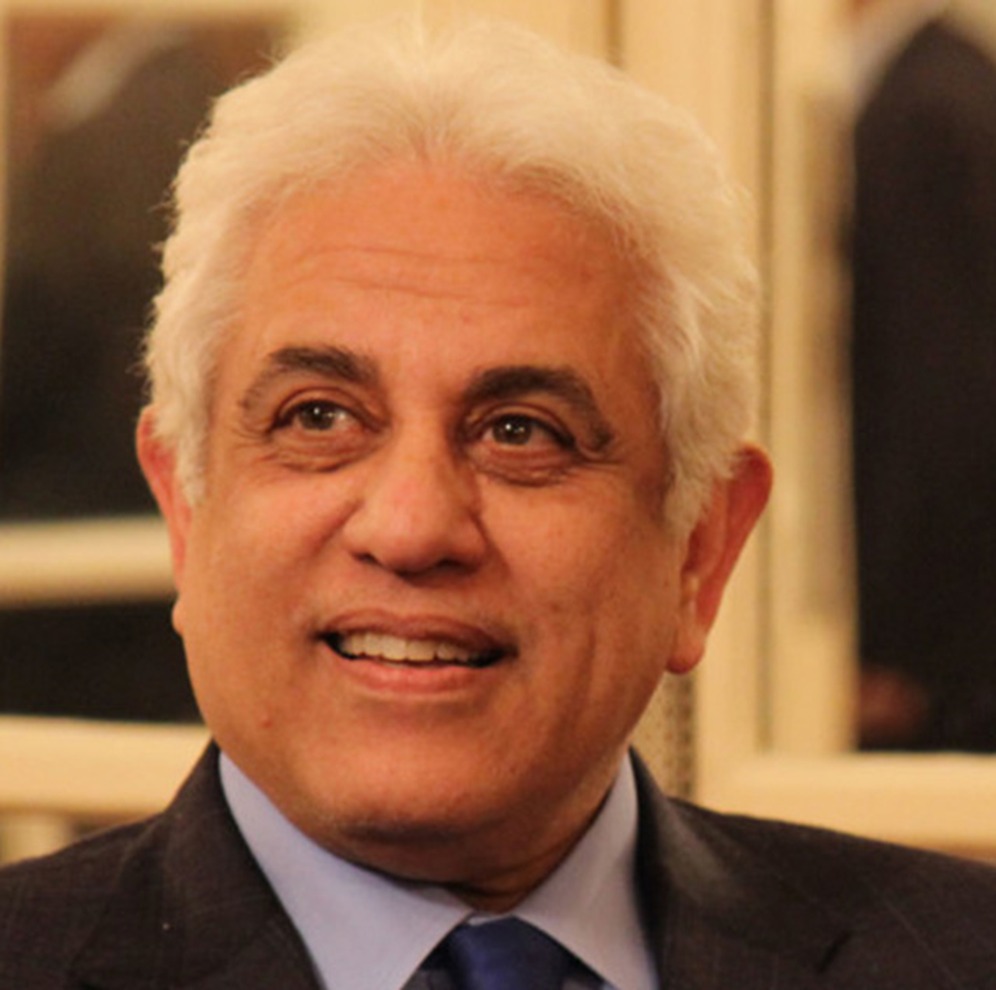
By Hossam Badrawi
The issue of “developing and renewing religious discourse” is constantly raised in the media, as well as in political and cultural debates. Yet it is often reduced to decorative words or broad appeals that never touch the core of the problem. The truth is that discourse is nothing more than a reflection of understanding. If the understanding itself does not change, then talk of renewing discourse is meaningless. What we truly face is a much deeper question: how can we rebuild our very understanding of religion?
The Problem Cannot Be Solved by Those Who Created It
Einstein’s famous saying is apt here: “You cannot solve a problem with the same mindset that created it.” This summarizes our situation precisely. Those who, for decades, have contributed to shaping a rigid image of religion and cementing certain interpretations as “untouchable absolutes” are now the very same people being asked to renew religious discourse. How can a solution come from within the same framework that created the impasse?
Europe could never have escaped the dominance of the Church, its myths, and its political control during the medieval dark ages without the role of its civil philosophers.
Thus, the issue is not about delivery style or improving the language of preachers—especially when their sermons are written by the same forces that once steered society toward extremist thought. The issue lies in the structure of thinking itself, in the core understanding upon which discourse is built.
In my view, religious discourse itself is not the real problem. Discourse is merely the outer shell reflecting the essence within. If that essence is stagnant, the discourse will inevitably become a repetitive recycling of the old. The real problem lies in the ideas presented as unquestionable absolutes, raised above all critique or review.
Many religious figures are convinced that even thinking about these matters is an act of heresy or an assault on the sacred.
But the confusion lies in conflating the sacred text itself—which we all respect—with human and historical interpretations produced in past centuries under very different circumstances. This conflation makes any attempt to question or reflect appear as an attack on religion, when in truth it is a search for a deeper, more consistent understanding that aligns with both reason and conscience.
An Apparent Contradiction Between the Philosophy of Religion and the Philosophy of Science
The essence of faith in most religions rests on belief in what cannot be directly proven: an act of trust and submission to what lies beyond the senses and the intellect. Science and modern philosophy of knowledge, however, rest on the opposite foundation: nothing is accepted without proof, experiment, and verifiable evidence.
Thus, it seems we are planting in the minds of our children two contradictory philosophies: one that calls for submission and obedience without proof, and another that insists on rejecting anything without evidence. This apparent contradiction cannot be ignored or concealed—it demands honest confrontation.
Unwittingly, we instill in our children a kind of intellectual stammering, which, at critical moments, can drive them toward extreme choices between one side and the other.
Yet the evolution of human knowledge since the 17th century has redrawn the boundaries of this contradiction. As scientific discovery expanded, the space attributed to “the unseen” or “pure faith” shrank. What was once explained as a direct divine act—natural phenomena, disease, the origins of the universe—is now explained through physics, biology, and chemistry. Thus, the realm of faith gradually contracted, now centered mainly on questions of what lies beyond death and metaphysical dimensions beyond the reach of empirical science.
Ironically, science itself did not eliminate the need for faith; rather, it opened new doors for rethinking it. Major questions—such as the existence of a creator, or the precise fine-tuning of universal laws—are no longer posed apart from scientific evidence. Cosmology and modern physics suggest that the universe is ordered according to delicate constants, and that the probability of such order arising by chance is infinitesimal. Many scientists view this as “implicit evidence” of a creative force or higher cosmic intelligence.
Thus, faith is no longer in absolute conflict with science. Instead, they can complement each other: science explains the mechanisms of existence, while faith grants those mechanisms purpose and meaning, preserving space for what lies beyond empirical exploration—death and the metaphysical.
From Superficial Reform to Fundamental Transformation
If discourse is a reflection of thought, then renewing discourse requires first and foremost renewing religious understanding itself.
Religious understanding must be rebuilt on a foundation of openness to reason and intellectual freedom.
What is required is not the demolition of religious foundations, but the ability to distinguish between the sacred text and human interpretation, between the essence of religion and the cultural heritage that carried it through history.
We must recognize that the only constants in religion are its great values: morality, justice, mercy, and human dignity. Methods of interpretation and application, however, are by nature variable—shaped by time and place.
There is no benefit in dressing up discourse with more modern words or flashy slogans if the underlying understanding remains unchanged. True reform lies in making religion a force of liberation rather than repression, a source of thought rather than a tool to silence it.
When the essence of understanding develops, a new discourse arises naturally:
- A discourse that reassures the mind rather than collides with it.
- A discourse that opens doors to questions instead of closing them.
- A discourse that transforms religion into a driving force for life, rather than a chain that restricts it.
Discourse is the language; understanding is the structure that speaks through that language. Changing the language alone is not enough if the structure remains the same.
Conclusion
The renewal of religious discourse is not a linguistic or media project, but a deeply civilizational one. It is a call to reconsider the very concept of religion within our collective consciousness—so that it becomes more consistent with reason, science, and humanity.
Only then will a new discourse be born: genuine, vibrant, rational, humane, contemporary, and able to speak to both the minds and hearts of people in their own time.