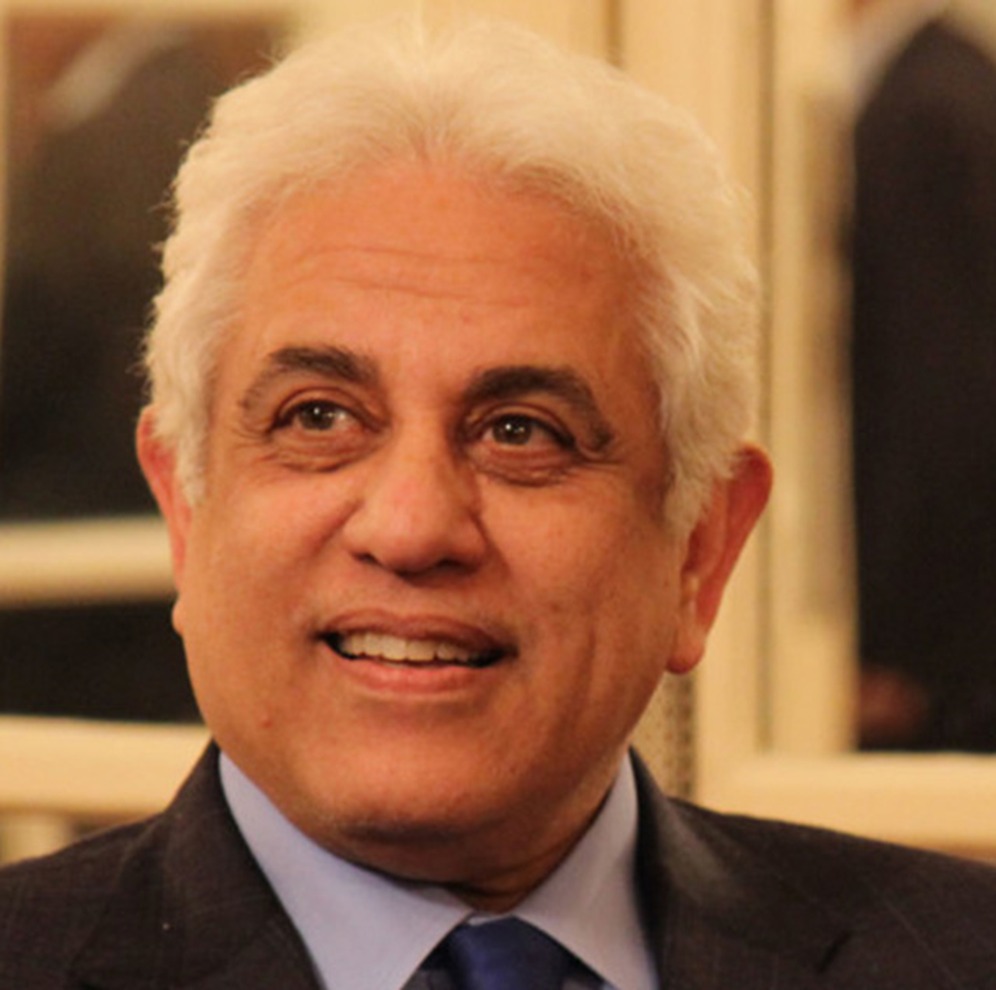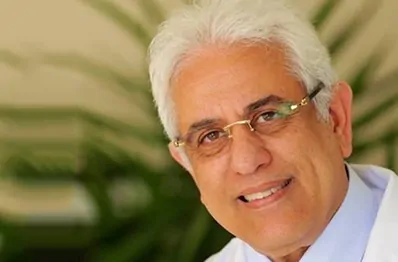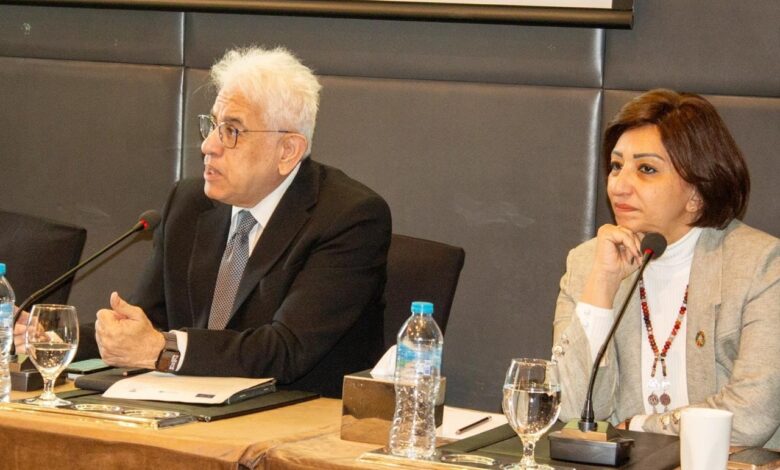
At the invitation of the National Council for Human Rights, the United Nations Human Rights Office, and the European Union, and under the title “Towards an Integrated National Framework for Equality,” on Wednesday, February 4, 2026, at the Fairmont Nile City Hotel, Dr. Hossam Badrawi participated as the keynote speaker in the activities of the third session.
Dr. Badrawi’s speech was titled “Combating Discrimination in Egypt,”
delivered before the National Council for Human Rights Conference in cooperation with the United Nations Human Rights Office and the European Union.
Ladies and Gentlemen, friends and colleagues,
I am honored today to speak about an issue that touches the very essence of the modern state and lies at the heart of the concept of citizenship: combating discrimination—not merely as a moral slogan, but as a constitutional, legal, and societal obligation.
My intervention is organized around seven key axes:
-
Discrimination: Why is it a matter of state?
-
The constitutional and legal framework in Egypt
-
The distinction between law and culture
-
Societal dialogue as a necessary space
-
The role of relevant institutions
-
Persons with disabilities as a case study
-
Towards an integrated vision
First: Discrimination—Why Is It a Matter of State?
Discrimination, in any society, is not merely an injustice against an individual or a group; it is a weakening of the very idea of the nation itself.
A strong state is not measured only by its ability to enforce the law, but by its ability to guarantee equality before the law and to enable all its citizens to feel that they are equal in rights, opportunities, and human dignity.
Any discrimination based on religion, gender, origin, color, disability, or any other reason is a direct violation of the principle of citizenship and a permanent source of tension within society.
Second: The Constitutional and Legal Framework in Egypt
It is important to emphasize that the Egyptian Constitution has laid a clear foundation for combating discrimination. It explicitly affirms:
-
The principle of equality among citizens
-
The criminalization of discrimination
-
The commitment to equal opportunities
It also obligates the state to establish an independent commission to combat discrimination—a progressive provision reflecting legislative awareness that this issue cannot be resolved by good intentions alone, but through institutions.
In addition, the legal framework includes:
-
Laws criminalizing certain forms of discrimination
-
Provisions protecting women
-
Provisions protecting persons with disabilities
-
Guarantees for freedom of belief and creed
However, we must acknowledge clearly and honestly that the real challenge lies not in the texts themselves, but in implementation and in the societal culture accompanying them.
Third: Discrimination Between Law and Culture
The law can prohibit, but culture is what transforms.
Many forms of discrimination in our societies are:
-
Unwritten and unannounced
-
Yet deeply rooted in customs, language, and mental images
Therefore, combating discrimination is not limited to issuing laws; it must also include education, media, religious discourse, and daily practice in schools, workplaces, and the street.
Fourth: Societal Dialogue as a Necessary Space
Here emerges the importance of national and societal dialogue as a safe and organized space to address controversial issues, including discrimination.
National dialogue is not merely a political debate; it is training in listening, respecting differences, and acknowledging real problems without denial or accusation.
Specifically, combating discrimination requires:
-
Calm dialogue that neither accuses society nor absolves it entirely
-
An effort to understand the roots of the problem and agree on practical solutions
Fifth: The Role of Relevant Institutions
Combating discrimination is the responsibility of an integrated system, including:
-
Legislative institutions
-
Completing the legal framework
-
Activating the Anti-Discrimination Commission
-
-
Executive institutions
-
Applying laws without discrimination
-
Ensuring equal opportunities in employment and services
-
-
Judicial institutions
-
Guaranteeing justice
-
Speedy adjudication of discrimination cases
-
-
The National Council for Human Rights
-
Monitoring
-
Awareness-raising
-
Submitting recommendations
-
-
Civil society
-
Awareness and bridge-building
-
Representing the groups most vulnerable to discrimination
-
-
Media and education
-
Changing stereotypes
-
Building a new awareness based on citizenship
-
Sixth: Persons with Disabilities as a Case Study
Allow me to pause at an important example: persons with disabilities.
Discrimination against them is often not driven by ill intent, but by ignorance, misplaced pity, or unintended exclusion.
Here, empowerment—in education, employment, and vocational training—is the deepest form of combating discrimination, because dignity is built on ability, not pity.
Seventh: Towards an Integrated Vision
Combating discrimination is not a battle against society; it is a national project to build a more cohesive society.
It does not mean erasing differences among people, but rather:
-
Respecting diversity
-
Ensuring justice
-
Upholding the value of the human being simply for being human
Conclusion
A state that succeeds in combating discrimination:
-
Protects its stability
-
Unlocks the energies of its citizens
-
Lays the foundation for a more just and secure future
Egypt, with its history, diversity, and capabilities, is able to make equal citizenship not merely a constitutional text, but a lived reality.
Ladies and Gentlemen,
Combating discrimination is not the responsibility of a single entity, nor is it confined to a single law, nor can it be achieved through a statement or a fleeting media campaign.
It is a continuous national process that begins with legislation, is entrenched through implementation, and succeeds only when it becomes a public culture.
Today, we have a real opportunity—with a new parliament capable of legislation and accountability, a civil society close to people and their issues, and media that shapes awareness and influences attitudes.
The question is not: Do we reject discrimination? Everyone rejects it.
The more important question is:
How do we transform it from a declared principle into daily practice?
How do we ensure that every citizen—at school, at work, and in the street—feels equal in opportunity, protected by law, and recognized in dignity?
Building a state of citizenship is not achieved through denial, accusations, or slogans, but through courage in acknowledgment, seriousness in reform, and cooperation among all parties.
At its core, combating discrimination is not a defense of a particular group, but a defense of the idea of the nation itself—a nation that does not exclude or classify its citizens, but opens equal space for dreaming, working, and participation.
I affirm that Parliament, by virtue of its constitutional position, is the primary guarantor of the principle of equality—the institution where values are transformed into laws and intentions into binding commitments.
In this context, combating discrimination is not a marginal human rights issue, but a legislative matter touching the essence of the social contract between the state and the citizen.
When citizens feel that the law protects them without discrimination, trust in the state is strengthened, belonging is reinforced, and diversity becomes a source of richness rather than tension.
Before the Egyptian Parliament and all state institutions lie clear responsibilities:
-
Completing the legislative frameworks to combat discrimination
-
Activating existing constitutional provisions, foremost among them the Anti-Discrimination Commission
-
Reviewing the impact of laws and public policies on groups most vulnerable to exclusion
-
Ensuring oversight of implementation, not merely reliance on good intentions
Combating discrimination does not mean creating new conflicts within society; it means managing diversity with justice and transforming difference into strength, and citizenship into a daily lived practice.
If the Constitution laid the foundation, then Parliament, education, and culture are what give it life.
Building a state of equal citizenship is not a demand of a group nor a response to pressure; it is a national choice that protects the stability and future of the state.
Additional Note
I would add that the central challenge facing the establishment of the Anti-Discrimination Commission in Egypt lies in subordination.
In most Arab countries—including Egypt—such bodies are established by executive decree, funded by government decisions, led by politically appointed figures, and granted powers that are more “advisory” than effective.
The result is that they often monitor society more than they monitor authority, becoming weak, fearful, or domesticated.
They can succeed only if presented as a guarantee of stability, as a tool of justice and a societal safety valve.
The most important guarantee of independence is that the Commission’s budget be listed as a single line item in the state budget, not routed through any ministry; that it be subject only to parliamentary oversight; and that it be obligated to issue an annual report published to the public, discussed in an open parliamentary session, without the possibility of withholding or politically reviewing the report.
Dr. Hossam Badrawi was joined on the platform by Dr. Maha Abdel Nasser, a prominent Egyptian engineer and politician, currently serving as a Member of the Egyptian House of Representatives.