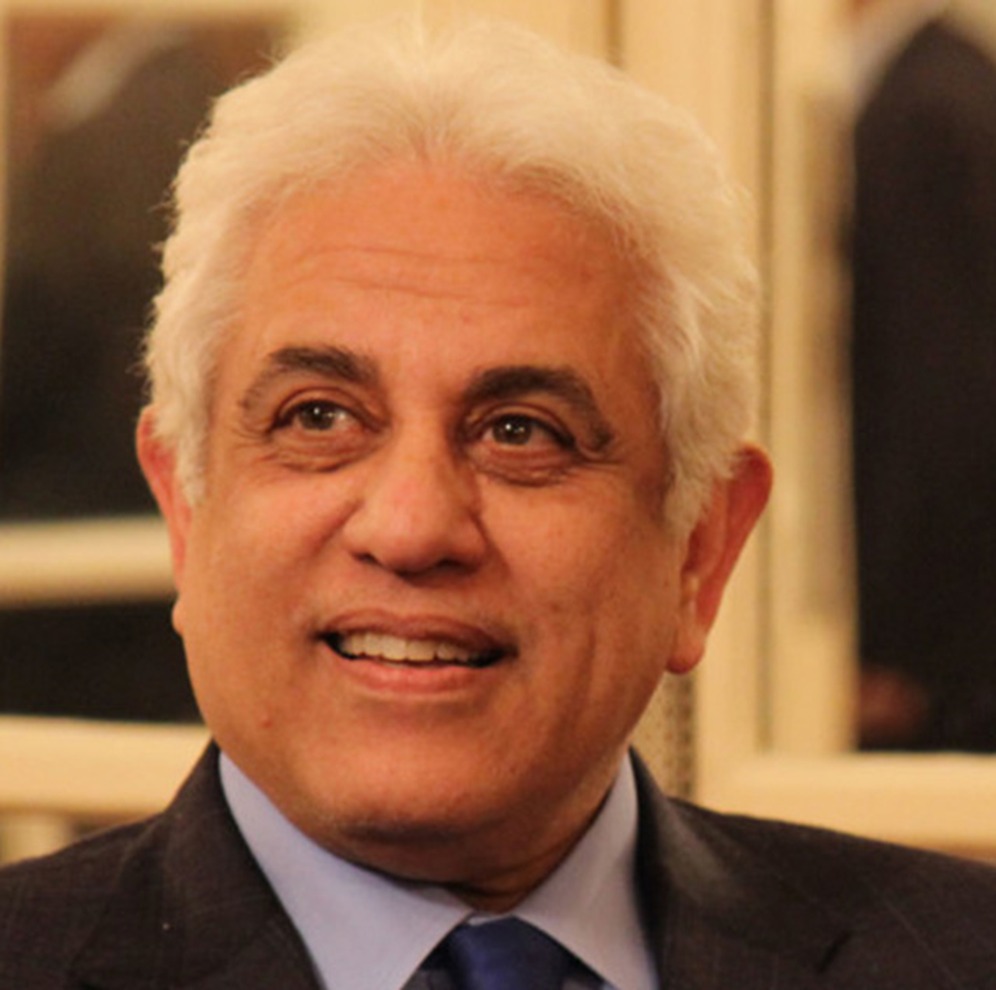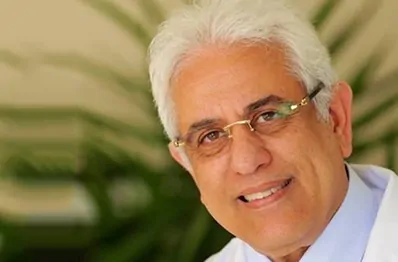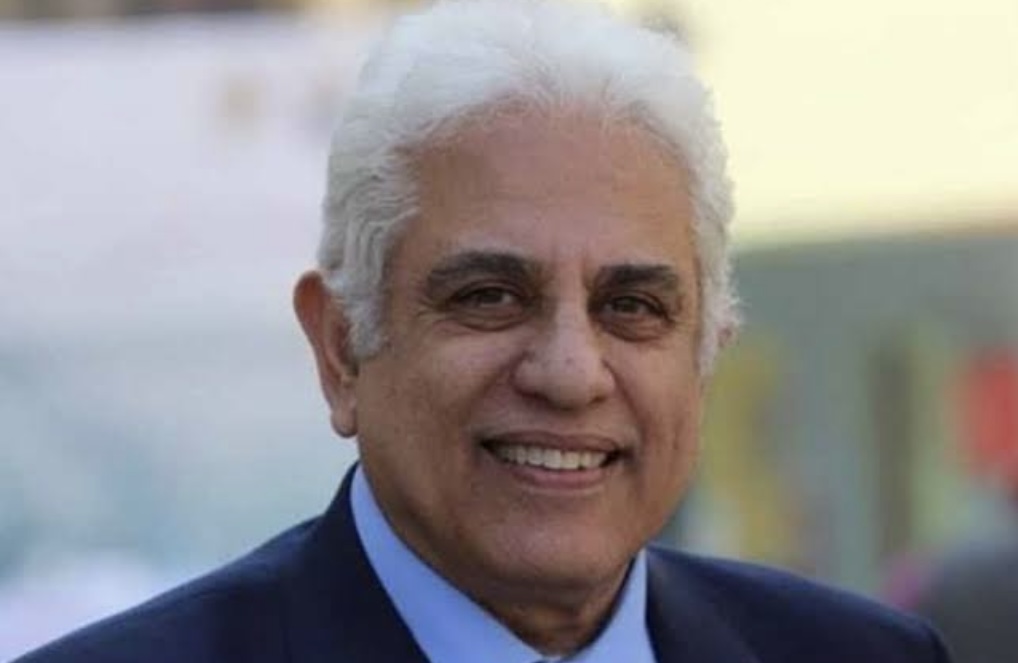
Hossam Badrawi, a prominent physician, politician, and former head of the OB/GYN department at Cairo University’s Medical School, reflects on how self-confidence, when combined with humility, becomes a universal value that shapes individuals and nations.
The great human values are not the property of any single religion or culture; they are the product of human experience across ages.
Many of these values even predate organized religion, forming in the human conscience as people come to discover the meaning of justice, freedom, and dignity.
Among these values stands out self-confidence, a foundation for human dignity and a tool for individual fulfilment. However, this value has a bright side and a dark one.
Self-confidence is a deep understanding of oneself, an awareness of personal worth, and the strength to face life without submission or humiliation.
It is the force that drives achievement and creativity, releasing a person from fear and hesitation.
Those who possess it do not seek others’ approval nor retreat in the face of challenges, because they know who they are and what they can do.
However, confidence is a virtue only when paired with humility and consideration for others. Detached from critical thinking, it becomes arrogance; separated from conscience, it becomes fanaticism.
At that point, the confident person becomes an oppressor rather than a companion, defending their ego against truth itself.
The dark side of confidence appears when it turns into fanatic certainty. The fanatic is so convinced of their own opinion that they become blind to others, seeing themselves as the sole measure of truth.
The egoist is so consumed by their own confidence that they can no longer see beyond themselves, turning confidence into an isolating barrier.
A value meant to elevate humanity becomes a tool of harm when the spirit of sharing fades and awareness of personal limits disappears.
Thus, an inherently human value becomes a tool of oppression when the spirit of sharing is absent and when awareness of the self-limits fades.
Self-confidence is only complete when balanced with confidence in others. Mutual trust is what builds the bridges of societies and grants people the ability to cooperate and create together.
Confidence in others means recognizing that truth is not confined to one individual but is the outcome of multiple minds, diverse experiences, and ongoing dialogue.
It means seeing in the other a mirror of part of ourselves, not an adversary threatening our existence.
A value in its essence is not measured by its presence or absence, but by its capacity for moderation.
Self-confidence is a virtue when it frees a person from fear, and a vice when it blinds them to others.
Confidence in others is a strength when it opens the door to cooperation, and a weakness when it turns into naivety or dependency.
For this reason, wisdom lies in balance: to trust ourselves without idolizing ourselves, to trust others without surrendering to them, to retain the awareness that every human being remains incomplete and needs another to become whole.
In a dialogue, I told young people dreaming of tomorrow, “Confidence has wings and entrances, but we must know that self-confidence is a trait not born with a person; it is acquired day by day.”
This explains why some people possess a great deal of it, while others lack enough confidence in themselves.
Each person should know which type they are, whether they can strengthen their self-confidence more, and how.
Psychologists have found that the causes of lacking self-confidence are usually rooted in childhood or adolescence, with parents, mothers, teachers, siblings, and the surrounding environment in general playing a major role in forming it.
Mocking a child’s appearance, academic struggles, or any weakness, rather than correcting it with support, plants doubt. Repeated blame without guidance only deepens the problem.
I told the youth that there are five keys to building self-confidence. First, stand out. Every person has strengths. Work on them, highlight them, enhance them, and express them.
Second, be authentic. Do not try to change your personalities to please others; you cannot be a copy of others to win their approval.
Third, set small, realistic goals for each day, based on your knowledge of your abilities. They should be achievable within a specific time. Do this gradually, divide your work into stages, and every time increase the difficulty of the challenge.
Fourth, remember and never stop repeating positive phrases in your mind, or even aloud when alone: “I can do this,” “Yes, I have the necessary competence for this task,” or “I am one of the best.”
This trick will help you become more positive in your thinking, overcome any feelings of frustration or lack of confidence, and expel negative thoughts from your head.
However, this method will not succeed or yield the desired results unless you believe in your abilities and work to develop them.
Finally, courageously face disturbing or embarrassing situations where you feel uncomfortable. Do not cast your eyes to the ground and break just because someone has criticized you. Instead, stand firm, confront, respond, and be positive in discussion.
With repetition, you will gain experience that enables you to avoid such situations or at least face them with full confidence.
Self-confidence and confidence in others are not merely individual values; they are building blocks in constructing a healthy society that sees an individual’s dignity as incomplete without freedom. It also regards freedom as incomplete without commitment to others.
Only in this way does confidence transform from a personal feeling into a universal human value, transcending religions, illuminating the path without drowning it in shadows.
Collective self-confidence
If self-confidence grants the individual the ability to achieve, then collective confidence for a people grants societies and nations the power to rise and shape the future.
It is the shared awareness of a group’s intrinsic value and a deep belief in its capacity to confront challenges and achieve great goals.
Nations that trust themselves do not collapse before crises but see them as opportunities for creativity and renewal.
Collective confidence is not just an emotional feeling; it is the product of an integrated system: education that plants awareness, media that reinforces identity, leadership that instils hope, and a civil society that opens spaces for participation.
Conversely, the absence of collective confidence produces a submissive society that lives in the shadow of dependence on others, losing the ability to take initiative.
As the individual is incomplete without self-confidence, so the nation does not rise without collective confidence in itself, giving it the power to turn crises into achievements and dreams into reality.