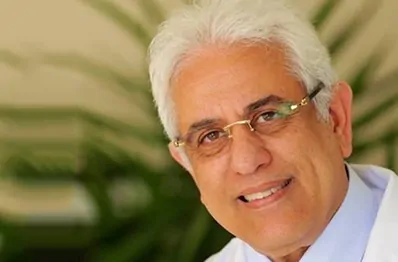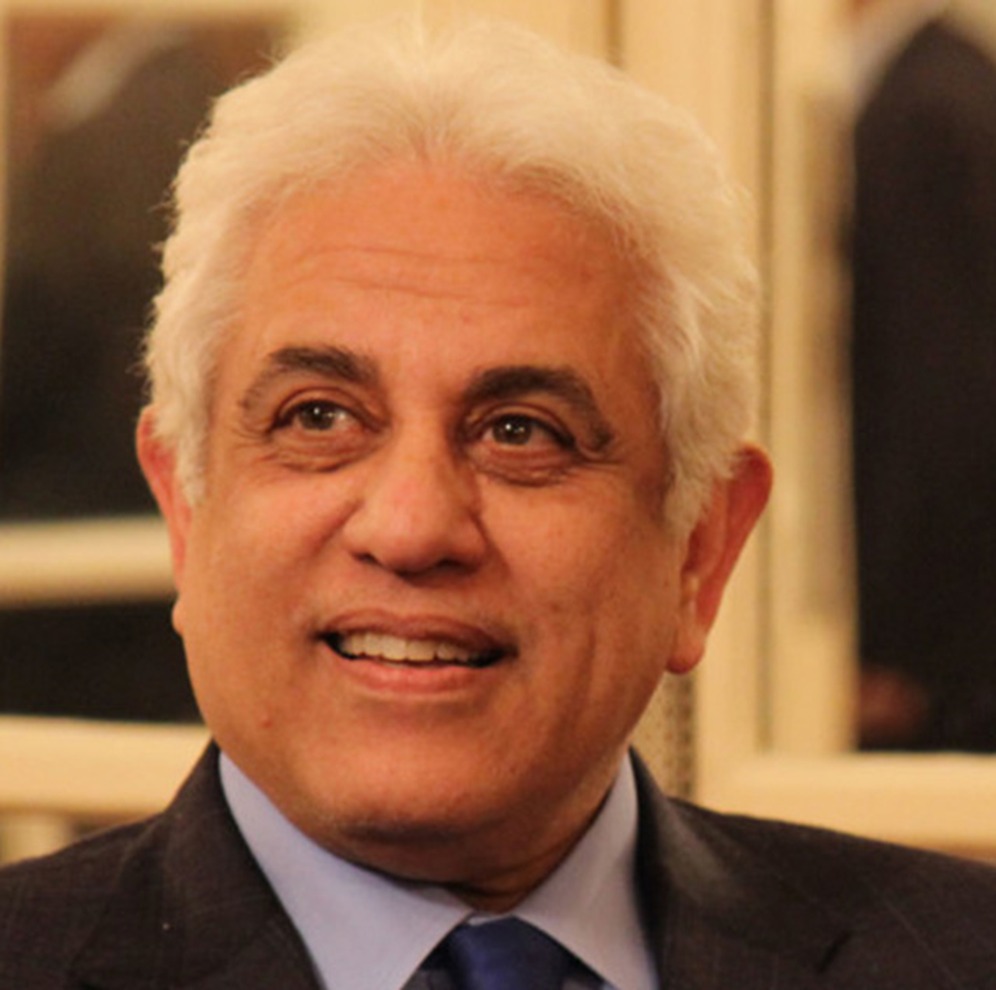
In a turbulent political world—where interests intertwine with positions, and the moral compass often goes missing—it is rare to encounter a figure who combines political firmness with human balance.
Mounir Abdel Nour is one of those rare few.
He is a politician in the true sense of the word—not in the common sense that reduces politics to maneuvering or conflict, but in its deeper meaning: clarity of vision, steadfast values, and the ability to differ without hostility, to oppose without animosity.
Politics in our societies does not suffer so much from a lack of actors as it does from a lack of models.
The crisis is not only in policies, but in the very idea that governs political practice itself. When the state becomes confused with the government, opposition with hostility, and identity with power, politics loses its meaning as a rational, ethical act and turns into a battlefield or a mere management of interests.
Within this blurred context, the experience of Mounir Abdel Nour stands out as one worthy of reflection and analysis—not because it is free of controversy, but because it presents a rare model of politics as disciplined thought guided by values, rather than as an instinct for conflict or a tool for personal gain.
Politics as Responsibility, Not Spoils
Mounir Abdel Nour is a politician in the deepest sense of the word.
Not because he holds a position, but because he possesses a vision, a moral compass, and the ability to distinguish between what is constant and what is changeable; between the state and power; between disagreement and enmity.
I knew him as a friend before being a companion in political life. I found him to be a stable, balanced human being—successful in his economic life without being corrupted by politics, at peace with himself and with others. More importantly, he carries a clear system of human values: love, justice, refinement, tolerance, honesty, generosity, and positivity—not as slogans, but as daily behavior, practiced with humility and grace.
Opposition: A Constitutional Function, Not a Psychological State
When we worked together in Parliament in the year 2000, Mounir Abdel Nour was the leader of the opposition, representing the Wafd Party at one of its most vibrant moments. He did not view opposition as a negation of the system or a clash with the state, but as a national function essential to balancing the public sphere.
He clearly distinguished between:
-
the legitimacy of the state,
-
the legitimacy of the government,
-
and the legitimacy of public policies.
This distinction—which seems self-evident in established systems—was, and still is, largely absent from many political practices in Egypt, where criticism turns into demolition and opposition into hostility.
Different Paths… Shared Ends
I chose to engage in political work from within the ruling system, seeking reform from the inside. He chose to work from within party-based opposition. The paths appeared different—perhaps even contradictory on the surface—but what united us was broader than party affiliation and deeper than positions.
Inside Parliament, we became an exceptional model of managing disagreement: disagreement in means, not in ends; difference in position, not in national belonging. At times, our sitting side by side raised questions from both the National Democratic Party and the opposition.
This experience offers an important lesson: the problem is not in differing positions, but in differing intentions. When the national goal is unified, diversity of paths becomes a source of strength rather than division.
Liberalism as a Rational Method, Not a Slogan
Mounir Abdel Nour belongs to the tradition of enlightened Egyptian liberalism, which views the modern civil state as an inclusive framework for diversity—not a tool of exclusion nor a battlefield of identities.
We came together in the experience of the New Call Association in the 1990s, before entering Parliament, and worked—along with others—to formulate a political and economic model that transcended ideological polarization and brought together diverse currents in Egypt.
The goal was not to create a political entity, but to build a unifying national idea.
In that experience, he was never captive to a narrow partisan stance. He was present with an open mind, capable of dialogue and consensus without abandoning core convictions. Here lies the value of the respectable politician: knowing when to hold firmly to principle, and when to open the door to convergence.
Four Revealing Moments in Mounir Abdel Nour’s Political Path
The exceptional nature of this experience becomes clear when we pause at four pivotal moments that constituted real tests of principle and position:
-
Leading parliamentary opposition, where he practiced opposition as institutional critical reasoning, not as obstruction—affirming that Parliament’s role is to balance authority with accountability.
-
Rejecting sectarian polarization during the Muslim Brotherhood era, courageously refusing attempts to recruit him as a Coptic Egyptian within the Brotherhood’s ruling framework—fully aware of the dangers of instrumentalizing religious identity as a political tool to deceive society and the world, and to undermine the very idea of the national state.
-
Assuming ministerial responsibility after the January Revolution, during one of the most complex historical periods, while maintaining firm adherence to his liberal, civil ideology—refusing to liquefy principles under the pressure of the moment or the temptation of power.
-
Returning to balanced opposition when he perceived the erosion of the modern civil-state model, the weakening of separation of powers, and the absence of accountability—affirming that true loyalty is not to authority, but to the idea.
Consistency Between Thought and Conduct
What makes Mounir Abdel Nour’s experience worthy of study is not a claim to perfection, but consistency—between thought and practice, discourse and behavior, politics and private life.
He succeeded economically without turning politics into a means of profiteering; he opposed without hatred; he criticized without destruction. This consistency is the essence of sound politics—and it is precisely what we lack in environments that reward opportunism and punish steadfastness.
He belongs to enlightened Egyptian liberalism: a liberalism that does not stop at slogans of freedom, does not sanctify the market at the expense of social justice, and views the modern civil state as an inclusive framework for pluralism.
In the experience of the New Call Association, this orientation was evident as we sought to formulate a political-economic model embracing multiple intellectual currents—consciously attempting to build a shared national space.
Friendship: A Human Value at the Heart of Politics
Beyond positions, our friendship endured over time, unaffected by changing circumstances or differing roles—a friendship grounded in mutual respect, trust, sincerity, and affection.
In a political world where relationships often become tools, this friendship was a shared human asset and an ethical barrier that prevented disagreement from turning into hostility, preserving the meaning of dialogue even in the most difficult moments.
Conclusion: Why Should This Experience Be Studied?
The importance of Mounir Abdel Nour’s experience lies in its educational value. It poses central questions for students of political thought:
-
How can opposition be practiced without demolition?
-
How is disagreement managed within a single state?
-
How can politics remain humane without losing effectiveness?
Politics in transitional societies does not suffer from a scarcity of actors, but from the absence of a reference model capable of combining political rationality with moral consistency. When the concept of the state is confused with government, and opposition is reduced to hostility, the search for learnable experiences becomes an intellectual necessity, not an academic luxury.
Within this framework, the experience of Mounir Abdel Nour gains particular significance—not as an individual career, but as a practical model of a rare idea in Arab political life: politics as a rational act governed by values, not as an instinct for conflict or a tool for gain.
In a time of conceptual confusion, this experience remains proof that politics—when practiced as thought and ethical responsibility—can be an instrument of construction, not merely an arena of struggle.