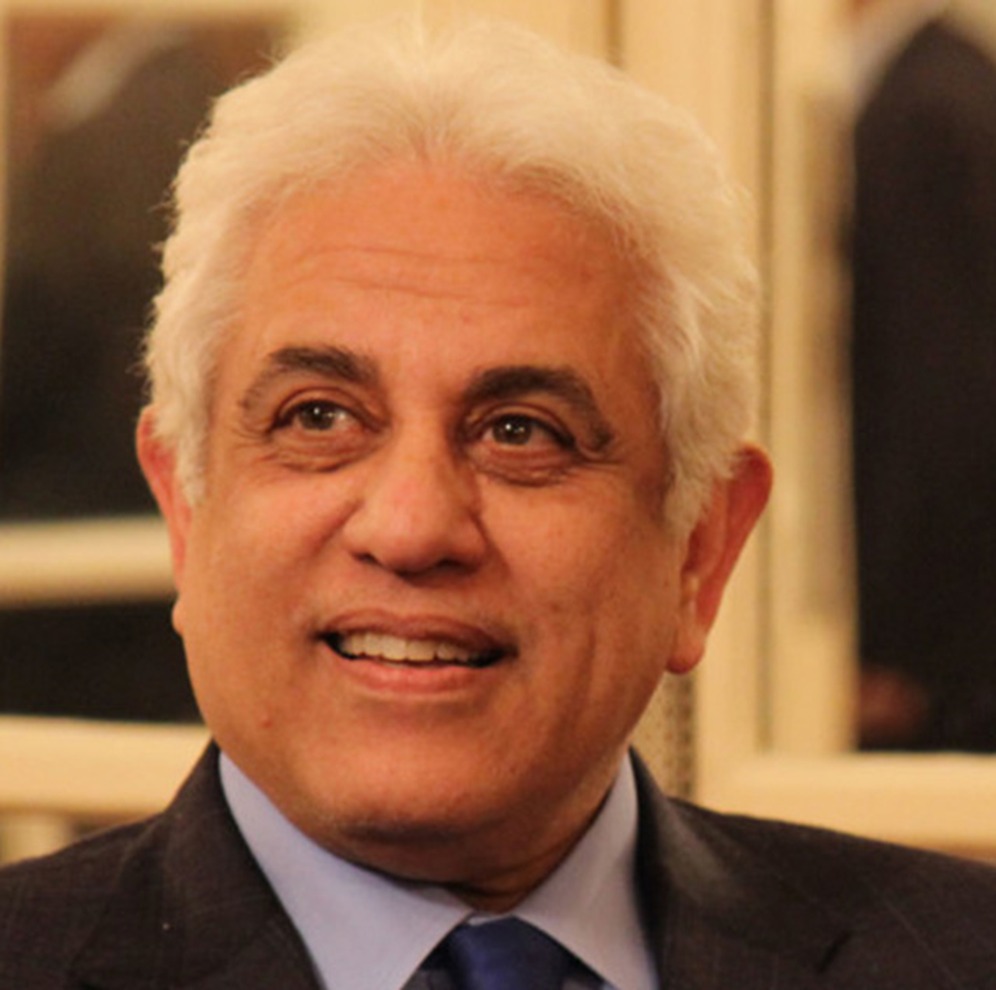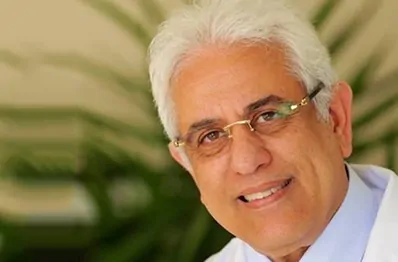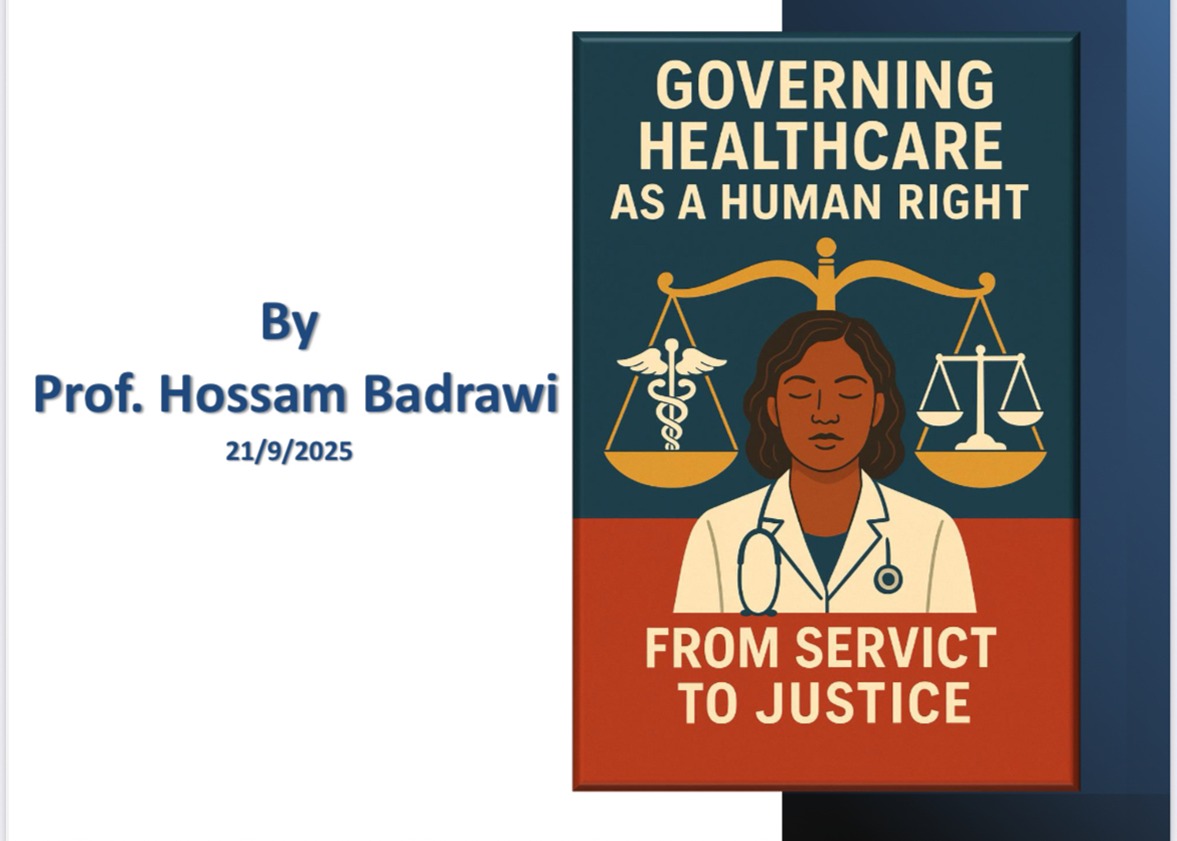
Here is the text of Dr. Hossam Badrawi’s lecture yesterday, September 21, 2025, at the American University in Cairo on healthcare as a human right, and the shift from a service-and-market balance philosophy to justice and entitlement:
There is no doubt that a citizen’s right to healthcare in his homeland has become one of the most important pillars of society, a reflection of its civilization, and a key foundation for its stability and people’s satisfaction. The concept of healthcare has expanded beyond diagnostic, therapeutic, and rehabilitative services to include the broader notion of maintaining public health within the framework of human development. Healthcare rests on specific principles: its availability near where citizens live and work, its delivery with a defined level of quality, and the citizen’s ability to access and afford it relative to his income.
As healthcare costs rise daily—due to the increasing prices of medical equipment, the need for continuous technological upgrades, the rising costs of medicines and diagnostic procedures, and the linkage of surgical supplies to foreign currency—we must think innovatively about how to sustain healthcare services with high quality. This requires redefining the role of the Ministry of Health in light of political, economic, and social transformations.
Citizens’ right to appropriate healthcare should be based on their needs, not on their ability to pay. Healthcare is not a commodity like any other, nor is it an ordinary service. It is often unpredictable and can be extremely costly. Therefore, our approach must involve pooling available resources, working systemically rather than in fragmented efforts, and developing long-term strategies that account for population growth, citizens’ capacities, and the state’s resources—so that citizens’ rights to healthcare remain non-negotiable, regardless of financial ability.
Our vision for healthcare in Egypt must focus on citizens’ needs as individuals and as a community. This requires not only greater investment in the health sector, but also human development for doctors, nurses, allied health professionals, and support services. It demands clear prioritization, effective use of resources, and community involvement—both as service providers and recipients with their families.
Responsibility of Society for Health
Providing medical services through the public or private sector does not automatically translate into a healthier society. These services are only one component of public health, which is the government’s primary responsibility. Public health is influenced by many factors:
-
Education
-
Poverty levels
-
Environmental conditions
-
Prevailing social habits
-
Population growth
-
Crime and accident rates
All these factors interact with health, positively or negatively. Health reform in Egypt cannot be imagined without addressing these fundamental issues.
There is a strong link between education, literacy rates, and health. Nutrition in schools, especially in early stages, is crucial for learning, while higher numbers of educated citizens raise overall public health.
Core Principles for Health Reform Policy
-
Universality: All Egyptians must receive the same set of primary healthcare services.
-
Quality: Services must meet internationally recognized clinical standards.
-
Equity: The financial burden of healthcare costs must be fairly distributed, ensuring that no citizen is ever deprived of services due to inability to pay.
-
Efficiency: Delivering the highest quality of service at the lowest cost.
Proposed Strategic Directions
-
Continued main funding from the state budget, with annual increases, alongside community participation to provide supplementary funding.
-
Establishment of comprehensive primary care clinics near population centers, operated by either the state or private sector.
-
Coordination among national institutions capable of service provision (Ministry of Health, Higher Education, Armed Forces).
-
Strengthening early-warning systems for disease to enable timely prevention and resource mobilization.
-
Building ties with advanced global medical centers and leveraging Egyptian expertise that has gained international recognition.
-
Deploying and dedicating doctors to rural and remote areas to guarantee consistent service availability.
-
Developing nursing, biomedical engineering, healthcare management, pharmaceutical, and medical supplies capacities.
-
Prioritizing family planning and maternal and child health.
-
Gradual expansion of health insurance with increased resources.
-
Ongoing modernization of emergency services, blood transfusion networks, and ambulance coverage nationwide.
Decentralization
The Ministry of Health should focus on: setting and monitoring quality standards, expanding preventive programs, health awareness, environmental sanitation, drug pricing regulation, fostering pharmaceutical investment, encouraging diverse insurance models, overseeing food safety and drug trials, newborn and maternal care, immunizations, epidemic control, and eradication of endemic diseases.
Direct service delivery, however, can be decentralized to the governorate level through local health units, hospitals, and emergency services. This must involve local community participation in management and funding, gradual leadership training, and capacity building.
Health Insurance
A. Gradual Expansion
The state has enacted a health insurance law with three components: quality assurance, management of service institutions and hospitals, and financial administration of social health insurance. The goal is comprehensive coverage for all Egyptians. This gradual rollout, with careful evaluation and adjustment, is a step in the right direction.
Clearly defining service packages, innovatively covering chronic diseases (diabetes, hypertension, etc.), aging-related illnesses, and epidemics will be essential. Actuarial studies and early implementation results must be analyzed before broader expansion.
Private and non-profit sectors should be encouraged to participate, giving citizens choices between insurance providers and programs. This could drive quality improvement under state supervision, through fair competition.
B. State Support with Efficient Management
The Social Health Insurance Authority must be supported by the state and society to guarantee essential service packages for all citizens. However, it should operate under sound administrative and economic principles to remain sustainable. The state may subsidize premiums for the poor, funded through national resources or cross-subsidization from wealthier citizens.
C. Financing Health Insurance
The institution must remain under direct state supervision, focused on management, monitoring, and oversight of service providers, whether public, private, or non-profit.
D. Choice for Citizens
It is crucial to provide citizens with real options in both insurers and service providers, within controlled cost frameworks. This respects citizens, fosters competition, and improves service quality.
E. Decentralization of Health Insurance
Exploring local insurance models at the governorate level could allow institutions to compete for enrollees. Pilot projects should be tested carefully before scaling up.
Primary Healthcare Services
A. Importance
Primary healthcare represents over 60% of citizens’ needs, especially for the poor. These services are low-cost but highly impactful. Dr. Badrawi calls for state expansion of these services, alongside innovative financing to support physicians and organizations focusing on primary care.
International comparisons show that advanced countries like the UK allocate about 75% of their healthcare budgets to primary care—highlighting its priority. In Egypt, the state should adopt primary care expansion as a five-year strategic priority, through both direct provision and insurance coverage.
B. Maternal and Child Health as a Gateway
Maternal health is vital within primary care. Expanding services for pregnant women and newborns is essential, linking families to local healthcare centers during and after pregnancy. This is also central to family planning efforts.
C. Prevention and Awareness
There must be greater emphasis on health education, especially for youth, integrated into school curricula and media campaigns. Training preventive care providers should be a priority, as prevention reduces future treatment costs.