2026 Collective Activities & ArticlesAl-Hurriya WebsiteAll ArticlesBy Dr BadrawiTranslated Articles

Hossam Badrawi writes for Al-Hurriya: Reflection on the Meaning of Mind and the Limits of Creativity

I begin with developments in artificial intelligence and move toward the philosophical core.

1. Symbolic Regression

Between 2020–2023, AI systems based on symbolic regression emerged.

One notable example was developed by researchers at ETH Zurich and MIT.

The idea: feed AI only experimental data — and it attempts to extract the mathematical equation describing it.

Remarkably, it rediscovered Newton’s laws, re-derived gravity equations, and extracted relations in complex astronomical systems.

It did not “understand” physics.
It searched for the simplest mathematical structure explaining the data.

2. Discovering Laws in Complex Systems

In 2023, researchers published in Nature about AI discovering:

  • Hidden conservation laws

  • Equations describing double pendulum motion

  • Chaotic systems difficult to derive manually

The AI was not given the law — it inferred it from data.

Did it prove them?
AI proposes equations, tests them numerically, verifies alignment with data.
Formal mathematical proof is still performed by humans.

3. AI Feynman (2019)

Named after Richard Feynman, the system aimed to discover physical laws automatically.

It successfully rediscovered more than 100 physics equations from data alone — a genuine scientific achievement.

So can AI discover entirely new laws?
Yes — early evidence suggests so.

The philosophical point: AI does not create from nothing; it extracts latent structure from data.

This raises a deeper question:
Are laws inherent in nature waiting to be discovered?
Or are they human mathematical formulations making nature comprehensible?

AI discovering new equations is not a trivial technical event.
Historically, discovery was a purely human act — a conscious mind confronting mystery.

Now a third entity enters: a computational system without feeling or contemplation — yet reaching correct conclusions.

Does knowledge require consciousness?
Or is correctness enough?

Is mind a biological property — or a universal structure?

Perhaps mind is not matter, but information organization.

AI may solve — but it does not witness.

Is witnessing required for truth?

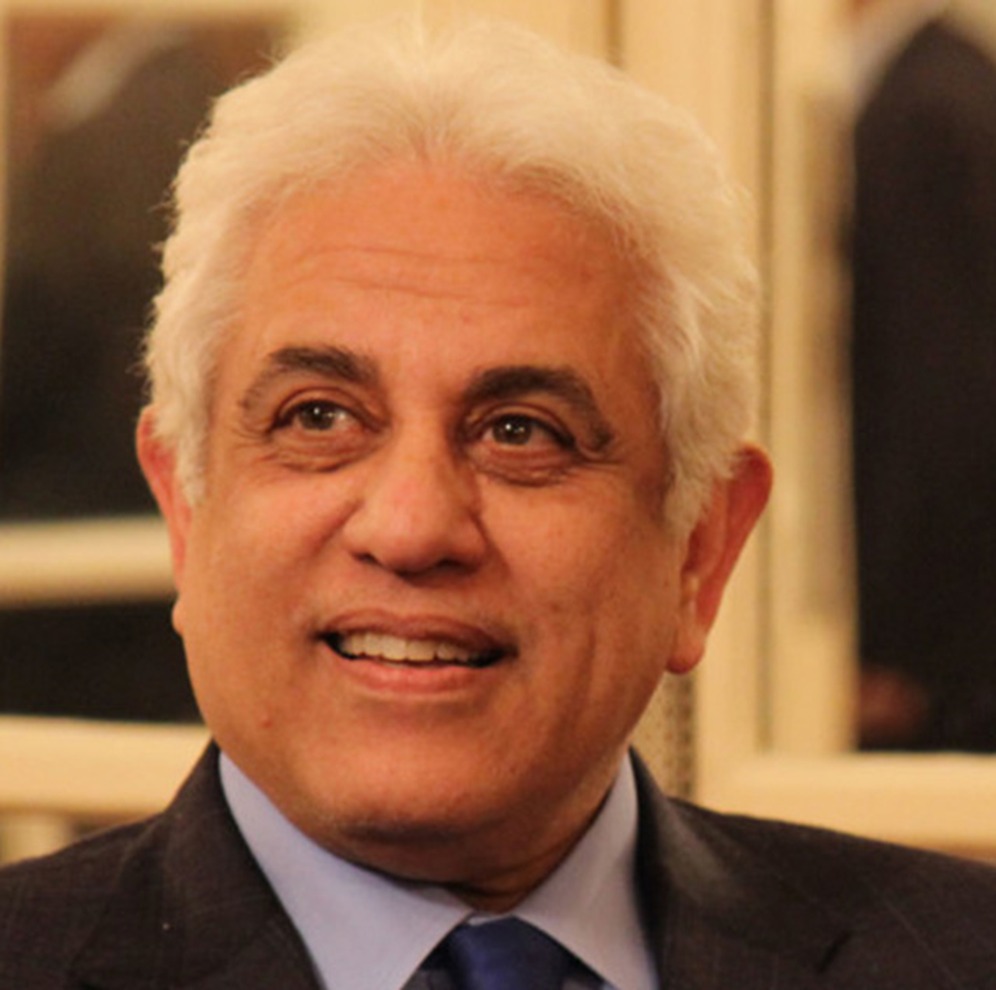
Dr. Hossam Badrawi

He is a politician, intellect, and prominent physician. He is the former head of the Gynecology Department, Faculty of Medicine Cairo University. He conducted his post graduate studies from 1979 till 1981 in the United States. He was elected as a member of the Egyptian Parliament and chairman of the Education and Scientific Research Committee in the Parliament from 2000 till 2005. As a politician, Dr. Hossam Badrawi was known for his independent stances. His integrity won the consensus of all people from various political trends. During the era of former president Hosni Mubarak he was called The Rationalist in the National Democratic Party NDP because his political calls and demands were consistent to a great extent with calls for political and democratic reform in Egypt. He was against extending the state of emergency and objected to the National Democratic Party's unilateral constitutional amendments during the January 25, 2011 revolution. He played a very important political role when he defended, from the very first beginning of the revolution, the demonstrators' right to call for their demands. He called on the government to listen and respond to their demands. Consequently and due to Dr. Badrawi's popularity, Mubarak appointed him as the NDP Secretary General thus replacing the members of the Bureau of the Commission. During that time, Dr. Badrawi expressed his political opinion to Mubarak that he had to step down. He had to resign from the party after 5 days of his appointment on February 10 when he declared his political disagreement with the political leadership in dealing with the demonstrators who called for handing the power to the Muslim Brotherhood. Therefore, from the very first moment his stance was clear by rejecting a religion-based state which he considered as aiming to limit the Egyptians down to one trend. He considered deposed president Mohamed Morsi's decision to bring back the People's Assembly as a reinforcement of the US-supported dictatorship. He was among the first to denounce the incursion of Morsi's authority over the judicial authority, condemning the Brotherhood militias' blockade of the Supreme Constitutional Court. Dr. Hossam supported the Tamarod movement in its beginning and he declared that toppling the Brotherhood was a must and a pressing risk that had to be taken few months prior to the June 30 revolution and confirmed that the army would support the legitimacy given by the people

Related Articles

Back to top button