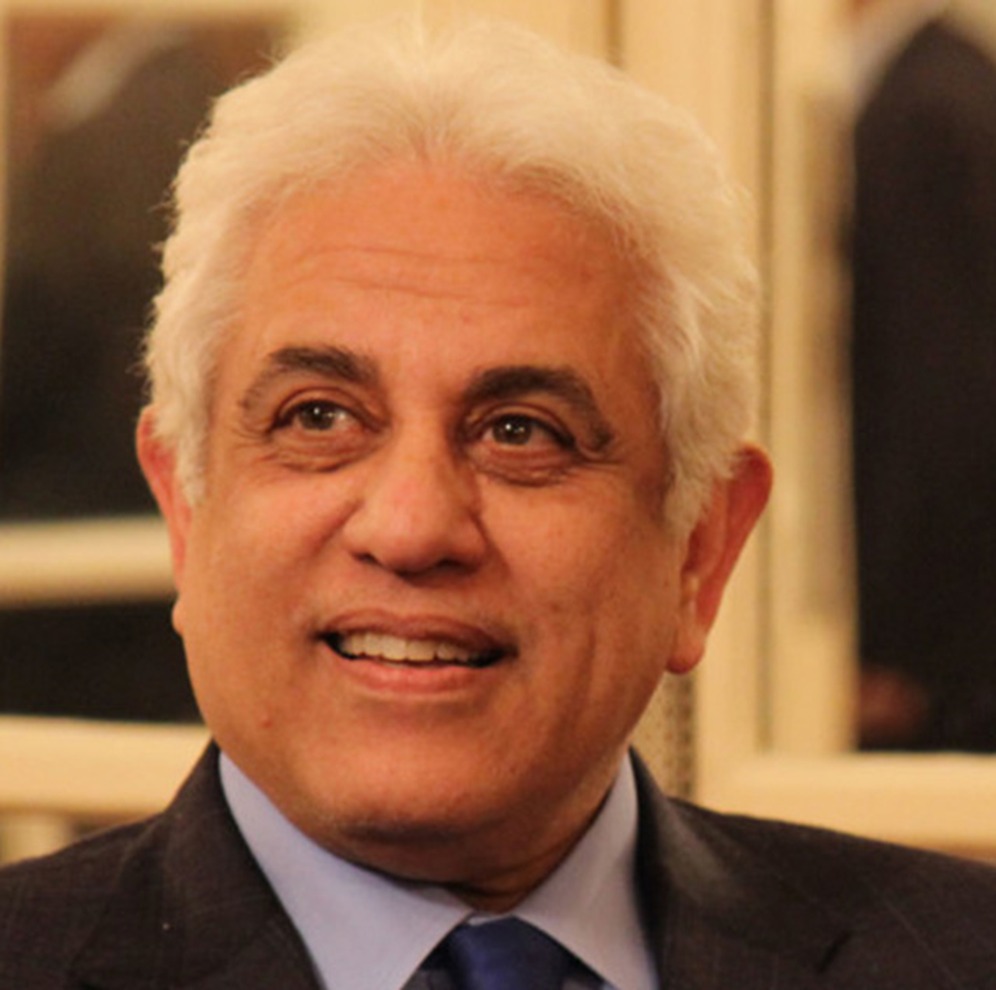
Hossam Badrawi, a prominent physician and politician and former head of the OB/GYN department at Cairo University’s Medical School, delves into consciousness and self-reflection.
This is a dialogue with the self — a question that may prompt anyone reading this article to turn inward, to understand themselves more deeply, to connect scattered thoughts into coherent meaning, and to paint a more complete picture of who they are.
Nothing arises from nothing. Every event in our personal and collective history leaves its mark on who we are, why we are the person we’ve become, and how our awareness of our immediate and global society was shaped. And, as knowledge expands, perhaps even your awareness of parallel universes comes into play.
You are a collection of values, ideas and behaviours that, together with your surroundings, form your mental self-image.
Consciousness is a mental state through which we perceive reality and the truths unfolding around us. It is born of our interaction with the environment. It matures gradually through the senses—gateways that deliver information to the mind, where it is interpreted, organized, and understood.
However, consciousness can also be partial when thoughts and perceptions are confined to a single aspect, failing to encompass the many interconnected dimensions that constantly influence one another in the evolution of life.
Our consciousness shapes our present and future, and our collective consciousness can shape the fate of humanity as a whole.
For example, I have long recognized the importance of education, knowledge, and healthcare for citizens. Over time, with accumulated experience and deeper reflection, I redefined them not as services but as fundamental rights. This transformation in perspective — a renewal of consciousness — led me to advocate for a system where access to these rights depends not on one’s ability to pay but on society’s collective capacity to guarantee them to every child and young person under all circumstances.
I believe every reader must understand both their own psychological makeup and that of their audience. Do their ideas and values form a coherent fabric? And if so, on what foundations does that coherence rest? A friend once asked me:
“Why? What led you to engage in dialogues with young dreamers? How did your passion grow, and your unwavering belief in the creativity and innovation of youth persist, even amid a society that often seems blind to these possibilities?”
I hadn’t attempted to articulate an answer until young people began asking these questions. Thus, this article may explain the motivations behind our society’s individual and collective consciousness — and the forces that shape our political, cultural, and intellectual realities.
We must recognize that when an idea’s time has come, it becomes a force of its own. A conscious mind can respect an idea even without fully embracing it.
As Abbas Al-Aqqad once said:
“When we attach ideas to individuals, we deny ourselves valuable insights if they come from adversaries, and we fall into foolish ones merely because they come from friends.”
History teaches us that those who introduce new ideas may initially be considered criminals within rigid cultural systems — until those ideas succeed and gain countless champions.
Ibn Rushd (Averroes) reminds us:
“Ideas have wings. You cannot stop them from spreading — even if you burn the books that contain them or kill their authors.”
I may disagree with an idea, but I do not oppose the thinker. Galileo’s words resonate deeply with me:
“All truths are easy to understand once they are discovered. The point is to discover them.”
People may die, nations may rise or fall, but ideas endure. They do not expire as long as they challenge prevailing dogmas — the comfortable certainties that the masses embrace as part of their collective identity.
We must understand that ideas acquire power when they capture the hearts of the masses — or when others impose them persistently, embedding them into the collective psyche until they are accepted as self-evident truths.
In the modern world, entire sciences have emerged dedicated to this craft: creating false narratives that spread widely despite lacking any real foundation. Looking at the world today, my deepest fear is the manipulation of our consciousness and thoughts. We are witnessing how consciousness can be manufactured by those who possess the tools to create what is not real, presenting it as an undeniable truth in the minds of entire nations — intimidating and silencing anyone who dares to question or think differently.
This is the manufacture of fabricated consciousness. Once it stabilizes and is reinforced repeatedly, people start to believe it—even sacrificing their comfort and, ultimately, their lives for a cause that was artificially constructed and then integrated into their collective consciousness.
Consider the war between Russia and Ukraine. Consider Israel’s war and its intent to annihilate the Palestinian people. Consider the conflict between Israel and Iran. Look back to the US invasion of Iraq or the rise of authoritarian regimes like Syria’s — all supported by the West with its glaringly racist double standards and deeply hypocritical stances.
These events reveal a chilling truth: European and American governments are far more extreme and inhumane than many of us once believed—lacking credibility not only today but historically and very likely in the future.
The dynamic between humans and their awareness of global events often rests on political narratives that manufacture false consciousness — transforming friends into enemies and perpetrators into victims. After two generations of engineered collective consciousness, many truths are lost. We live in an artificial reality crafted by those who control the tools, write the scripts, and dominate the media and social networks.
It is the puppet theatre of consciousness, orchestrated by those who pull the strings, telling the story of their existence on this stage.
The ultimate question remains:
Do you know who you are? Do I know who I am? Are we simply puppets on the stage of life — personally, nationally, and globally — or will we one day seize the strings ourselves?
The answer lies in science — clearly defining the values we seek—and embracing humanism as we confront the soulless march of digital technologies. Without careful guidance, science can be used to create artificial consciousness that becomes a widely accepted reality — a reality that no longer even requires proof.
Read the original article
https://english.ahram.org.eg/News/548425.aspx