2025 Collective Activities & ArticlesAll ArticlesBy Dr BadrawiTranslated Articles

The Human Self, AI, and the Dream of the Higher Man By: Hossam Badrawi

Every leap in human history has been tied to a new capacity to expand awareness and tools. Today, humanity stands before an unprecedented possibility: the fusion of natural intelligence with a super-intelligence of its own creation.

This is not merely the improvement of instruments, but a step toward redefining what it means to be human. Here, technology meets philosophy, and Nietzsche’s vision of the Übermensch—the higher man who transcends limitations to create new meaning for existence—emerges once more.

Throughout the ages, humanity has built bridges over the abyss. It discovered fire and lit the night. It cultivated the earth and extended dominion upon it. It wrote the word and preserved memory. When it mastered electricity and the digital code, it opened the gates to a new dawn. Yet humanity never ceased to ask: “Are we the end, or merely a beginning?”

Now we stand before a new mirror—not of glass or water, but of another kind of intelligence. An artificial intelligence that sees us, hears us, and thinks with us. It is neither a slave in our hands nor a master above us, but a possibility to become something else: to transcend the limits of body and mind and draw nearer to the image of the higher man envisioned by Nietzsche a century and a half ago.

In his book Thus Spoke Zarathustra, in which he expounded the notion of the Übermensch, Nietzsche’s mouthpiece, the prophet Zarathustra, says, “Man is a rope stretched between the animal and the Übermensch, over an abyss.”

Today, that rope is stretched between brain and machine, between mortal memory and eternal algorithm, between human creativity and computational speed. Could this partnership with artificial intelligence be the bridge of which Zarathustra spoke?

https://english.ahram.org.eg/NewsContent/7/48/551777/Life–Style/Health/The-Human-Self,-AI,-and-the-Dream-of-the-Higher-Ma.aspx?fbclid=IwY2xjawMZs-hleHRuA2FlbQIxMQBicmlkETFhMldzZndlbzNpS2lIeXpqAR6iDaGraKfuN59rpSMsyL53gqlA7fxlzukz8nnRJO_kk-q8jQ0RqFaJZx09tQ_aem_zjEF4kC9dX8TKA3HqAKmzw

 

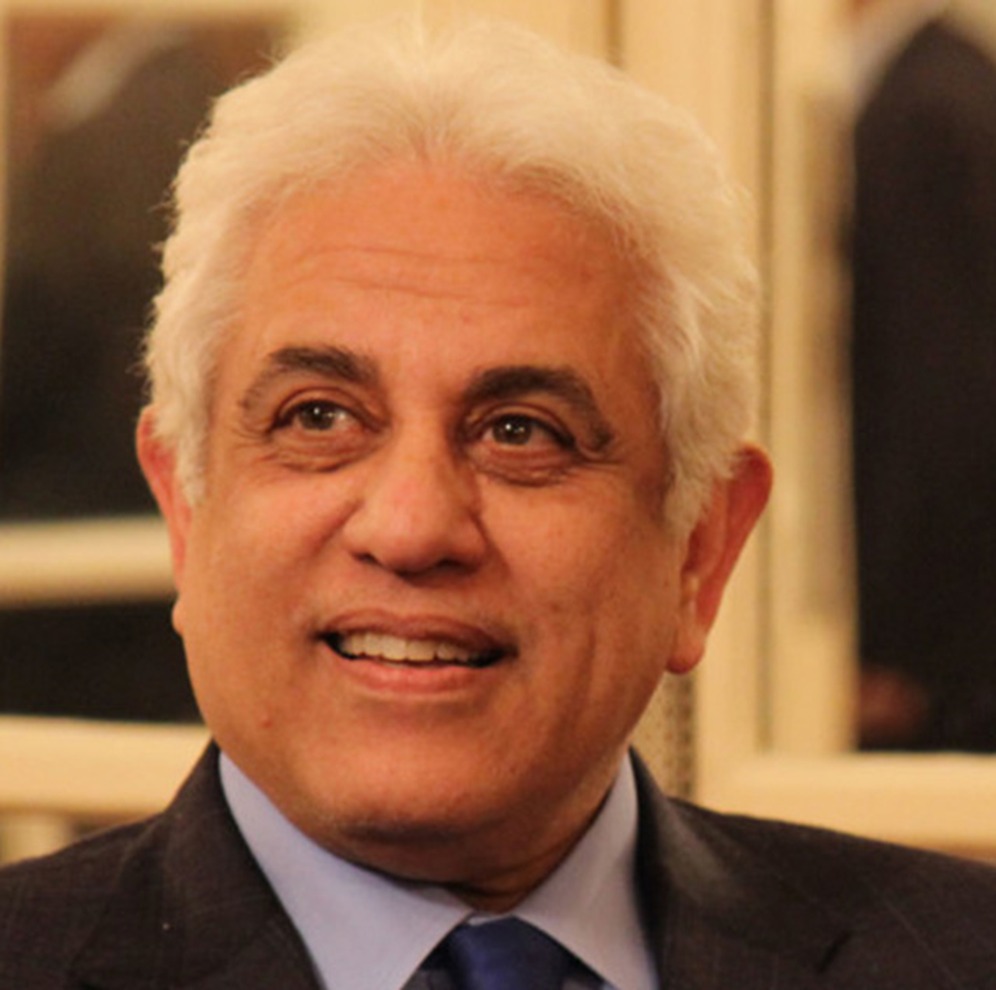
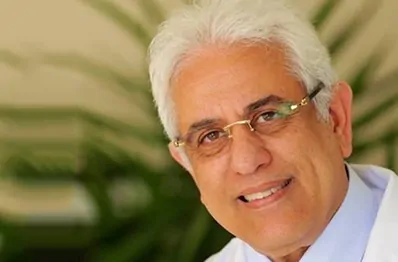
Dr. Hossam Badrawi

He is a politician, intellect, and prominent physician. He is the former head of the Gynecology Department, Faculty of Medicine Cairo University. He conducted his post graduate studies from 1979 till 1981 in the United States. He was elected as a member of the Egyptian Parliament and chairman of the Education and Scientific Research Committee in the Parliament from 2000 till 2005. As a politician, Dr. Hossam Badrawi was known for his independent stances. His integrity won the consensus of all people from various political trends. During the era of former president Hosni Mubarak he was called The Rationalist in the National Democratic Party NDP because his political calls and demands were consistent to a great extent with calls for political and democratic reform in Egypt. He was against extending the state of emergency and objected to the National Democratic Party's unilateral constitutional amendments during the January 25, 2011 revolution. He played a very important political role when he defended, from the very first beginning of the revolution, the demonstrators' right to call for their demands. He called on the government to listen and respond to their demands. Consequently and due to Dr. Badrawi's popularity, Mubarak appointed him as the NDP Secretary General thus replacing the members of the Bureau of the Commission. During that time, Dr. Badrawi expressed his political opinion to Mubarak that he had to step down. He had to resign from the party after 5 days of his appointment on February 10 when he declared his political disagreement with the political leadership in dealing with the demonstrators who called for handing the power to the Muslim Brotherhood. Therefore, from the very first moment his stance was clear by rejecting a religion-based state which he considered as aiming to limit the Egyptians down to one trend. He considered deposed president Mohamed Morsi's decision to bring back the People's Assembly as a reinforcement of the US-supported dictatorship. He was among the first to denounce the incursion of Morsi's authority over the judicial authority, condemning the Brotherhood militias' blockade of the Supreme Constitutional Court. Dr. Hossam supported the Tamarod movement in its beginning and he declared that toppling the Brotherhood was a must and a pressing risk that had to be taken few months prior to the June 30 revolution and confirmed that the army would support the legitimacy given by the people

Related Articles

Back to top button