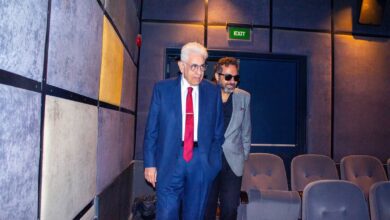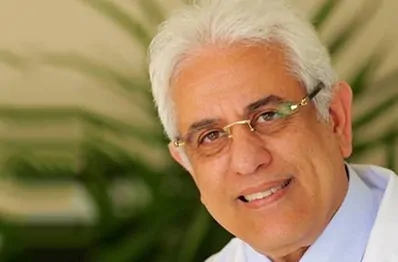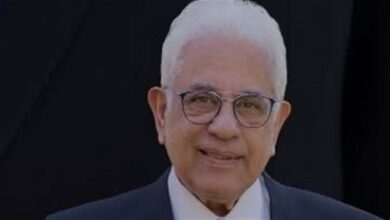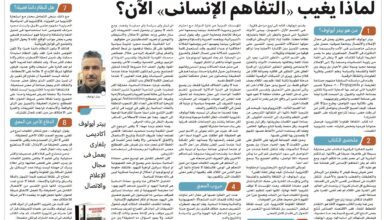

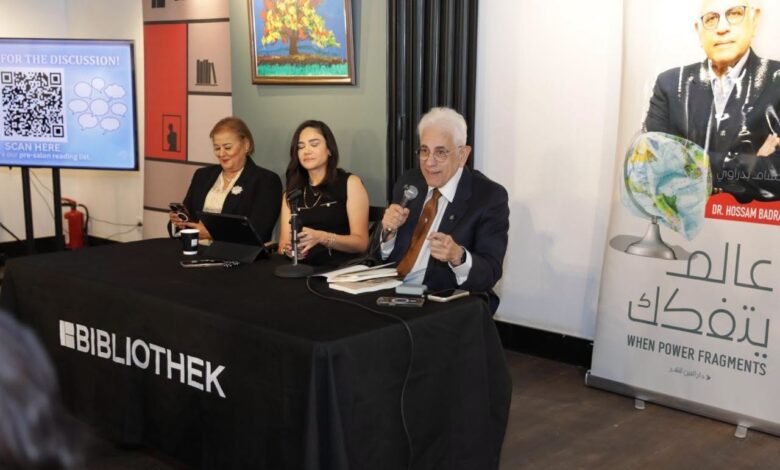
On the evening of Wednesday, September 23, 2026, Bibliotheca in Sheikh Zayed was more than simply a venue hosting a cultural discussion of new publications. It was transformed into a fully fledged intellectual salon—something akin to a journey that carried its audience from the harshness and complexity of the global scene into spaces of hope and creativity.
The moment you stepped into the hall, you were welcomed by a remarkable harmony of visual and spiritual elements: artworks and designs reflecting a deep appreciation for art, accompanied by enchanting music performed by two young talents, Nour and Sama. In her opening remarks, Dr. Fatma emphasized that the evening represented a comprehensive vision encompassing politics, development, and the promotion of optimism—qualities that distinguish Dr. Hossam Badrawi.
With an impressive audience of more than 75 prominent intellectual, political, and community figures, alongside more than 40 participants from around the world joining via Zoom, the accomplished journalist Nesma El-Saeed took the lead in moderating the discussion, smoothly guiding the audience from the warmth of art into the depths of politics and rational strategic analysis.
With his calm voice and methodical analytical mind, Dr. Hossam Badrawi began by dissecting the global scene through the lens of his first book, A World Falling Apart. He invited us to imagine the world as a “chessboard” being rearranged, emphasizing that the world is not moving toward a new balance so much as new poles of power are taking shape.
With remarkable candor, he explained that American dominance rests not only on military power, but also overwhelmingly on knowledge production, technology, and investment in artificial intelligence at American universities. He also highlighted regional opportunities, pointing to the potential strength of an alliance among Egypt, Saudi Arabia, Türkiye, and Pakistan—an alliance capable of creating an influential pole if the necessary political will exists.
Yet the lifeline out of this fragmentation was present in his second book, Toward an Integrated Educational Philosophy for Human Development.
Badrawi addressed the core problem with courage, criticizing systems based on rote learning and memorization that stifle creativity, and emphasizing that developing an “innovative and critical mind” is the only reliable guarantee for keeping pace with the future. He stressed that reforming education and healthcare is not merely a matter of plans on paper, but a “political decision” requiring sustained political will that does not shift with every change of ministerial portfolios.
The evening did not remain a one-way exchange between speaker and audience. It expanded into an open community dialogue. As soon as Dr. Badrawi opened the floor for discussion, the hall became a forum for addressing the issues that occupy citizens’ minds and weigh heavily on their lives—from economic challenges and the lack of fairness in allocating constitutional budgetary priorities, to the crises facing the healthcare and education systems, and finally the pressures of everyday life amid rapidly changing circumstances.
It was here that the wisdom of the evening became particularly evident. Dr. Badrawi listened carefully and thoughtfully to every question and criticism, addressing each issue and responding to every question with complete transparency and rationality. Rather than delivering emotional speeches, he offered analytical perspectives and practical solutions based on sound management of the state’s financial and human resources, as well as the need to restore public trust through policies that support citizens and invest in their awareness and capacity.
The symposium eventually came to an end, and the attendees left the halls of Bibliotheca, but the intellectual impact of the evening will continue to resonate.
Dr. Hossam Badrawi succeeded in bringing together prominent figures and ordinary citizens, blending art with politics and connecting criticism with solutions within a single intellectual framework. In doing so, he affirmed a powerful idea: the fragmentation of the world around us can only be confronted through greater coherence and awareness within ourselves.