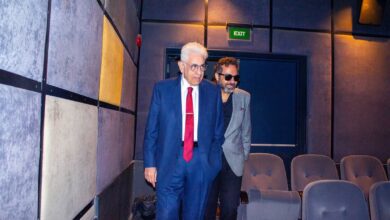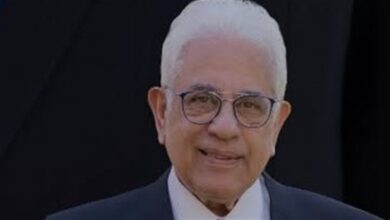

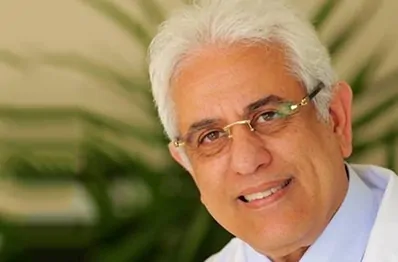
Thinker Dr. Hossam Badrawi warned against reducing university-admission policies to simply responding to the current needs of the labor market. He stressed that the job market a student enters university today to prepare for may change dramatically before graduation, and that the primary mission of education should be to develop students who are capable of continuous learning and adapting to change.
In comments to Al-Hurriya, Badrawi addressed the trend toward increasing the number of students admitted to fields such as computer science, artificial intelligence, data science, medicine, engineering, nursing, industrial education, agriculture, and tourism. He said that increasing admissions in these areas appears logical in light of the changes taking place in the labor market, but emphasized that “the apparent logic behind a decision does not always represent its deeper logic.”
He explained that the more important question should be: Are we preparing our children for a world that exists, or for a world that has not yet been born? A student who enrolls today in a university major because it is in demand in the labor market will not begin their professional career for another four or five years—a period long enough for the nature of many jobs and the skills they require to change significantly.
Education, he stressed, should not be limited to giving students a skill believed to be in demand at the present moment. Instead, it should give them the ability to learn, adapt, and reshape their skills whenever the world around them changes. He described this ability as “the mother skill” from which other skills can emerge.
Badrawi: Guidance Should Not Become a Restriction on Students’ Choices
Regarding the reduction in the number of students admitted to some humanities colleges, Badrawi warned against allowing efforts to guide students toward certain fields to become a restriction on their choices. He emphasized that every young person has the right to choose the field that matches their interests, abilities, and ambitions.
He said that a young person who wants to study history, philosophy, or literature, or pursue a career in writing or the arts, should not feel that their choice is less valuable simply because demand for these disciplines does not appear directly in labor-market indicators.
He also pointed out that technological skills are no longer the exclusive domain of scientific disciplines. Writers, artists, poets, authors, and others working in the humanities and creative fields also need a basic level of practical knowledge and skills related to technology and artificial intelligence.
Humanities Colleges Are Not Outside the Equation of Development
Badrawi stressed that evaluating the importance of humanities disciplines solely by the number of jobs available to their graduates represents, in his view, an incomplete measure of their role in society.
He explained that these fields contribute to building awareness, identity, and culture; producing specialists capable of documenting and writing history; shaping public taste; strengthening critical thinking; and confronting extremism through ideas and intellectual engagement. Society, he emphasized, needs not only engineers, doctors, and scientists, but also writers, historians, philosophers, and sociologists.
Badrawi: Students Should Be Encouraged, Not Forced into Certain Paths
Badrawi proposed an approach in which the state’s role at this stage should be to create an economic environment that generates genuine employment opportunities across different fields, while encouraging young people to innovate, pursue entrepreneurship, and create jobs, rather than treating students as numbers to be distributed according to the labor market’s needs at a particular point in time.
He emphasized that a strong state does not simply need to redistribute students among different disciplines. Instead, it should open multiple pathways for them and encourage initiative and innovation, while preserving every student’s right to choose the path that suits their abilities and ambitions.
Badrawi concluded by stressing that the real challenge facing Egyptian education is not choosing between applied sciences and the humanities. Rather, it is building an educational system that provides students with a strong foundation of knowledge and skills, enables them to keep pace with an ever-changing labor market, and, at the same time, preserves the role of disciplines that contribute to building society’s awareness, culture, and identity.