
The new call in a new time
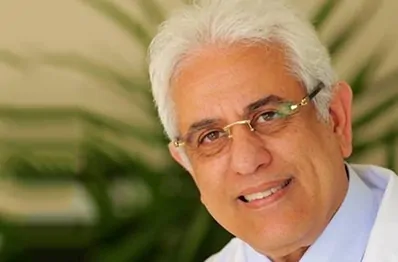
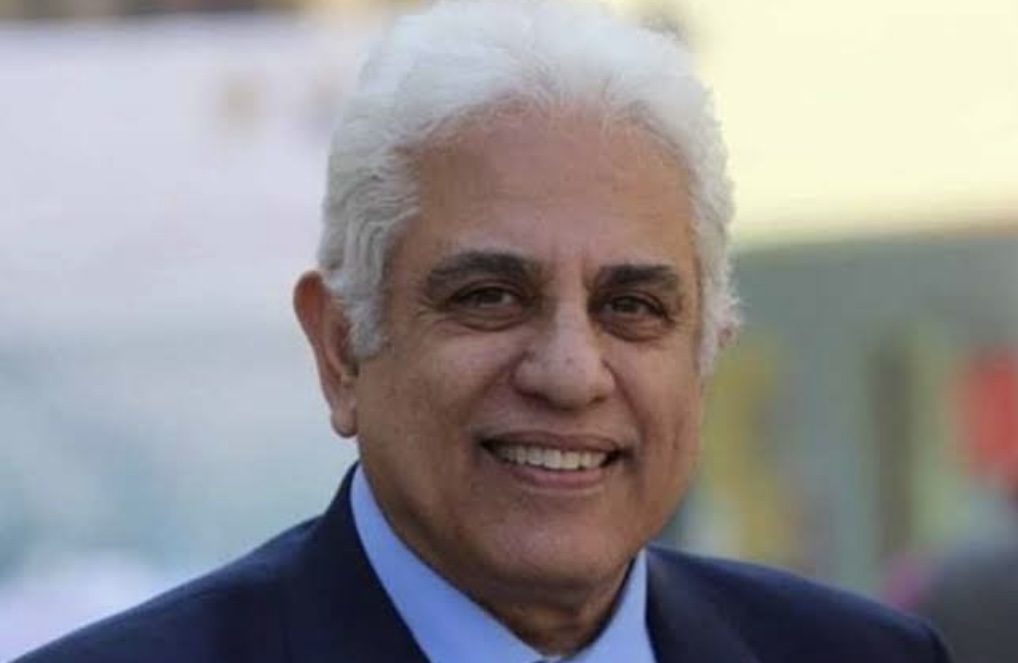
Hossam Badrawi
Generations after generations
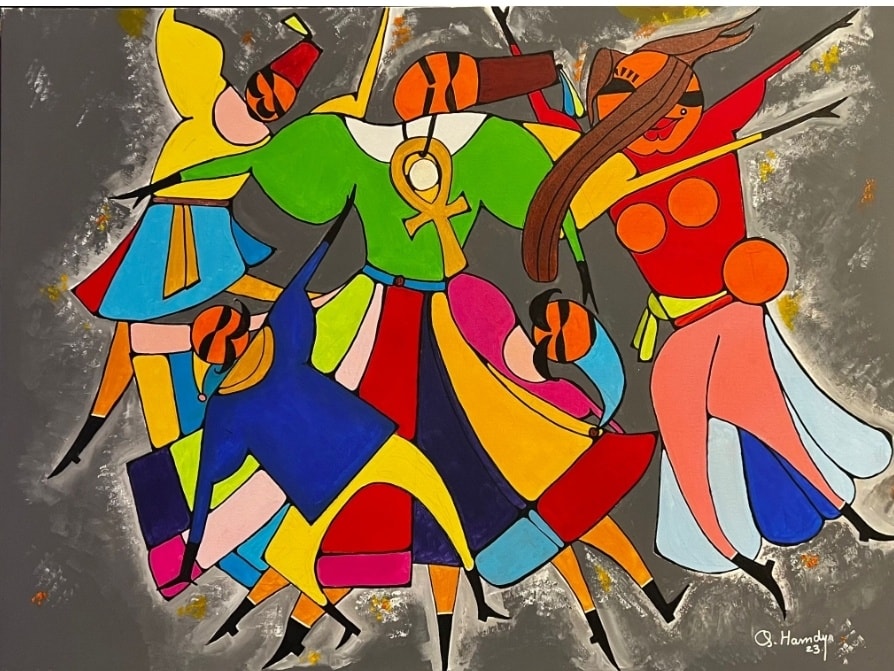
Brushed by d. Osama Hamdi
At the beginning of the nineties, the new call was….a liberal, enlightening political gathering of the first order, which brought us together as young people with Dr. Saeed Al-Najjar, may God have mercy on him, who is who he is, with knowledge, culture and international standing.
We used to meet on the grounds of the New Call every Wednesday, discuss and debate, and issue papers and research, with the aim of reforming the state of the country.
In the new call, I learned economics, society and politics, and we separated according to our political concepts, and some of us merged, and I and Dr. Osama al-Ghazali Harb and changed us for reform from within the system, and some of us preferred to work within the framework of the opposition, such as Mahmoud Abaza and Mounir Abdel Nour. And others, and many remained independent, such as Mona Zulfiqar, Omar Muhanna, Saad Eddin Ibrahim and others, but it was and continues to bring us together and connect us with what we agreed upon in the new call at that time and until now.
How close today is to yesterday, when you found us having a dialogue after more than thirty years had passed, as if the political scene was still in the same frame.
We believed that individual freedom is the basis of all civilizational progress and the source of all creativity, and that responsibility is the other side of individual freedom, and its philosophy does not look at the individual as a stand-alone entity, but rather looks at him as an integral part of a social system.
The enlightened liberal Dr. Saeed Al-Najjar enriched our collection with his books and studies, which were always characterized by a high critical sense and a broad human tendency, calling for an open liberal society that allows achieving a balance between the individual and the group, between economic goals and spiritual aspirations, between the independence of the individual and the need to relate to the group. With him, this can only be achieved through the state of truth, law and democracy, as a basis for freedom, equality and social cohesion.
The titles of the publications of the New Call (at the time) coincided with our dreams and included “New Liberalism”, “The Future of Development in Egypt”, “Economic Reform and Misconceptions”, “GATT and the World Trade System” and “What About Human Rights?” And “Our Political System at the Crossroads”, “Towards an Enlightened Interpretation of Heritage” and others.
I remember our dialogue about Dr. Saeed Al-Najjar’s book “Renewal of the Economic and Political System in Egypt,” which was published in two parts by “Dar Al-Shorouk” in 1997, based on a pivotal saying that considers that “the individual is the social reality that rises above the state, and that the state is his agent and servant to carry out With specific functions, it is not permissible for it to overstep it or to trample on its basic rights except within the limits and conditions set by the law.” He added: “Individual freedom is the correct framework for achieving comprehensive and steady development. .
In the new call, we affirmed the close relationship between the free economy and the concept of social justice, in what we called social liberalism.
As for the enlightenment side, in my opinion, there are enlighteners, but there is no coherent current for enlightenment in Egypt, and throughout the various eras, those who call for enlightenment are subjected to moral and physical abuse and assassination, without an entity in which they can take refuge. And the idea was, and still is, how do we create this current? How do we collect its pillars? What is the mechanism through which the idea that we believe in spreads and rises?
A large part of my belief in liberalism and enlightenment stems from the use of my mind, my research in references, and the deduction of meanings by referring to my knowledge of science, astronomy, medicine, my experience in life, and my listening and enjoying the opinions of others different from mine. What motivates me to search for the truth and for solutions.
My experience says that many fight without defining the meanings of words they disagree about, and if they agreed on the definition, there would be no reason for the fights.
Enlightenment and liberalism are among these words, which mobilized my students in “Dreamers of Tomorrow” to my question, so the following dialogue took place between us, which indicates the breadth of their horizons, the youth’s desire for knowledge, their belief in science as a way and a means, their pursuit of freedom and dignity, and their hope for a bright future that differs from a reality they complain about.
The educated young man said: What do you mean by the word enlightenment and what is its relationship to liberalism? And what does all this have to do with reform and renaissance?
I said: Enlightenment is a term that expresses an intellectual, cultural, and philosophical movement that emerged in the eighteenth and nineteenth centuries in Europe, defending rationality and logic, and firmly calling for the power of reason as a means to establish a legitimate system of ethics and knowledge.
Enlightenment includes a set of ideas that focus on:
1- The supremacy of the mind, as an essential source of knowledge.
2- Determining and implementing ideals such as freedom, tolerance and brotherhood.
3- Constitutional rule, separating religious institutions from the political administration of the state.
4- Respect for individual freedom.
5- Religious tolerance.
6- Follow the scientific method in thinking
In addition to questioning inherited beliefs without reference and rejecting judgment based on intimidation and terrorism of thought, a position highlighted by the philosopher (Immanuel Kant), in his wonderful article “Dare to Know”, saying that human protection and education lie in becoming mature, and capable of Relying on himself, and using his mind to liberate himself from instinctive beliefs in the given facts, whether those innate instincts formed in the field of knowledge, or those inspired by habits, and this is his only means of modernity and advancement.
The young man said: What is the harm in using science, reason and logic?!
Another said: The constitution of Egypt, which agreed with the people, confirms these concepts, and even details them in detail
A third said: What are the restrictions that impede enlightenment and the exercise of freedom in this sense?
I said: The restrictions are many, and the most important of them is the human comfort to keep the matter as it is; Since change requires joint effort and concessions, and a transition from one time to a new time in which responsibilities change, directions multiply, people learn from their mistakes, and rulers learn from the fates of those who preceded them.
Experience says that if rule is established for a political or religious sect, why do they expose themselves to shocks that might rob them of ownership or control over peoples? But this is the responsibility of every enlightened citizen of the nation before the society in which we live, and it is a social, political and educational mission to liberate from ignorance, obscurantism and the tyranny of absolute dictatorial regimes to freedom regulated by law, and a mind that is open to accepting difference in its various names, and even respecting it.
Let us define the foundations of enlightenment and the manifestations of freedom that we mean first, even if we differ in the ideologies of government, and in our economic, religious and cultural beliefs, and make our belonging to the philosophy of the constitution a platform in which we gather and around it.
The New Call did not hesitate in the nineties to confirm the inseparability of political reform and economic reform. Happy to attend the “National Dialogue Conference.” At that time, we sent a message to the President of the Republic saying, “We – Mr. President – deeply believe that the first problem in Egypt at this delicate stage that we are going through is the problem of our political system, which suffers from severe imbalances that prevent confrontation Therefore, the starting point for getting Egypt out of its current crisis and pushing it on the path of progress and prosperity is represented in a comprehensive review of our political system by drafting a new constitution, based on genuine democratic foundations and principles. (This is in the mid 90’s, not today)
One of the messages of the new appeal said, “Democracy means the transfer of power, and we do not have any transfer of power, (ten years have passed since the rule of President Mubarak at the time), which contradicts the most basic principles of democracy, and led to stagnation of political life, the atrophy of parties, and the spread of negativity towards broader public action.
In a thesis titled “The Concept of Citizenship in the Modern State,” we concluded that Egypt in the twenty-first century is a civil state that requires equality among all citizens, regardless of their religion, nationality, race, or political ideology, warning of the danger of raising the slogan of privacy over human rights. Because it simply means that we have to recognize that the various forms of discrimination in internal laws are due to the specificity of Islamic civilization, and therefore, it is inevitable to accept the universality of human rights principles; As the common denominator among all people and peoples, or say it is the minimum required by human dignity.
In fact, by reviewing history, I call again for the new call in a new time, and it is sad, despite my natural optimism, that we are still in the same situation and the need for a new call.