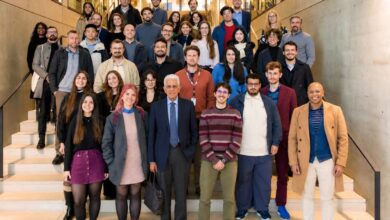

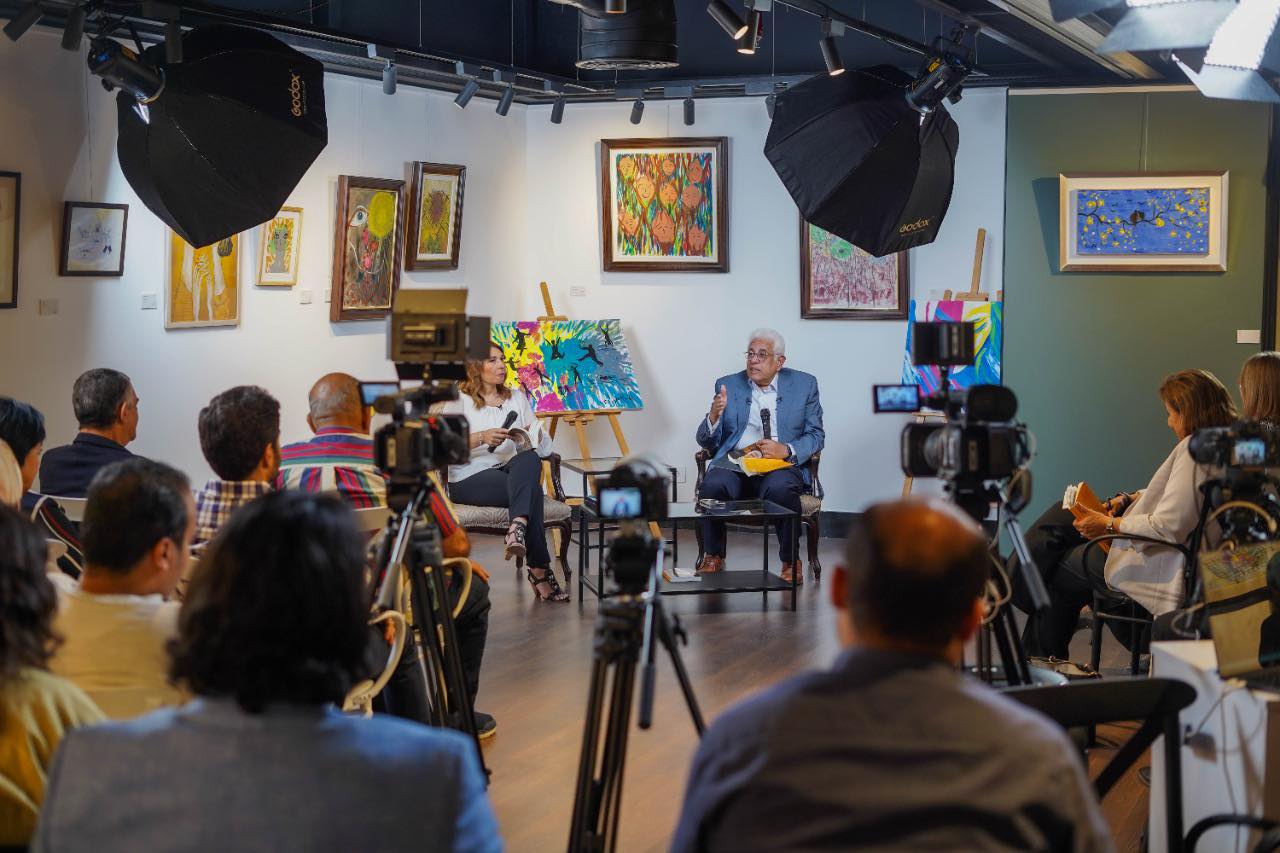
In a delightful and wonderful evening, the Bibliotech Library celebrated Dr. Hossam Badrawi’s book “An Invitation to Think” by holding a signing ceremony and a symposium in which many figures from the political, media and civil society participated.
The evening began with the playing of distinguished pieces of music on the harp by the distinguished student Nada Al-Zarqani, then it was followed by the start of the symposium
by Dr. Badrawi, which was brilliantly moderated by the distinguished writer Rasha Samir, in the presence of more than 100 public figures
Dr. Muhammad Kamal, Dean of the Institute of Arab Research and Studies, Dr. Hazem Yassin, Professor of Ophthalmology, Artist Tariq Al-Dasouki, Dr. Salma Al-Bakry, President of the Education First Foundation, Dr. Mahmoud Hamza, Ambassador Ashraf Rashed, Ambassador Ahmed Abu Shadi, and a group of public figures and artists
The evening began with a presentation by writer Rasha Samir about the book and on the approach of Dr. Hossam the rationalist and the enlightener and his dialogues with the youth, then a word by Dr. Badrawi about the book and the most important of what came in it and the motives through which he wrote the book An Invitation to Think
And our need for an enlightening current as a necessity to liberate society from reactionary currents that are single-minded and influenced by Imam Ali bin Abi Talib, Professor Al-Akkad, Taha Hussein, Zaki Najeeb Mahmoud, Khaled Muhammad Khaled, Ihsan Abdul Quddus, Gibran Khalil Gibran, and the pioneer of enlightenment Sheikh Muhammad Abdo.
d read Hossam, paragraphs from the book, and give hope to the new generations of youth and our children
During his speech, he stressed the importance of our need to implement the mind based on science and knowledge
Then the dialogue was followed by questions and interactive discussions with the audience
Then Dr. Badrawi signed the book for the audience to take souvenir photos with them
The book is published by the Egyptian Lebanese House and can be obtained from the following link:
https://almasriahbookstores.com https://almasriahbookstores.com/…/%D8%AF%D8%B9%D9%88%D8…