
2025 Collective Activities & ArticlesAll ArticlesBy Dr BadrawiTranslated Articles

Egypt Is Egypt — “A Beating Heart and a Balance of Wisdom” By Hossam Badrawi

In times when the voice of fire rises above the voice of reason, Egypt — with its historic wisdom and political acumen — continues to hold the threads of balance at a moment when the region teeters between explosion and collapse.

And because I am among those who criticize the way Egypt manages its domestic economic and political affairs — the narrowness of vision in opening the windows of freedom of expression and the imbalance between the powers of the state’s institutions — fairness and national conscience compel me today to speak a word of truth about Egypt’s stance on the Palestinian cause, a position that deserves respect and praise.

The Egyptian leadership has chosen the path of responsible peace — neither submission nor impulsiveness — and its pursuit of an agreement that spares bloodshed and protects civilians on both sides is both a national and humanitarian act.

Egypt did not resort to slogans, nor did it bargain away its principles. Instead, it advanced through calculated steps, guided by a skilled diplomacy and an intelligent security mind, working to bring together parties that are nearly impossible to unite around one table — especially under leaders in Israel, the United States, and Hamas, each capable of igniting a new blaze at any moment.

But the most important and deeply resonant stance in the heart of the Arab nation is Egypt’s categorical rejection of any form of displacement onto its territory.

That rejection was not merely a political decision — it was a historical shield that preserved the essence of the Palestinian cause alive in minds and hearts. It prevented the transformation of the struggle into a new tragedy of refugees that would erase identity and dissolve rights under temporary headlines.

Perhaps Egypt’s refusal of whatever “price” might have been offered to ease its economic hardship reflects the steadfastness of its principles and the leadership’s confidence in overcoming its crises without compromising what is right.

At this delicate moment, Egypt is not only defending its borders, but also the very boundaries of Arab consciousness — defending the right to exist, to dignity, and to identity.

Therefore, it is a national — before moral — duty to commend this role, not out of flattery or distortion, but in acknowledgment of a patriotic act rightly credited to the Egyptian leadership for its wise management of one of the region’s most complex crises.

Criticism, when necessary, is a duty.
And praise, when deserved, is an obligation.

It is only fair to say that this Egyptian diplomatic performance befits the history and stature of the state and reminds us of the role Egypt has always played — as the rational heart of the Arab nation.

And in a crisis like this, Egypt has proven that the voice of wisdom can still be heard… when it speaks from a sincere national heart.

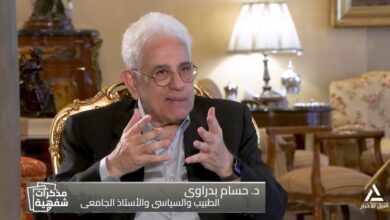
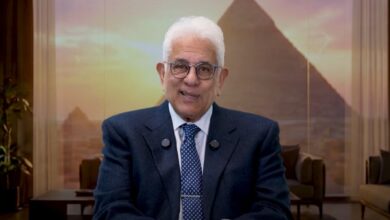
Dr. Hossam Badrawi

He is a politician, intellect, and prominent physician. He is the former head of the Gynecology Department, Faculty of Medicine Cairo University. He conducted his post graduate studies from 1979 till 1981 in the United States. He was elected as a member of the Egyptian Parliament and chairman of the Education and Scientific Research Committee in the Parliament from 2000 till 2005. As a politician, Dr. Hossam Badrawi was known for his independent stances. His integrity won the consensus of all people from various political trends. During the era of former president Hosni Mubarak he was called The Rationalist in the National Democratic Party NDP because his political calls and demands were consistent to a great extent with calls for political and democratic reform in Egypt. He was against extending the state of emergency and objected to the National Democratic Party's unilateral constitutional amendments during the January 25, 2011 revolution. He played a very important political role when he defended, from the very first beginning of the revolution, the demonstrators' right to call for their demands. He called on the government to listen and respond to their demands. Consequently and due to Dr. Badrawi's popularity, Mubarak appointed him as the NDP Secretary General thus replacing the members of the Bureau of the Commission. During that time, Dr. Badrawi expressed his political opinion to Mubarak that he had to step down. He had to resign from the party after 5 days of his appointment on February 10 when he declared his political disagreement with the political leadership in dealing with the demonstrators who called for handing the power to the Muslim Brotherhood. Therefore, from the very first moment his stance was clear by rejecting a religion-based state which he considered as aiming to limit the Egyptians down to one trend. He considered deposed president Mohamed Morsi's decision to bring back the People's Assembly as a reinforcement of the US-supported dictatorship. He was among the first to denounce the incursion of Morsi's authority over the judicial authority, condemning the Brotherhood militias' blockade of the Supreme Constitutional Court. Dr. Hossam supported the Tamarod movement in its beginning and he declared that toppling the Brotherhood was a must and a pressing risk that had to be taken few months prior to the June 30 revolution and confirmed that the army would support the legitimacy given by the people

Related Articles

Back to top button