
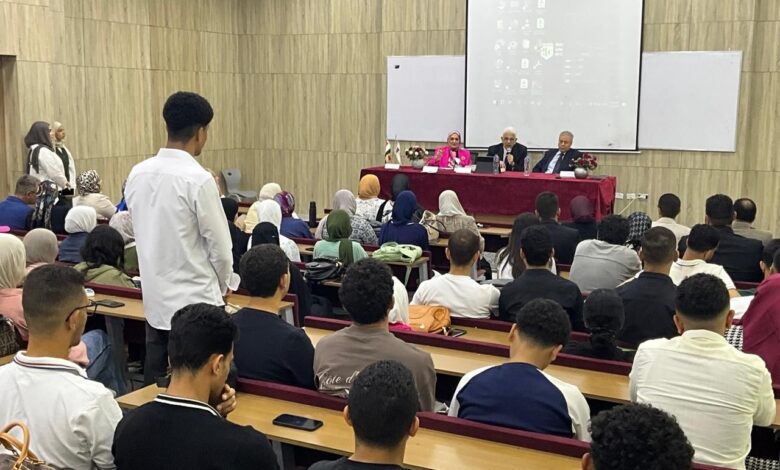
Our society today faces a real crisis in managing disagreement. Many people believe that merely discussing what they consider “non-negotiables” is a threat, so they close the door to dialogue, replacing it with rejection or accusation. Yet dialogue does not necessarily mean agreement; it is a space to understand oneself and others, and to reach solutions or shared ground.
I believe that every person has rights regardless of my personal beliefs about them. Just as I defend Alaa Abdel Fattah’s right to leave prison after serving his sentence, despite my fundamental disagreements with many of his views, I always advocate for distinguishing between judgment of a person and their human and legal rights.
Why do we engage in dialogue?
-
It is not a cultural luxury but a human necessity.
-
It broadens our horizons: Hearing opposing views tests our own ideas and reveals their strength or weakness.
-
It builds trust: Honest, respectful dialogue makes even those who disagree feel secure.
-
It promotes coexistence: A diverse society cannot survive without mechanisms for managing differences.
Rules of Mature Dialogue
Separate the idea from the person
Criticizing an idea is not an attack on the individual. Respect for the person is constant; disagreement with their opinion is temporary.
Listen before responding
Many people do not listen to understand—they listen to prepare an attack. Good listening is half the dialogue.
Respect is inviolable
Even in the fiercest disagreements, certain boundaries must never be crossed: no insults, no mockery, no belittling.
Admitting ignorance is a virtue
It is not shameful to say, “I don’t know.” What is shameful is claiming absolute knowledge and closing the door to discussion.
Separate belief from rights
I may reject an idea in my convictions, but I do not deny the speaker their right to express it. This is the essence of justice.
Intellectual humility
The human mind is limited. What seems “fixed” today may change tomorrow with new knowledge or different experiences.
Responsibility in expression
Freedom does not mean chaos. Opinions must be expressed in a disciplined manner that respects context and society.
The biggest obstacle: personalizing dialogue
Too often, discussions turn into trials of intent rather than exchanges of ideas.
Those with opposing views may be accused of betrayal, heresy, or ignorance. This personalization kills dialogue before it begins. We must separate an individual’s dignity from the correctness of their opinion: the former is always protected, the latter is open to discussion.
The fruit of dialogue
Successful dialogue does not mean one side wins and the other loses. Rather, it means we all leave more aware. Our beliefs may not change, but we gain:
-
Greater clarity in understanding our own arguments
-
The ability to respect differing views
-
A shared space where no one overwhelms the other
Conclusion
Dialogue is a school of freedom and reason. It is practice in being human before being advocates for our ideas. My constant call: discuss without personal attacks, argue without exclusion, and open the doors of the mind without fear. Only then does difference become enrichment, not a curse.