
20262026 Collective Activities & ArticlesNews

Dr. Hossam Badrawi Delivers Lecture at the University of Oxford’s Department of Politics and International Relations Titled “How Do Nations Change?”

Distinguished colleagues, dear students,

It is a great honour to stand before you today, in a place that has shaped so much of how the world thinks about the state, liberty, and power.

I want to begin with a question that seems almost naïve in its simplicity, and yet I have found that our confusion about it lies behind much of our confusion about modern history itself:

 **Do nations change overnight, the way weather changes between one evening and the next morning? Or is what we witness as a sudden explosion in the streets, in fact, a fruit that has been ripening for a long time beneath the surface — 

one we only notice the moment it falls, and so mistake for something newly born?**

I come to this question not primarily as a political scientist, but as a physician who has spent much of his career also thinking, and writing, about education, culture, and the Egypt’s  long and difficult passage toward modernity.

 I mention my medical background because it will return more than once in this lecture —

 not as an ornament, but because I have come to believe that the vocabulary of medicine —“ fever, chronic disease, tolerance, relapse “— describes the anatomy of political change more precisely than the vocabulary of triumph and defeat that dominates our news cycles.

Let me start by saying :

  1. The Word “Revolution” Betrays Us

We use the word “revolution” to describe almost anything: popular anger, a coup, the fall of a ruler, even a passing rebellion against a single unpopular decision. 

The more we use the word, the less clear it becomes.

Is every mass uprising a revolution? 

Does the fall of a ruler mean the fall of a regime? 

Does a revolution begin the day the crowds fill the square, or years earlier, when ideas and expectations quietly begin to shift beneath a placid surface?

I want to propose, at the outset, a working definition, one I will test against history for the remainder of this lecture:

> **A revolution is a relatively rapid, fundamental transformation in the legitimacy of authority, the structure of the state, and the social contract — occurring when the gap between a changing society and the state’s capacity to absorb that change becomes unbridgeable by reform.**

This definition does not require violence, though violence is often present. 

It does not require a single leader or a unified ideology.

 And critically, it sets a threshold: an event only qualifies as a revolution if it produces new rules and new legitimacy — not merely a new face at the top of an old hierarchy.

This distinction matters enormously, 

Why?

because it lets us separate three phenomena we routinely conflate: 

**protest**, which says to a government, “change this policy”; 

**uprising**, which says, “we can no longer bear this rule”; and

 **revolution**, which asks the far more radical question — “who has the right to govern, on what basis, and under what covenant?”

  1. Why the Poor Do Not Always Revolt

Here is where common sense misleads us. We assume, almost instinctively, that poverty and oppression are the fuel of revolution — that suffering accumulates until it detonates. 

But history does not confirm this. 

If poverty alone produced revolutions, the poorest societies on earth would be the most revolutionary.

 They are not. 

Some of the most repressive regimes in history have endured for generations, unchallenged.

“Alexis de Tocqueville”, writing in the nineteenth century about the French Revolution he had not personally witnessed, made an observation I consider one of the most penetrating in the whole of political thought: 

**the most dangerous moment for a bad government is typically not when it is at its most oppressive, but when it begins to reform.** Reform does not merely relieve pressure — it awakens something more volatile than anger: 

it awakens hope. 

A people who have known only repression may adapt to repression. 

But a people who glimpse the possibility of change will demand more of it — and when reform stalls midway, disappointment becomes a far more combustible force than despair ever was.

“James C. Davies” formalised this insight in his famous “J-curve” theory: revolutions tend to erupt not at the point of deepest deprivation, but after a period of rising expectations followed by a sharp reversal.

 And “Ted Robert Gurr” gave us the concept of **relative deprivation** — people do not revolt because they are poor in absolute terms; they revolt when they perceive a widening gap between what they believe they deserve and what they actually receive. 

This is why a frustrated university graduate in a middle-income country may feel more aggrieved than a subsistence farmer in a much poorer one: the graduate has glimpsed a door that then closed in his face, while the farmer never saw the door at all.

Education, media, and connectivity to the wider world do not merely inform people — they raise the ceiling of expectation. In this sense, revolutions often begin in the mind long before they begin in the street.

III. The Real Question: Why Do Some States Adapt and Others Break?

If suffering alone does not explain revolution, we are left with a more interesting — and, I think, more useful — question:

 **why do some states manage to reform themselves continuously, while others are eventually forced to break?**

I want to offer you a concept that I have found more analytically productive than the tired opposition between “revolution” and “reform”: 

**the state’s capacity for civilisational adaptation** — its ability to continuously adjust its laws, institutions, and distribution of power at a pace commensurate with the real transformation occurring within society: in knowledge, values, education, the role of women, family structures, technology, and citizens’ understanding of their own rights.

Society changes every single day — through schools, universities, the economy, migration, the internet, and successive generations. 

The state, by its very nature, moves more slowly: laws are not rewritten daily, bureaucracies are inherently conservative, and institutions resist change because they fear losing their own stability.

The problem is never simply that society changes, nor simply that the state is slow. The danger begins when the *gap* between their respective speeds grows wide enough that they effectively come to inhabit different eras. 

A citizen may live with the mind of the twenty-first century while parts of the state still reason with the instincts of the twentieth.

Allow me, once more, my medical metaphor: a physician does not regard a patient’s fever as the disease itself.

 Fever is a sign — sometimes a healthy sign of the body fighting back, sometimes a dangerous sign that something has gone badly wrong. 

The disease itself lies in whatever produced the fever. **Revolution, I would argue, is the fever, not the illness.** 

The illness is the state’s loss of capacity to adapt to a society that has already changed beneath it. 

And this is why lowering the fever — toppling a government, removing a president — does not by itself cure the disease. 

The deeper condition, the broken relationship between state and society, may persist long after the visible crisis has passed.

  1. Legitimacy: The Question Every Revolution Is Really Asking

If I could distil this entire lecture into a single analytical tool, it would be this: 

**every revolution, whatever its slogans, is ultimately an argument about the source of legitimacy

** Does authority derive from God, from heredity, from the nation, from the revolution itself, from a party, from a constitution, from the ballot box, from a particular religious doctrine? Trace how a society answers this question, and you will understand far more about its trajectory than any account of marches and battles could tell you.

Consider four cases briefly, because I think the contrast is genuinely illuminating.

**England, 1688** — what the English themselves called their “Glorious Revolution” — was not the most violent of revolutions, nor did it seek to remake society from its foundations. 

Its achievement was narrower and, in a sense, more radical: it relocated legitimacy from the person of the king to the constitutional order itself. 

The king would still rule — but not alone, and not above the law.

 It was, I would argue, a revolution *within* the state rather than *against* it, and it may be the single most durable contribution to what we now call constitutional government.

**The American Revolution** asked a different question: not “how do we constrain a king?” but “who has the right to govern us?” 

Its most iconic phrase, “no taxation without representation,” was not really about the tax rate — it was a philosophical claim about the absence of consent. 

This was neither a revolution of the hungry nor of class conflict; it was a revolution of political legitimacy, and its genius lay in what came immediately after independence: the swift construction of institutions — a constitution, a separation of powers — capable of *sustaining* liberty long after the founders themselves had gone.

 Power may be built by a leader; only law builds a state.

**The French Revolution** asked the most radical question of the three: not how to constrain the king, nor merely who should govern, but where legitimacy comes from *at all*.

 Its answer — sovereignty belongs to the nation — rewrote the political vocabulary of the entire world: citizenship, popular sovereignty, the general will, equality before the law. But we should not romanticise it. The revolution that began in the name of liberty descended, within a few short years, into Terror, and then into the rule of Napoleon. 

This was not an accident; it exposed a pattern that would recur again and again: **toppling the old order does not, by itself, answer the much harder question of who now speaks in the revolution’s name.**

 The moment of unity — everyone agreeing on what they reject — is far easier to sustain than the moment of construction, when former allies discover they want fundamentally different futures.

**The Russian Revolution** pushed this danger to its extreme. 

The Bolsheviks were not merely asking who should govern; they believed they possessed the final answer to what the human being itself ought to become. 

Ideology preceded the party, and the party preceded the revolution. 

This is, I think, the deepest lesson of 1917: **the more certain a revolution becomes that it possesses ultimate truth, the less capable it becomes of tolerating disagreement** — because dissent is no longer received as another opinion, but as a threat to the revolution’s very identity.

  1. State Strength and Societal Freedom Are Not Opposites

Allow me to challenge a dichotomy I think has done real damage to political thinking in both the West and the developing world: the assumption that a strong state and a free society are somehow in tension — that more of one requires less of the other.

I do not believe this. 

A weak state does not produce more freedom; it tends to produce the collapse of law itself, and the rise of competing centres of power — clan, militia, faction, capital — that fill the vacuum the state has left behind. Citizens do not fear a strong state; they fear a state unconstrained by law.

Equally, a state that maintains order through force alone may look stable for decades — until it doesn’t. 

Force can suppress protest, but it cannot suppress the underlying transformation of society; 

it can postpone the reckoning, but not cancel it. 

Over time, the gap I described earlier widens, and power — once a tool of stability — becomes an obstacle to renewal. 

Rigid states, like dry wood, appear strong, but they are the first to snap. 

Flexible states, like the green branch, bend in the wind — and survive it.

This is why I insist on separating two things too often treated as one: 

**the strength of the state** and **the strength of the ruler**. 

A ruler who concentrates everything in his own hands may appear powerful, but the institutions around him grow weaker with every year of that concentration — they learn to wait rather than to decide, and when that ruler eventually departs, the vacuum he leaves reveals just how hollow the surrounding structures had become. 

A genuinely strong state, by contrast, is one that continues to function competently regardless of who occupies its highest office. Great states are not measured by the greatness of their rulers, but by their capacity to endure after those rulers are gone — which is precisely why I regard the peaceful, regular transfer of power not merely as a democratic value, but as an administrative and civilisational necessity: a mechanism for the state’s own biological renewal.

  1. Why Changing the Regime Is Not Enough

I want to turn now to what I consider the most difficult — and most neglected — question in the entire literature on revolutions: 

**why do some societies, after successfully overthrowing their old order, end up reproducing precisely the authoritarianism they rose against?**

A constitution can be rewritten in months. A government can be replaced in days. But a *culture* cannot be replaced at the same speed. 

Citizenship — respect for law, tolerance of disagreement, the belief that authority is a function and not a privilege, that opposition is not treason, that a ruler is a public servant rather than a national father figure — these are not laws. They are habits of mind, and habits of mind take generations to form.

This is why authoritarianism so often survives the authoritarian: it has already embedded itself not only in politics, but in the family, the classroom, the university, the workplace, and even in how we raise our children. A child taught that obedience matters more than understanding grows into an adult who searches for someone to obey, not someone to hold accountable.

 A school that rewards memorisation over inquiry produces citizens who fear questions rather than citizens who generate knowledge.

This is also, I believe, why freedom itself can feel frightening. Freedom is not merely the absence of constraint; it is the burden of choice, and choice is exhausting. 

Some people, quite understandably, prefer the certainty a strongman offers to the anxiety that liberty demands. And so, after a ruler falls, many societies find themselves searching — almost involuntarily — for a new one to take his place, not because they love authoritarianism, but because they fear the vacuum more.

I would go so far as to say that the single most dangerous illusion that follows any revolution is the belief that changing power is sufficient.

 It is not. 

It may, in fact, be the easiest part of the entire process. **The harder task — infinitely harder — is rebuilding the citizen.**

VII. History as a Laboratory: More Than One Path to Change

I want to close the historical portion of this lecture by resisting the idea that revolution, in the French or Russian sense, is the only template for national transformation. It is one template among several.

**China** shows us revolution that rebuilt the state, followed decades later by the state itself undertaking sweeping economic reform without a second revolution — proof that even a revolutionary order may, a generation or two later, be compelled to revisit its own founding assumptions.

**Japan**, during the Meiji era, achieved something that functioned like a revolution in its depth of consequence, without a popular uprising at all — a revolution imposed from above, by a state that understood the world had changed and chose to reform itself before the contradiction became an explosion. 

Perhaps the more useful question is not always “did a revolution occur?” but **”did the state manage to revolutionise itself before society was forced to revolutionise it for them?”**

**India** shows us decolonisation that preserved and repurposed inherited institutions within a new democratic covenant, rather than demolishing everything and starting from zero — a reminder that independence does not end the work; it only begins it, at the much harder question of whether a diverse nation can govern its own differences.

**South Africa** offers, I think, one of the most morally significant cases in modern history: a negotiated transition, led by figures such as Nelson Mandela and F.W. de Klerk, that avoided a near-inevitable civil war by treating compromise itself as a revolutionary act.

 Revolution, this case teaches us, does not always mean defeating one’s opponent; sometimes the truly revolutionary act is accepting his continued existence.

**Sudan**, by contrast, illustrates the opposite lesson: repeated uprisings that succeeded in toppling governments but repeatedly failed to build what comes after — a sobering reminder that toppling a ruler may take weeks, while building a state may take generations, and that a revolution unable to convert itself into institutions remains at permanent risk of returning to its starting point, or somewhere worse.

VIII. Egypt: Three Revolutions, Three Different Questions

Allow me, finally, to bring this closer to my own country, because I think Egypt offers a compressed illustration of everything I have argued today.

In less than a century, Egypt experienced three distinct historical moments, each posing a fundamentally different question about legitimacy.

**1919** was, at its core, a *national* revolution. Its question was not how to rebuild the economy or reinterpret religion, but simply: does an Egyptian nation exist with the right to determine its own destiny? It united Muslims and Christians, peasants and intellectuals, men and women, around a single idea — national independence — and the legitimacy it produced belonged to the Egyptian nation itself.

**1952** arose in a different context — a country with a measure of political independence, but still burdened by deep social inequality, weak institutions, and continued occupation of the Suez Canal. The question shifted from “who are we?” to “how do we build a state strong enough to deliver social justice and genuine independence?” 

Its legitimacy derived from state-building itself — real achievements in education, health, industry, and land reform — but its parallel legacy was a narrowing of political space and a weakening of the mechanisms for transferring power, as the state’s legitimacy became increasingly fused with the legitimacy of the revolution itself.

**2011** was different again — leaderless, without a single ideology or organisation, which was simultaneously its greatest strength and its greatest vulnerability. It could unite millions around a rejection of the status quo, but not around a shared vision of what should follow. Its slogan — “bread, freedom, social justice, human dignity” — was a brilliant expression of that breadth, but it was not a governing programme. And so the real struggle began only after the old order fell: not whether change was needed, but **who now had the right to define the revolution and determine the state’s future** — the legitimacy of the ballot box, the legitimacy of the square, the legitimacy of the state, the legitimacy of institutions, the legitimacy of the revolution itself, all competing at once, without the national consensus needed to resolve them quickly.

I would add one further reflection here, offered more tentatively: Egypt’s particular resilience, I suspect, lies not only in its recent history but in the depth of its civilisational memory. The Egyptian state is not a creature of the twentieth century; it is one of the oldest continuous centralised states in human history. Perhaps this is part of why no single ideology — religious or secular — has ever succeeded in permanently capturing the whole of Egyptian society: not because Egyptians are less committed to their convictions, but because that civilisational memory runs deeper than any single project for reshaping identity.

  1. Conclusion: From Revolution to a Culture of Renewal

Let me draw these threads together.

I began with a question about timing — does change happen suddenly, or does it only appear sudden? I hope I have persuaded you that the honest answer is the second.

 What we call revolution is very often the visible eruption of a much longer, quieter process: the widening of a gap between a society that never stops changing and a state that has stopped changing with it.

I have argued that poverty and oppression alone do not explain revolution — that rising expectations, followed by disappointment, are frequently more combustible than despair itself.

 I have argued that every revolution, beneath its slogans, is really an argument about where legitimacy comes from — and that the most durable transitions in history are precisely those that succeeded in relocating legitimacy from persons to institutions, and from the revolutionary moment to permanent, revisable rules.

 I have argued that a strong state and a free society are not natural enemies, but natural partners — that the true opposite of freedom is not order, but a state unaccountable to law. 

And I have argued that changing a regime, however necessary, is the easier half of the task; the harder half is cultivating the citizen who can sustain what comes after.

If there is a single idea I would ask you to leave this room with, it is this: 

**the true achievement of a civilisation is not measured by how skilfully it conducts its revolutions, but by how successfully it renders revolution unnecessary** — not by closing the doors to change, but by keeping other doors permanently open: reform, accountability, the peaceful transfer of power, and the capacity to learn, continuously, from one’s own mistakes.

Nature offers no permanent stillness. 

Cells renew themselves; seasons turn; rivers keep their names while their waters are never quite the same water twice. 

Stillness, in biology, is not a sign of life — it is a sign of death.

 I believe the same is largely true of nations. 

They too must continually renew their ideas, their institutions, their leadership, their laws, their methods of education, and their understanding of the human being. 

When that renewal stops, history begins searching for another way to force it — and we call that way, when it finally arrives, a revolution.

I opened this lecture with a question about revolution. I want to close it with something closer to a conviction: that civilisation is not measured by how many revolutions a nation survives, nor by how many rulers fall, but by whether renewal has become a habit, reform a culture, disagreement a source of creativity, and the transfer of power a means of the state’s continuation rather than a threat to its survival. 

A nation that reaches that point has not escaped autumn — autumn remains part of every living cycle — but it has learned, finally, that autumn is not an ending. 

It is only the season in which the tree prepares itself for a new spring.

Thank you. I look forward to your questions.

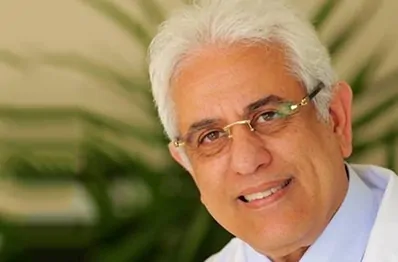
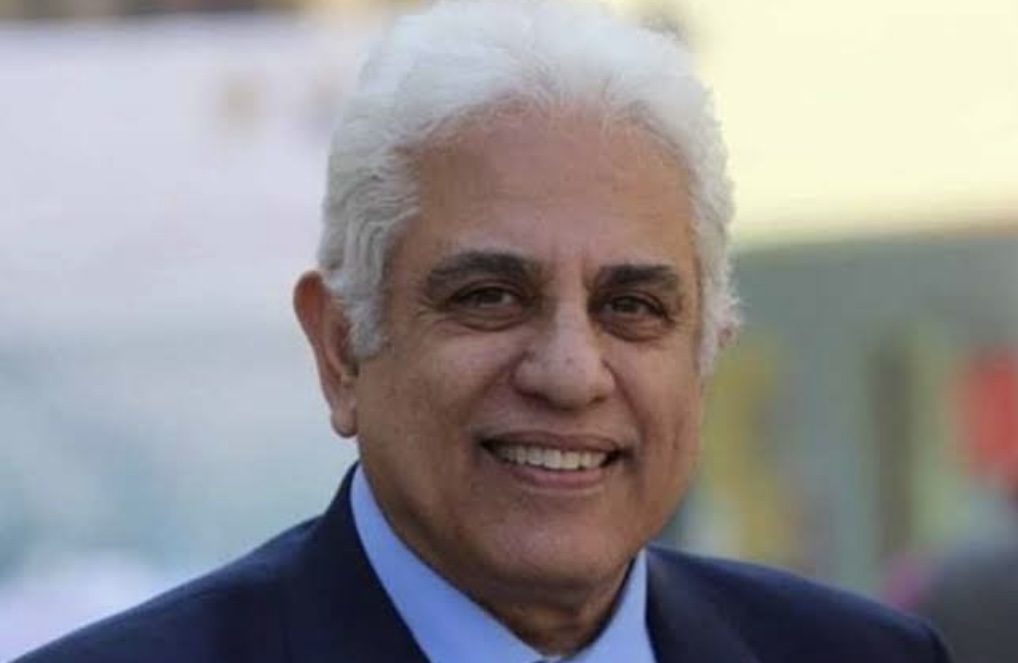
Dr. Hossam Badrawi

He is a politician, intellect, and prominent physician. He is the former head of the Gynecology Department, Faculty of Medicine Cairo University. He conducted his post graduate studies from 1979 till 1981 in the United States. He was elected as a member of the Egyptian Parliament and chairman of the Education and Scientific Research Committee in the Parliament from 2000 till 2005. As a politician, Dr. Hossam Badrawi was known for his independent stances. His integrity won the consensus of all people from various political trends. During the era of former president Hosni Mubarak he was called The Rationalist in the National Democratic Party NDP because his political calls and demands were consistent to a great extent with calls for political and democratic reform in Egypt. He was against extending the state of emergency and objected to the National Democratic Party's unilateral constitutional amendments during the January 25, 2011 revolution. He played a very important political role when he defended, from the very first beginning of the revolution, the demonstrators' right to call for their demands. He called on the government to listen and respond to their demands. Consequently and due to Dr. Badrawi's popularity, Mubarak appointed him as the NDP Secretary General thus replacing the members of the Bureau of the Commission. During that time, Dr. Badrawi expressed his political opinion to Mubarak that he had to step down. He had to resign from the party after 5 days of his appointment on February 10 when he declared his political disagreement with the political leadership in dealing with the demonstrators who called for handing the power to the Muslim Brotherhood. Therefore, from the very first moment his stance was clear by rejecting a religion-based state which he considered as aiming to limit the Egyptians down to one trend. He considered deposed president Mohamed Morsi's decision to bring back the People's Assembly as a reinforcement of the US-supported dictatorship. He was among the first to denounce the incursion of Morsi's authority over the judicial authority, condemning the Brotherhood militias' blockade of the Supreme Constitutional Court. Dr. Hossam supported the Tamarod movement in its beginning and he declared that toppling the Brotherhood was a must and a pressing risk that had to be taken few months prior to the June 30 revolution and confirmed that the army would support the legitimacy given by the people

Related Articles

Back to top button