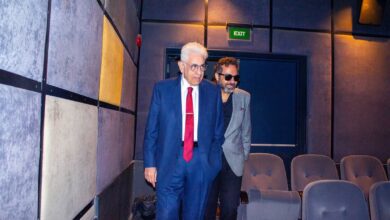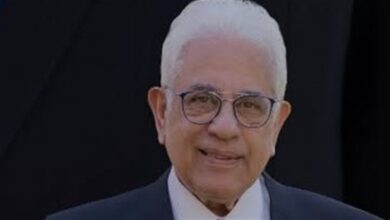

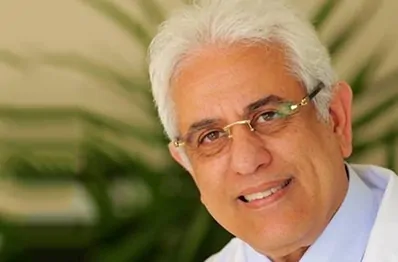
Dr. Osama Hamdy, a professor at Harvard University, is a globally recognized expert in diabetes research and treatment. He directs one of the world’s leading research and development centers for this serious disease in the United States. We share not only our birthplace, Mansoura, but also a deep love for our country, dreaming of its future and working toward it.
A discussion arose between us about the Egypt we dream of and the history tied to its leaders. Since we prefer to see the best in people, appreciate what we consider positive, and criticize what we see as wrong, our conversation focused on Egypt’s leaders in modern times. It felt like a dialogue about the future.
Dr. Osama began:
“Over the past eighty years, Egypt has had seven rulers. Each of them, to the best of his ability, tried to serve this country from a position of leadership. They succeeded in some things and failed in others. You may become attached to one of them and only see his achievements, excusing all his failures and viewing him as an angel. But you may forget that a ruler is merely a servant of the people, not their master. Success and failure are measured by the people’s satisfaction during his rule and by history’s judgment after his departure. Unfortunately, most of them ended their era differently from how they wished.”
I said:
“If power had been transferred through a civilian process—without death, coups, or assassinations—we would have seen one achievement built upon another. We would have seen the accumulation of each era’s strengths and the correction of its mistakes. We would not have seen every president demolishing what his predecessor built, or sometimes erasing his name from history and accusing his era of corruption and failure.”
He replied:
“You’re right. Looking objectively at these eras and their leaders, each had strengths and weaknesses. They were human beings who made both correct and incorrect decisions, and each lived in a unique historical context different from the one we live in today.”
I said:
“Let’s examine them one by one and consider the different perspectives regarding what they achieved and where they failed.”
He said:
“I’ll begin with King Farouk. His was the era of pashas and barefoot peasants. He was patriotic, loved his country, respected the constitutional democratic system and free elections, and disliked British colonialism.”
I asked:
“And what are the criticisms against him?”
He said:
“Personal irresponsibility, obsession with gambling, interference in politics through constantly changing governments, neglecting rural Egypt and leaving it vulnerable to ignorance, poverty, and disease, and entering the 1948 war without preparation, which led to a defeat for all Arabs.”
I said:
“And his era ended with his removal through the military revolution and the distortion of his legacy, even undermining leaders who lived during the monarchy, as though Egypt had only been born after the July 1952 revolution.”
I added:
“And what about Mohamed Naguib, whose existence was erased from history throughout Nasser’s life, and whose era ended with removal from office and house arrest?”
He said:
“The monarchy and colonialism ended during his time, and the republic was declared. But he had aligned himself with the Muslim Brotherhood and dissolved political parties, and he was not the true leader of the revolution.”
I said:
“The era of Gamal Abdel Nasser will be where you and I disagree, given my knowledge of your admiration for him.”
Dr. Osama replied:
“Nasser’s era was one of industrial growth, social justice, hopes for Arab unity and African outreach, the nationalization of the Suez Canal, construction of the High Dam, cultural, literary, and artistic advancement, expansion of socialism, attempts to create a society of sufficiency, social laws protecting the middle class, workers, and farmers, ending the domination of capital over government, and then the War of Attrition following the defeat.”
He continued:
“But the criticisms against him include reliance on loyalists over competence, failure of the unity project, involvement in the Yemen war, destruction of the private sector, the 1967 defeat whose consequences still affect us, authoritarianism, absence of democracy, control of the media, and security repression.”
I said:
“You were objective in your description, but what I personally hold against Nasser is the loss of a historic opportunity. Given his popularity across the Arab world, he could have moved the country toward sustainable democracy. Instead, he accepted dictatorship, relied on referendums, and lost an opportunity that may never come again in Arab history.”
He said:
“And what about Anwar Sadat?”
I replied:
“His era was one of victory and the beginning of peace, reclaiming Sinai, democratic transformation, industrial city development, and moving away from dependence on the Soviet bloc with foresight regarding its potential collapse.”
He said:
“But there were many criticisms as well: reckless economic liberalization, widening class divisions, bringing political Islam back into public life and strengthening it, aligning too closely with the Western and American camp, and dismantling much of Nasser’s social justice framework. His era ended tragically with assassination among his own soldiers by people whom he had released and pardoned.”
I said:
“What I can never forgive him for is amending the constitution to extend presidential terms. He himself did not benefit from it, but those who came after him did.”
I added:
“Hosni Mubarak’s era was characterized by stability, completing the liberation of territory, restoring Arab relations, avoiding regional conflicts, expanding foreign investment, and increasing national income.”
I continued:
“But this did not improve the lives of the middle and lower classes. There was social deterioration, political stagnation, failures in education and healthcare, widening class inequality, severe population growth, the emergence of slums, and moral decline in society.”
I added:
“He also had the opportunity to reinforce democracy and peaceful transfer of power, as he had spoken of at the beginning of his presidency, but he did not do so. His rule ended with his forced resignation outside constitutional procedures and the transfer of authority to the armed forces instead of holding early presidential elections according to the constitution.”
Dr. Osama said:
“And like those before him, much of what he accomplished was erased, his name removed even from metro stations, and he and many around him were put on trial, both the guilty and the innocent.”
I said:
“As for Mohamed Morsi, his era represented the rise of political Islam and its rapid and dramatic downfall due to arrogance, poor judgment, and intolerance. There was concentration of power and attempts to color society with the Brotherhood’s ideology. However, we must also remember the reality of media freedom during his era, which was one of the reasons for his downfall.”
I added:
“I also criticize him for empowering the Brotherhood throughout state institutions, weakening those institutions, creating parallel structures such as armed militias, opening the door to extremists and protecting them, enabling Turkish, Qatari, and American interference in Egypt’s affairs and future, and overseeing economic decline. His era ended with removal from power through a popular uprising supported by the military.”
He said with a smile:
“Shall we continue talking about Abdel Fattah El-Sisi’s era, which is still ongoing, or is that inappropriate?”
I said:
“I think the fear surrounding open political discussion does not originate from the presidency itself but from a perception that continues to grow.”
“There has been a return of fear regarding surveillance of private life, to the point where people often move their phones away during conversations out of concern that they may be monitored. Most likely this is not true, but in politics, perceptions often become reality in people’s minds even without evidence.”
“Still, it may be difficult to judge a historical period while it is still unfolding. Its effects become clearer with time.”
Dr. Osama said:
“If Egypt had adopted the best aspects of each ruler, built upon their achievements, and corrected their mistakes instead of destroying everything and starting over each time, we would be in a different place today.”
I said:
“If we combined the strengths of every era, we would achieve the modern civil Egyptian state we all dream of: a modern civil state with a stable constitutional democratic system, free elections, peaceful transfer of power, no use of religion for political gain, major industrial advancement with a central role for the private sector, a clearly defined role for the state, high-quality education as a right rather than a paid service, healthcare meeting international standards regardless of a citizen’s financial capacity, public transportation that respects human dignity, swift justice based on a clear philosophy and independent from executive authority, equal opportunities, and cultural, literary, and artistic advancement free from restrictive extremist thought.”
“We would have built a country that protects and develops the middle class, expands foreign investment to create jobs, preserves media freedom, continues major projects and infrastructure development, sustains economic reform, improves security performance through science rather than appearances, maintains balanced regional and international relations, eliminates slums, improves urban planning, controls population growth, and develops tourism—Egypt’s underutilized treasure.”
“Is this not the Egypt we all dream of?”
I added:
“Sustainable human development and peaceful transfer of power, my friend, are the foundation of cumulative progress, learning from our mistakes, and avoiding repeating the same actions while expecting different results.”
He concluded:
“Beyond pleasant words, with complete honesty and sincerity, I say to Egypt’s current and future leaders: this is all we wish from you for our beloved Egypt. May history remember you kindly.”