
2025 Collective Activities & ArticlesAll ArticlesBy Dr BadrawiTranslated Articles

When Al-Ahly Club Reflects the Crisis of Collective Awareness in Our Relationship with Authority and Symbolism

Al-Ahly Club in Egypt is not merely a sports institution or a football team that fills hearts with joy through victories; in essence, it is a social phenomenon that mirrors the Egyptian personality — with all its diversity, contradictions, and depth — representing the collective Egyptian spirit.

Within Al-Ahly come together people from all classes, sects, and regions, united by an emotional bond that transcends sports and becomes almost a form of national belonging.

Therefore, what happens inside Al-Ahly — its elections, its internal conflicts, its fans’ loyalty — can be read as a microcosm of Egyptian society itself.

Al-Ahly represents the largest popular gathering in which class, religious, and regional affiliations merge into a single identity called “Al-Ahly.” What happens within it is thus a reflection of the entire nation — a miniature model of Egypt.

The Current Scene

It was recently announced that Captain Mahmoud El-Khatib, the club’s president, does not intend to run for another term — a position worthy of respect for its wisdom and understanding of the importance of leadership renewal, especially since his health is not in the best condition.

Under the regulations of club elections introduced after the January Revolution, club presidents cannot serve more than three consecutive terms. Personally, I love El-Khatib and count most of the board members among my friends, and I believe many of them — and others — are qualified to lead the club in the coming stage.

Yet, as soon as El-Khatib announced he would not seek a third term, pressure began to mount on him to stay — not through a democratic contest, but through acclamation (“by consensus”), effectively suspending the very idea of change.

The irony is that those who complain about the long tenure of rulers in Egypt are the same ones urging their beloved president to remain in office.

It is a psychological and cultural paradox worth contemplation.

This phenomenon is not unique to Al-Ahly; it reflects a broader cultural pattern in Egyptian society — a false sense of stability that confuses continuity with stagnation. It stems from a deep-rooted fear of the unknown and a lack of trust in alternatives.

The Egyptian saying “What we know is better than what we don’t” becomes public policy — a repeated pattern across major institutions: unions, universities, political parties, and even the state itself.

A Psychological Perspective

In social psychology, this phenomenon is called collective dependence on familiar authority — people seek security in the continuity of the same leadership, even if it has grown tired or stagnant.

What is often forgotten is that change is not ingratitude; it is the condition for growth. When continuity becomes the supreme value, creativity suffocates, and loyalty shifts from the idea to the person, from principle to symbol.

From Al-Ahly to the Nation

What we see in Al-Ahly is not merely a sports issue; it is a social rehearsal for how authority is exercised in Egypt. Those who reject endless leadership terms in the club are often the same who justify them in politics. Those who sanctify the sports icon are the same who build a halo of infallibility around political leaders.

It is the same chain of fear — of the unknown, of chaos, of the idea that the alternative might be worse — but at its core, it is fear of freedom itself.

When we liberate our minds from this fear, we will realize that change is not destruction, but a natural law of life.

Our love for a leader is not proven by keeping him in power, but by respecting his will — and our own — to choose and renew.

Al-Ahly, like Egypt, does not depend on a single individual, no matter how great. Renewal is the guarantee of continuity, not its enemy.

The issue is not with individuals, but with the idea that governs how we perceive them.

The fear of the alternative keeps us prisoners of time, repeating the same scenes — in politics as in sports, in universities as in the state.

When we break this fear, we will discover that change is not a threat — it is the law of life itself.

Al-Ahly — like Egypt — stands not upon a person, but upon an idea. And whoever believes in the idea does not fear the renewal of the faces that carry it.

Let Al-Ahly Club be a school for leadership rotation, not a mirror of stagnation. Only then will we truly begin to build a new culture for the nation.

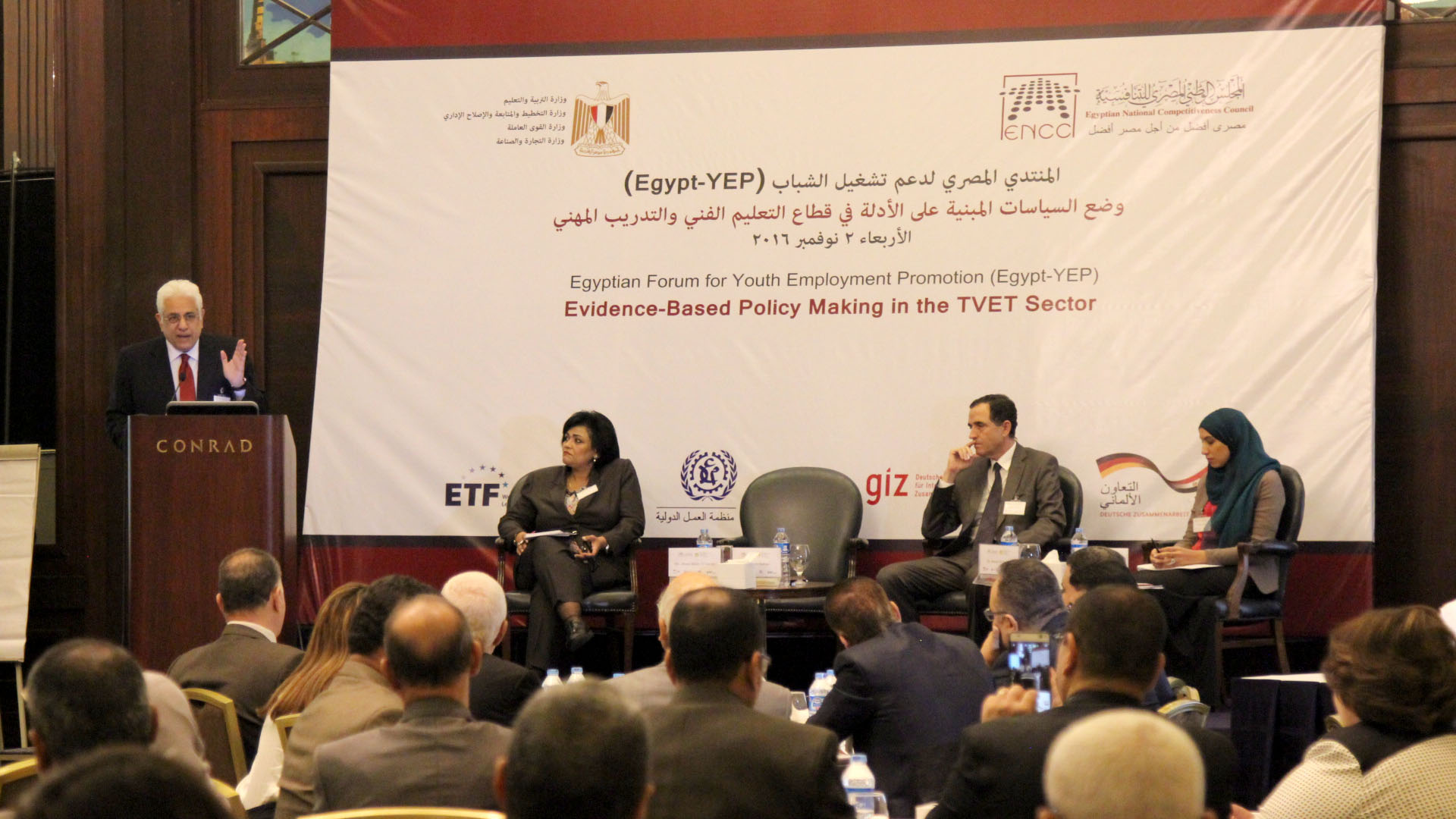
Dr. Hossam Badrawi

He is a politician, intellect, and prominent physician. He is the former head of the Gynecology Department, Faculty of Medicine Cairo University. He conducted his post graduate studies from 1979 till 1981 in the United States. He was elected as a member of the Egyptian Parliament and chairman of the Education and Scientific Research Committee in the Parliament from 2000 till 2005. As a politician, Dr. Hossam Badrawi was known for his independent stances. His integrity won the consensus of all people from various political trends. During the era of former president Hosni Mubarak he was called The Rationalist in the National Democratic Party NDP because his political calls and demands were consistent to a great extent with calls for political and democratic reform in Egypt. He was against extending the state of emergency and objected to the National Democratic Party's unilateral constitutional amendments during the January 25, 2011 revolution. He played a very important political role when he defended, from the very first beginning of the revolution, the demonstrators' right to call for their demands. He called on the government to listen and respond to their demands. Consequently and due to Dr. Badrawi's popularity, Mubarak appointed him as the NDP Secretary General thus replacing the members of the Bureau of the Commission. During that time, Dr. Badrawi expressed his political opinion to Mubarak that he had to step down. He had to resign from the party after 5 days of his appointment on February 10 when he declared his political disagreement with the political leadership in dealing with the demonstrators who called for handing the power to the Muslim Brotherhood. Therefore, from the very first moment his stance was clear by rejecting a religion-based state which he considered as aiming to limit the Egyptians down to one trend. He considered deposed president Mohamed Morsi's decision to bring back the People's Assembly as a reinforcement of the US-supported dictatorship. He was among the first to denounce the incursion of Morsi's authority over the judicial authority, condemning the Brotherhood militias' blockade of the Supreme Constitutional Court. Dr. Hossam supported the Tamarod movement in its beginning and he declared that toppling the Brotherhood was a must and a pressing risk that had to be taken few months prior to the June 30 revolution and confirmed that the army would support the legitimacy given by the people

Related Articles

Back to top button