
Cultural diplomacy
Written by:
Dr.. Hossam Badrawi
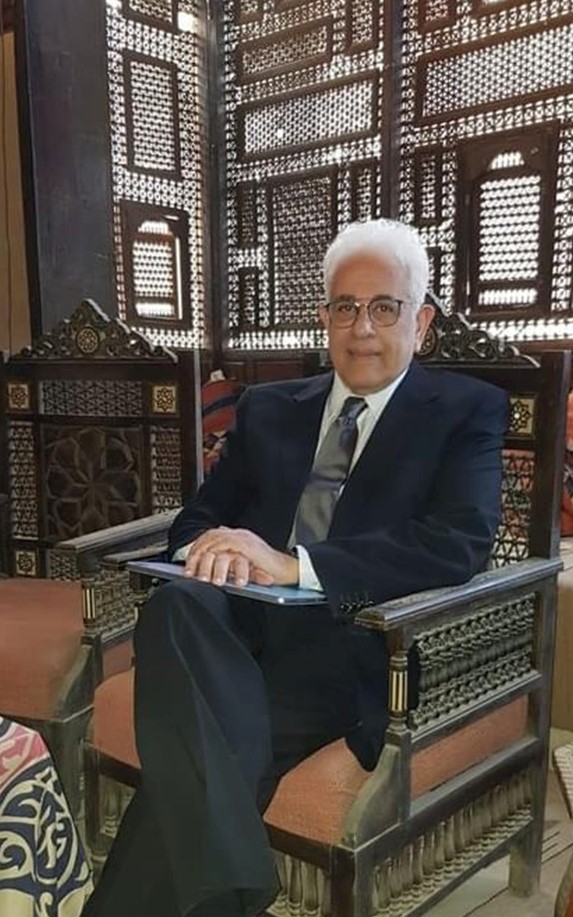
The Sinnari House, affiliated with the Cultural Sector, hosted me at the Library of Alexandria as part of the inauguration activities of the Egypt Cultural Forum, a symposium entitled “The Cultural Component and its Impact on Egyptian Foreign Policies,” sponsored by the Al Salam Foundation for Culture, Dialogue, and Arts, as a keynote speaker accompanied by a group of dignitaries. The prominent Egyptians are Dr. Ali El-Din Hilal, professor of political science at Cairo University, Ambassador Mohamed Al-Orabi, former Minister of Foreign Affairs and Chairman of the Egyptian Council for Foreign Affairs, and Professor Helmy Al-Namnam, journalist and former Minister of Culture.
Cultural diplomacy involves the exchange of ideas, values, traditions and other aspects of culture between nations and peoples to promote mutual understanding and respect. It is an ancient practice and a vital modern foreign policy tool, playing an increasingly important role in world affairs
In ancient times, there were cultural exchanges through trade, arts, and sciences between different civilizations, the Egyptians and Phoenicians, the Greeks, the Romans, and the Chinese. These exchanges contributed to enhancing mutual understanding and respect between different peoples
In the Middle Ages, cultural diplomacy continued through cultural and religious exchanges, and universities and religious schools in Europe and the East became centers of intercultural dialogue.
In the modern era, countries have begun to use cultural diplomacy more systematically as part of their foreign policies. In the nineteenth and early twentieth centuries, colonial powers used cultural diplomacy to strengthen their imperial control
After World War II, cultural diplomacy became an integral part of international relations, as major countries such as the United States and the Soviet Union used culture as a tool for political influence during the Cold War.
Since the end of the Cold War, cultural diplomacy has evolved to include a wide range of activities, including arts, sports, education, science, and youth exchanges. Institutions such as cultural institutes, museums, universities, and international organizations all play a major role in promoting cultural exchange and mutual understanding between countries and peoples.
– There are several theories that support the cultural components of foreign policies**, such as:
Social construction theory, which emphasizes that international structures are fundamentally shaped by cultural ideas, identities, and values. Cultural beliefs and perceptions directly affect how countries interact with each other
The theory of cultural integration also explains that the spread of cultural values, customs and standards across borders can have an important impact on international relations and make it easier for countries to develop foreign policies that are compatible or understanding of the cultures of others.
As for the theory of international identity, it focuses on how national identity is shaped and the perception of this identity by the self and others through a cultural lens. Cultural identity is the focus of the development and implementation of foreign policies, as political decisions are based on how the country represents itself on the international scene.
Cultural exchange theory supports the idea that cultural interactions and exchanges between countries can lead to improving bilateral relations and developing common foundations for cooperation. This theory emphasizes the role of cultural diplomacy as a tool in foreign policies
The theory of dialogue among civilizations gained momentum after the end of the Cold War, and is based on the idea that understanding and recognition of cultural and religious diversity can contribute to reducing international tensions and promoting global peace and stability.
Soft power is a concept developed by Joseph Nye in the late twentieth century, and refers to the ability to influence and attract others to obtain desired results through attraction, persuasion, cultural forces, and political values, rather than coercion or physical payment (hard power). ). Soft power is seen as a complement to hard power and not a substitute for it in foreign policy.
Joseph Nye, himself, defined soft power as “the ability to influence the behavior of others to obtain desired results through appeal rather than coercion.” Culture, political values, and public diplomacy are considered the main tools for exercising soft power.
Countries with a strong soft power capacity often use their cultural resources, such as films, music, and literature, as well as their promotion of values such as democracy and human rights, to enhance their image in the world and to influence global public opinion. This type of influence can make states more able to achieve their external goals in ways that are less costly and less dangerous than using military or economic force.
The idea behind soft power is that a country’s cultural appeal and values can be important resources equal to, and sometimes superior to, military and economic power.
We do not forget that the Egyptian film is called “Arab Film” in the Middle East, and that the money in most Arab countries is called “Masari” as confirmation of its leadership. Likewise, Egyptian culture absorbed everyone who came to it as a friend or even an occupier. It is known that the fame of any artist began in Egypt, and that Egypt alone now absorbs 9 million Arabs without calling them refugees.
Egypt used to send teachers to all the schools of the Arab world after the departure of their occupiers, and in many cases their salaries were paid by the Egyptian government, and Al-Azhar Al-Sharif receives students until now, a role that was also played by Egyptian universities.
Leaders, kings, and ministers in Arab countries learned in Egypt, and Egypt’s leadership in education and culture must have had the greatest impact on many of the countries surrounding it. Egypt’s African role went beyond the commercial and military aspect to containing and supporting many African peoples.
In the era of globalization, where information and cultures are exchanged at breakneck speeds, soft power has become more important than ever. It plays a decisive role in shaping the international image of countries and their influence on the global scene
The mechanisms of cultural diplomacy are multiple, and cultural attachés play an extremely important role that should not be taken as a regular job. Rather, whoever holds it must be able to spread culture.
International protocols and agreements on cultural preservation are very important and Egypt actively participates in these agreements with the aim of preserving cultural heritage, combating illicit trafficking in cultural property, and ensuring the recovery of antiquities that were illegally exported. Through these efforts, Egypt promotes international cooperation and emphasizes the global importance of cultural preservation
We must also not forget to support Egyptian expatriates and the cultural diaspora, maintain strong relations with their communities abroad, and support cultural events and communities abroad that help spread Egyptian culture and enhance the sense of community and national identity among Egyptians living abroad.
All of these examples underscore how Egypt uses its cultural dimension not only as an extension of its foreign policy but as a strategic asset to enhance its global presence, enhance international partnerships, and promote mutual understanding and respect among nations.
We have what no one else has, Egyptology, and this science may play a role in cultural diplomacy by contributing to reviving interest in Egyptian heritage and culture, which strengthens Egypt’s national identity and highlights its importance on the global scene and enhances tourism and partnership in Archaeological discoveries and new knowledge provided by Egyptologists, which supports the local economy and enhances cultural diplomacy.
The ongoing restoration and preservation of Egyptian antiquities also highlights the importance of preserving world heritage, encouraging other countries to support these efforts.
Joint research and studies between scholars in Egypt and scholars from all ethnicities about ancient Egypt also play a role that facilitates the exchange of knowledge and experiences between academics and enhances cultural relations between the countries.
Thanks to advances in Egyptology, some aspects of Egyptian history can be retold in more detailed and accurate ways, and this makes it easier for diplomatic authorities to use this information to enhance the image of Egypt as a cradle of human civilization.
—
Egypt, with its ancient history and rich culture, possesses enormous cultural resources that it can use effectively in cultural diplomacy on the international scene. Cultural diplomacy depends on using culture as a means to strengthen international relations, encourage mutual understanding and promote peace between countries
Some analysts may believe that there is still room to enhance the use of Egyptian cultural power more efficiently in international diplomacy. Improving cultural strategies and programs, increasing initiatives to exchange cultural experiences, and strengthening international partnerships that will enhance Egypt’s cultural role on the international scene.