
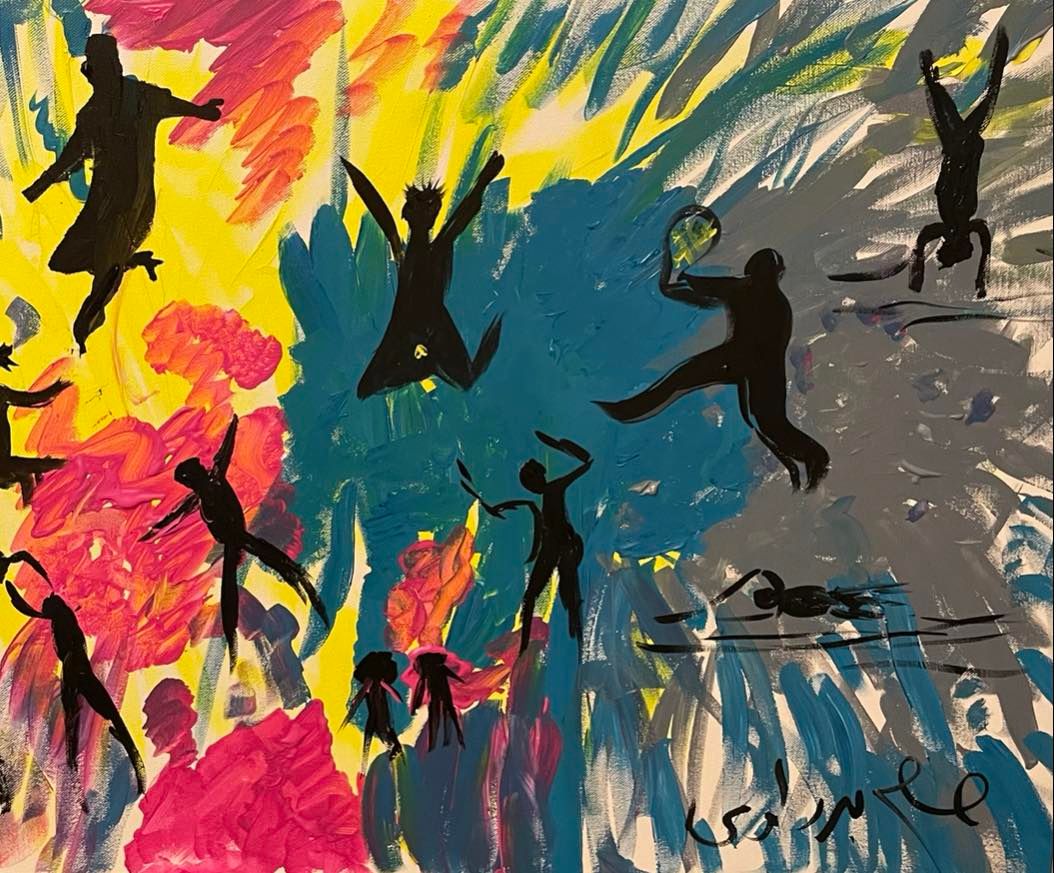
Ali Café “Dreamers of Tomorrow”
Dialogue about youth… with young people
(From the book The New Republic)
Bristi
The youth opened with me an issue that has been preoccupying me for a long time, which is the state’s policies in dealing with youth.
The young doctor, old in reason, asked:
Doctor, have the ruling intellectual premises for dealing with youth changed over time, and have you experienced them as a young man, a man, a politician and an academic?
I said: By historical review, I can say that the main pillars of the July 1952 Revolution depended on the state apparatus playing the role of guardian of the youth’s thoughts and visions. The regime and its ruling party, whatever its name, intervened in defining the goals of working with the youth in order to prove a specific ideology that tends to the socialist left, in its conscience, with a focus on marginalizing the role of youth belonging to any current or any other orientation that has an opposition or even a different orientation.
The state’s orientations have been linked to the use of youth to serve the goals of the political system at every stage, as happened during the reigns of President Nasser and his reliance on the vanguard organization of the Youth Organization and then President Sadat and his policy of pushing the Brotherhood and Islamic currents to confront the Nasserist current in universities, which ended with his assassination by them. Then the attempts to organize Horus during the era of President Mubarak, which ended with corruption and corruption of the youth, and after that during the period of the Brotherhood’s rule by relying on the Brotherhood’s youth to impose control on the street and besiege the media production city and the Constitutional Court and create a semi-regular army parallel to the police apparatus that imposes obedience and punishes those who disagree with it.
However, these visions, which its owners thought were valid during the ruling period during the three eras of the July Revolution, and then the Brotherhood era, are no longer valid in the current period and the stage of rebuilding the state.
I now see new and old attempts at the same approach in coordinating parties and assigning one party, without an ideology, to assume the role of the ruling party in form, and we all know that it is a reformulation of what failed previously, as if we do not learn from the past.
The diversity of ideas and visions that society is witnessing represents a serious challenge in itself, and it is necessary to develop a vision to deal with it positively, not by prevention, coercion, or by creating a new unilateral movement, but by science, knowledge, experience, and hard work with young people within the framework of a new vision.
The challenge lies in the fact that the different parties are not accustomed to the existence of the other, and at the same time that the state apparatus concerned with youth and security is not accustomed to dealing with pluralism, which is the basis of the modern civil state.
Another young woman said: Is it necessary for the state to have an orientation with the youth, or are they left to their own ideas?
I said: I believe that it is necessary to formulate a new general policy for youth to which state agencies adhere, in the face of the increasing attractiveness of ideas of extremism and violence, and facing real dangers linked to the absence of values in dealing and the creation of opposing dualities between religions and even within the framework of one religion, the absence of the foundations of citizenship and the choice not to believe in its legitimacy Institutions and resorting to the street to take what is believed to be a right with violence and vandalism to express demands and needs.
If the state does not politically create the climate for that, other parties will do it. There is no vacuum in politics, as it will always be filled by the most organized, funded and prepared.
A third young man said: Explain to us more, does not the existence of a declared policy for young people mean directing them to specific ideas from an older generation that may not be suitable for the future?
I said: The existence of a holistic vision for dealing with young people must be based on the creation of a modern civil state, which was approved by the country’s constitution and which lives without emergencies or exceptions, in which young people enjoy equal opportunities and equality regardless of their political, religious or intellectual affiliations in the field. framework of ordinary law.
We must realize the difficulty of youth rallying around a vision that speaks of pluralism, respect for difference, and the rotation of power in front of visions that use ignorance and need to attract youth to religious or worldly ideologies in a monolithic approach that ends with blind obedience, intransigence in confrontation, and leads to reaction.
The young doctor said: Who do you mean by youth?!
I said: I mean three stages, from 14 to 23 (where everyone is present in educational institutions and can be reached and gathered), and it is a stage in which there is sharpness, growth and movement, and it differs from a stage after the age of 23 years when they begin to be employed and assume responsibility, and the two stages differ from what After that comes the years in which young people begin to form a family and search for the privacy of housing, which are years of maturity in which priorities differ. Reaching young people after graduation is a big challenge, and working with them needs to fill every social, political and religious void that is formed affected by the balance of success and failure, hope and frustration, participation and marginalization. and positive.
A bright young woman said: What are the obstacles to setting policies for each stage? Things seem easy and possible?
I said: The formulation of this policy faces challenges, the most important of which is the rooting of a culture of dependence on the father and mother state that spends, supports, employs and guarantees, and this is entrenched in the conscience of the Nasserite regime that suited its time, and this is something that is not possible in all economies of the world now, especially in countries that spend More than it produces, but our state continues to use the method of providing services as a means of ensuring loyalty, despite declaring a different philosophy. Here, the state’s main function is capacity building through education, training, and creating opportunities, an attractive climate for employment within the framework of equal opportunities, ease in dealing with state agencies, and allowing freedom of expression within the framework of legitimacy, so that young people are not lost and transformed from a constructive force into a destructive force.
The second challenge: It is a dual challenge, which is represented in the small number of youth civil associations to serve as a vessel for implementing these policies, and the ruling regime’s lack of confidence in these few associations and the security’s apprehension of any activity that includes youth, no matter how much we change in legislation.
The third challenge: The philosophy of government formation in Egypt makes the various ministries islands
Dialogue about youth… with young people
(From the book The New Republic)
Bristi
The youth opened with me an issue that has been preoccupying me for a long time, which is the state’s policies in dealing with youth.
The young doctor, old in reason, asked:
Doctor, have the ruling intellectual premises for dealing with youth changed over time, and have you experienced them as a young man, a man, a politician and an academic?
I said: By historical review, I can say that the main pillars of the July 1952 Revolution depended on the state apparatus playing the role of guardian of the youth’s thoughts and visions. The regime and its ruling party, whatever its name, intervened in defining the goals of working with the youth in order to prove a specific ideology that tends to the socialist left, in its conscience, with a focus on marginalizing the role of youth belonging to any current or any other orientation that has an opposition or even a different orientation.
The state’s orientations have been linked to the use of youth to serve the goals of the political system at every stage, as happened during the reigns of President Nasser and his reliance on the vanguard organization of the Youth Organization and then President Sadat and his policy of pushing the Brotherhood and Islamic currents to confront the Nasserist current in universities, which ended with his assassination by them. Then the attempts to organize Horus during the era of President Mubarak, which ended with corruption and corruption of the youth, and after that during the period of the Brotherhood’s rule by relying on the Brotherhood’s youth to impose control on the street and besiege the media production city and the Constitutional Court and create a semi-regular army parallel to the police apparatus that imposes obedience and punishes those who disagree with it.
However, these visions, which its owners thought were valid during the ruling period during the three eras of the July Revolution, and then the Brotherhood era, are no longer valid in the current period and the stage of rebuilding the state.
I now see new and old attempts at the same approach in coordinating parties and assigning one party, without an ideology, to assume the role of the ruling party in form, and we all know that it is a reformulation of what failed previously, as if we do not learn from the past.
The diversity of ideas and visions that society is witnessing represents a serious challenge in itself, and it is necessary to develop a vision to deal with it positively, not by prevention, coercion, or by creating a new unilateral movement, but by science, knowledge, experience, and hard work with young people within the framework of a new vision.
The challenge lies in the fact that the different parties are not accustomed to the existence of the other, and at the same time that the state apparatus concerned with youth and security is not accustomed to dealing with pluralism, which is the basis of the modern civil state.
Another young woman said: Is it necessary for the state to have an orientation with the youth, or are they left to their own ideas?
I said: I believe that it is necessary to formulate a new general policy for youth to which state agencies adhere, in the face of the increasing attractiveness of ideas of extremism and violence, and facing real dangers linked to the absence of values in dealing and the creation of opposing dualities between religions and even within the framework of one religion, the absence of the foundations of citizenship and the choice not to believe in its legitimacy Institutions and resorting to the street to take what is believed to be a right with violence and vandalism to express demands and needs.
If the state does not politically create the climate for that, other parties will do it. There is no vacuum in politics, as it will always be filled by the most organized, funded and prepared.
A third young man said: Explain to us more, does not the existence of a declared policy for young people mean directing them to specific ideas from an older generation that may not be suitable for the future?
I said: The existence of a holistic vision for dealing with young people must be based on the creation of a modern civil state, which was approved by the country’s constitution and which lives without emergencies or exceptions, in which young people enjoy equal opportunities and equality regardless of their political, religious or intellectual affiliations in the field. framework of ordinary law.
We must realize the difficulty of youth rallying around a vision that speaks of pluralism, respect for difference, and the rotation of power in front of visions that use ignorance and need to attract youth to religious or worldly ideologies in a monolithic approach that ends with blind obedience, intransigence in confrontation, and leads to reaction.
The young doctor said: Who do you mean by youth?!
I said: I mean three stages, from 14 to 23 (where everyone is present in educational institutions and can be reached and gathered), and it is a stage in which there is sharpness, growth and movement, and it differs from a stage after the age of 23 years when they begin to be employed and assume responsibility, and the two stages differ from what After that comes the years in which young people begin to form a family and search for the privacy of housing, which are years of maturity in which priorities differ. Reaching young people after graduation is a big challenge, and working with them needs to fill every social, political and religious void that is formed affected by the balance of success and failure, hope and frustration, participation and marginalization. and positive.
A bright young woman said: What are the obstacles to setting policies for each stage? Things seem easy and possible?
I said: The formulation of this policy faces challenges, the most important of which is the rooting of a culture of dependence on the father and mother state that spends, supports, employs and guarantees, and this is entrenched in the conscience of the Nasserite regime that suited its time, and this is something that is not possible in all economies of the world now, especially in countries that spend More than it produces, but our state continues to use the method of providing services as a means of ensuring loyalty, despite declaring a different philosophy. Here, the state’s main function is capacity building through education, training, and creating opportunities, an attractive climate for employment within the framework of equal opportunities, ease in dealing with state agencies, and allowing freedom of expression within the framework of legitimacy, so that young people are not lost and transformed from a constructive force into a destructive force.
The second challenge: It is a dual challenge, which is represented in the small number of youth civil associations to serve as a vessel for implementing these policies, and the ruling regime’s lack of confidence in these few associations and the security’s apprehension of any activity that includes youth, no matter how much we change in legislation.
The third challenge: The philosophy of government formation in Egypt makes the various ministries islands