2025 Collective Activities & ArticlesAll ArticlesBy Dr BadrawiTranslated Articles

Between the Hammer of Rigidity and the Anvil of Extremism: The Crisis of Moderation in the Political Sphere By Hossam Badrawi


In an era where voices and positions overlap, political moderation faces a true existential challenge. Although freedom of expression—as guaranteed by the constitution—should grant citizens and political elites the space to voice their opinions, this freedom becomes endangered when besieged by two seemingly opposite yet equally harmful sides: the rigid wing that cannot accept criticism, and the extremists opposing the ruling system.

First: Rigidity from Within Power

Authoritarian systems often fear the moderate voice more than their outright opponents. The moderate does not wholly reject the system, but rather seeks to reform it from within—expressing critical positions and calling for reforms without threatening the very structure of the state. This is precisely what alarms the rigid faction inside the system, for they see moderation as a mirror exposing their flaws without giving them justification. Thus begins a campaign of accusations of treason, doubt, and restrictions against this centrist voice—under claims that it is “playing both sides,” “making excuses for the opposition,” or “weakening internal unity.” Eventually, the space for free expression shrinks until silence becomes the only refuge for moderates.

Second: Extremism from Outside Power

On the other hand, some extremist opponents have no qualms about exploiting moderate statements, taking them out of context and using them as proof of the “collapse of the regime” or as an “internal confession.” The moderate’s words are loaded with meanings never intended, and he is portrayed as if he has joined the ranks of radical opposition—even though he has not abandoned his balanced critical stance.

Thus, the rational voice finds itself rejected by both sides: the system doubts his loyalty, while the opposition deems him insufficient. The true reformist voice is lost, suffocated by both sides of black-and-white thinking. In such a climate, a dangerous logic prevails: one must be “entirely with the system” or “entirely against it,” leaving no room for critical thinking, reassessment, or legitimate disagreement. The political arena becomes a battleground for extremes who see only black and white, while every shade of gray is expelled from the equation.

Ironically—almost surreally—the fiercest extremists on both sides end up unintentionally cooperating to bury the gray zone, which in reality is the condition for political renewal and the heart of any true democracy.

Restoring the Voice of Moderation

Societies do not grow on the rhythm of shouting, but on the cadence of dialogue, acknowledgment of differences, and acceptance that free opinion does not endanger the system, but protects it from stagnation.

Restoring respect for the moderate voice—whether inside or outside power—is a political and cultural necessity, not a luxury. The moderate is neither a traitor nor complicit, but often more concerned for the state than the hardliners themselves. His perspective does not reduce the nation to a regime, nor the regime to a leader, but sees it as a structure open to reform, criticism, and renewal. Let us remember: the gravest threat to nations is not opposition, nor even failure, but the silencing of reason amidst the noise of slogans.

In politics, moderation is not indecision nor a gray stance—it is a courageous choice in the face of two opposing forces: a power that cannot tolerate criticism, and an opposition that cannot tolerate understanding. In a world full of sharp slogans and extreme emotions, the voice of reason becomes the most vulnerable to suppression—from all directions.

My Personal Experience Before 2011

My personal experience before 2011 was a living example of this complex dilemma facing reformers from within.

I believed—and still do—that real reform does not only come from the streets, but from changing the structure from within. The deeper change happens when critical thought moves inside the walls of the system itself.

At that time, many in the opposition and the media saw in me a good example: a member of the ruling party who spoke about freedom, power rotation within the party and the state, democracy, and human rights, and who drafted a project for political and educational reform without fearing to expose flaws.

But that space was only a shrinking margin the more influence I had. Soon, the hardline faction inside the ruling party saw me as more of a threat than an opportunity. Instead of supporting the reformist direction, conspiracies were made to obstruct it, to the point of direct intervention to block me from winning elections—despite my actual support from the street.

That was a clear scene of the system contradicting itself: it declared a desire for reform, then feared its own figures when reform became real.

On the other side, this was not fully accepted by the opposition either. Some of them—though they respected me personally—could not accept the idea that someone was trying to reform from within. To them, you were either “with us” against the regime, or you were part of the machinery of authoritarianism—even if you were fighting that authoritarianism from within. Thus, my stance—moderate in appearance, revolutionary in essence—became a double target of doubt: the system feared me, and the opposition doubted my motives.

But what both sides failed to understand was that moderation is not compromise—it is a brave reformist vision, balancing on a thin line between rejecting authoritarianism and refusing chaos.

How often I felt the bitterness of this contradiction. In times of stability, the reformist is treated as a case to be contained or excluded. But in times of danger and looming collapse, moderate voices are suddenly summoned to act as a safety valve and rescue front. Thus, in the moment of the ruling party’s collapse during the January Revolution, I was asked to assume responsibility of leadership, to be the face of reform trying to salvage what could be saved. I did not run away, but I knew I was only being sought when the old machine had broken down—not when a new future was being planned.

The Symbolic Assassination of Moderation

What happens to political moderation is not always physical or legal assassination, but symbolic and moral assassination: distortion, doubt, marginalization, followed only by emergency summons.

It is a hidden mechanism whereby opposites—rigid authority and extremist opposition—work together to exclude the voice of reason, each for their own reasons. Yet together, they contribute to suffocating the gray zone and turning the political arena into a black-and-white battlefield with no tolerance for any gradient.

Towards Restoring the Political Meaning of Moderation

Defending political moderation today is defending the very essence of democracy. What is required is not that we always agree, but that we recognize the legitimacy of disagreement. What is required is not that we always be revolutionary or always conservative, but that we remain flexible in thought, firm in values.

Moderation is not weakness—it is the highest form of moral and political strength, for it requires a dual resistance: resistance against authoritarianism and resistance against chaos, both at once.

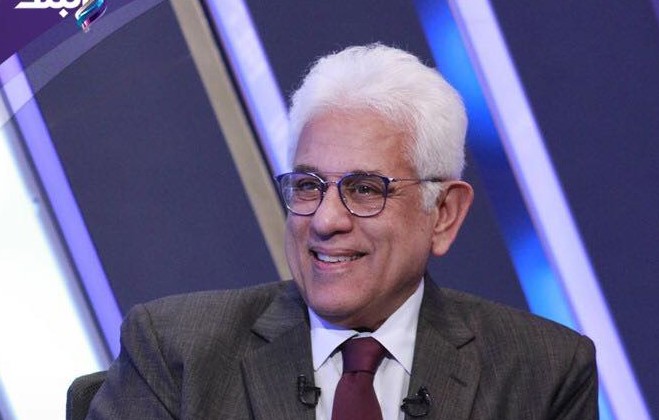
Dr. Hossam Badrawi

He is a politician, intellect, and prominent physician. He is the former head of the Gynecology Department, Faculty of Medicine Cairo University. He conducted his post graduate studies from 1979 till 1981 in the United States. He was elected as a member of the Egyptian Parliament and chairman of the Education and Scientific Research Committee in the Parliament from 2000 till 2005. As a politician, Dr. Hossam Badrawi was known for his independent stances. His integrity won the consensus of all people from various political trends. During the era of former president Hosni Mubarak he was called The Rationalist in the National Democratic Party NDP because his political calls and demands were consistent to a great extent with calls for political and democratic reform in Egypt. He was against extending the state of emergency and objected to the National Democratic Party's unilateral constitutional amendments during the January 25, 2011 revolution. He played a very important political role when he defended, from the very first beginning of the revolution, the demonstrators' right to call for their demands. He called on the government to listen and respond to their demands. Consequently and due to Dr. Badrawi's popularity, Mubarak appointed him as the NDP Secretary General thus replacing the members of the Bureau of the Commission. During that time, Dr. Badrawi expressed his political opinion to Mubarak that he had to step down. He had to resign from the party after 5 days of his appointment on February 10 when he declared his political disagreement with the political leadership in dealing with the demonstrators who called for handing the power to the Muslim Brotherhood. Therefore, from the very first moment his stance was clear by rejecting a religion-based state which he considered as aiming to limit the Egyptians down to one trend. He considered deposed president Mohamed Morsi's decision to bring back the People's Assembly as a reinforcement of the US-supported dictatorship. He was among the first to denounce the incursion of Morsi's authority over the judicial authority, condemning the Brotherhood militias' blockade of the Supreme Constitutional Court. Dr. Hossam supported the Tamarod movement in its beginning and he declared that toppling the Brotherhood was a must and a pressing risk that had to be taken few months prior to the June 30 revolution and confirmed that the army would support the legitimacy given by the people

Related Articles

Back to top button