
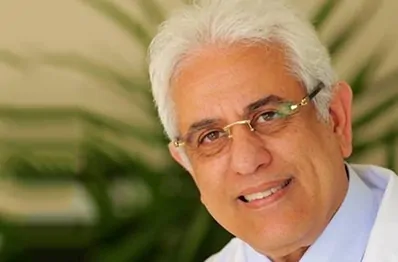
My friend Mr. Abdel Rahim Ali drew my attention to what the French philosopher Julien Benda wrote in 1927 in his famous book The Betrayal of the Intellectuals. He explained that Benda did not mean betrayal in the sense people usually understand it—betrayal of one’s country or trust—but a more complex and dangerous form of betrayal: the intellectual’s betrayal of truth.
Benda believed that the role of the intellectual is not to side with his group, nor to justify the mistakes of his nation, party, or sect. Rather, his role is to be the voice of reason when everyone else falls silent; to remain capable of saying “no,” even to those he loves; and to place truth above loyalty.
But almost a century later, the question is no longer:
Why do intellectuals betray?
It has become:
Can an intellectual truly remain independent at all?
The modern world does not force intellectuals into taking sides; it seduces them into doing so.
Tyranny no longer requires many prisons—it requires a large audience.
It no longer needs to silence differing voices; it only needs to reward similar ones.
The closer an intellectual comes to the crowd, the greater his fame becomes.
And the farther he moves away from it, the greater his loneliness becomes.
That is the dilemma.
Human beings naturally seek belonging, and intellectuals are no exception.
They need recognition, fear isolation, and want to feel that they stand on the side of good.
And here begins the small betrayal.
Not when they lie, but when they stop asking the questions that might anger their group.
When they replace the question:
“What is the truth?”
with the question:
“What serves the cause I believe in?”
At that moment, reason transforms from a tool of inquiry into a tool of justification.
The intellectual becomes a lawyer rather than a seeker.
More dangerous than that, betrayal does not merely corrupt politics—it corrupts the meaning of truth itself.
Justice becomes justice only if it serves our group.
Freedom becomes a value only if we benefit from it.
Criticism becomes a virtue if directed at others, and betrayal if directed at ourselves.
Thus morality is redefined on the basis of loyalty.
The question is no longer:
“Is this true?”
but:
“Who said it?”
Is he one of us, or one of our opponents?
And when society reaches this stage, the intellectual no longer becomes a victim of polarization, but one of its architects.
But is complete independence possible?
Perhaps not.
Every person carries biases, memories, fears, and dreams.
The intellectual is not a being suspended above history, but a child of his time and society.
However, the difference between a true intellectual and others is not that he is free of bias, but that he recognizes his biases and struggles against them in order to remain a defender of truth.
To remain capable of doubting himself.
To accept losing his audience in order to preserve his conscience.
To endure loneliness when truth becomes less popular than illusion.
Perhaps the betrayal of intellectuals is not the greatest problem of our time.
The greater problem is that society itself no longer asks intellectuals to be independent consciences.
Instead, it wants them to be soldiers in a battle, social media influencers, or spokespersons for the ideological tribe they belong to—or for the government of the state in which they live.
And when they refuse this role, they are accused of betrayal.
But if they accept it, they may have committed the real betrayal.
For truth does not need believers as much as it needs people with the courage to seek it—
even if that search leads them to stand alone.