
2026 Collective Activities & ArticlesAl-Hurriya WebsiteAll ArticlesBy Dr BadrawiTranslated Articles

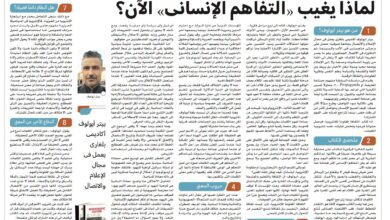
Hossam Badrawi writes for Al-Hurriya: I Can’t Keep Up

I admit it…
I can’t keep up.

Not just because time is tight,
nor because life has become crowded with responsibilities,
but because the world… has started pouring into me without pause.

Every minute—every second—
dozens of things reach me:
news… analyses… videos… opinions… notifications… shocks… fears… and advice.

An entire world is thrown into my mind…
without me asking for it.

I open my phone to read a message…
and minutes—or hours—later,
I find myself jumping between dozens of topics:

A war here…
a crisis there…
a sharp political opinion…
a complex economic analysis…
a touching human story…
and a medical tip that might save a life.

Some of it is useful… yes.
But most of it… is not.

And yet… I read.

The question that haunts me:

How much time do we waste… just deciding what is worth reading?

And how much of that “choice”
is not really a choice…
but a response to what was imposed on us?

We don’t just consume information…
we are reshaped by it.

Even the ideas we reject…
pass through our minds,
leave a subtle trace,
then disappear.

But… do they really disappear?

Can an irrational idea,
one we glanced at briefly,
change something within us?

Can repeated messages—even superficial ones—
build a new pattern of thinking,
slipping into the self… without us noticing?

I think… yes.

Not because we are weak,
but because our minds were not built for this relentless flood.

The human mind was designed to contemplate,
not to be bombarded.

To choose,
not to be overwhelmed.

And here, a more dangerous question emerges:

Is there a hidden mind… shaping humanity’s consciousness?

Not necessarily a single person,
nor a conspiracy in the traditional sense…

But a system:
algorithms… platforms… interests…
pushing what we should see,
and hiding what we shouldn’t.

We think we choose…
while we are gently guided.

The problem is not information itself…
but the overflow of it.

A drop refreshes,
but a flood… drowns.

So how do we deal with this?

Not by withdrawing from the world,
nor by shutting everything out.

But by reclaiming our right to choose.

To ask, before we read:
Why am I reading this?

To slow down…
in a world that forces speed upon us.

To accept that we won’t know everything…
and that we shouldn’t.

Knowledge is not in quantity,
but in depth.

Not in what passes through our minds,
but in what stays within them.

Maybe the solution is not to “keep up”…
but to decide:

What is worth keeping up with…
and what should simply be allowed to pass.

I still… can’t keep up.
But I’m starting to learn…
that this isn’t a flaw.

Maybe…
it’s the beginning of understanding.

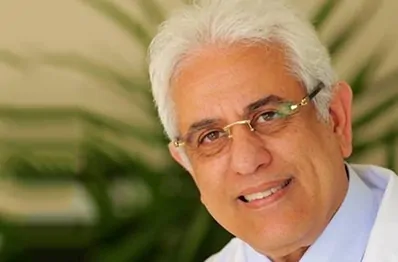
Dr. Hossam Badrawi

He is a politician, intellect, and prominent physician. He is the former head of the Gynecology Department, Faculty of Medicine Cairo University. He conducted his post graduate studies from 1979 till 1981 in the United States. He was elected as a member of the Egyptian Parliament and chairman of the Education and Scientific Research Committee in the Parliament from 2000 till 2005. As a politician, Dr. Hossam Badrawi was known for his independent stances. His integrity won the consensus of all people from various political trends. During the era of former president Hosni Mubarak he was called The Rationalist in the National Democratic Party NDP because his political calls and demands were consistent to a great extent with calls for political and democratic reform in Egypt. He was against extending the state of emergency and objected to the National Democratic Party's unilateral constitutional amendments during the January 25, 2011 revolution. He played a very important political role when he defended, from the very first beginning of the revolution, the demonstrators' right to call for their demands. He called on the government to listen and respond to their demands. Consequently and due to Dr. Badrawi's popularity, Mubarak appointed him as the NDP Secretary General thus replacing the members of the Bureau of the Commission. During that time, Dr. Badrawi expressed his political opinion to Mubarak that he had to step down. He had to resign from the party after 5 days of his appointment on February 10 when he declared his political disagreement with the political leadership in dealing with the demonstrators who called for handing the power to the Muslim Brotherhood. Therefore, from the very first moment his stance was clear by rejecting a religion-based state which he considered as aiming to limit the Egyptians down to one trend. He considered deposed president Mohamed Morsi's decision to bring back the People's Assembly as a reinforcement of the US-supported dictatorship. He was among the first to denounce the incursion of Morsi's authority over the judicial authority, condemning the Brotherhood militias' blockade of the Supreme Constitutional Court. Dr. Hossam supported the Tamarod movement in its beginning and he declared that toppling the Brotherhood was a must and a pressing risk that had to be taken few months prior to the June 30 revolution and confirmed that the army would support the legitimacy given by the people

Related Articles

Back to top button